
How Nokia is Scaling its Data Centre Networking Plans
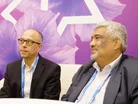
Nokia has been making strides in the data centre industry in recent months, as part of a push towards automation and connectivity solutions.
As telcos are increasingly adopting AI and other emerging technologies, Nokia has been looking to capture the data centre networking market specifically to focus on delivering networks for the AI era.
As the company finalised its acquisition of Infinera, we spoke with Vinai Sirkay, SVP and Deputy GM, IP Networks at Nokia and Manish Gulyani, Vice President and Head of Marketing for Network Infrastructure at Nokia. They shared how Nokia continues to address growing demands from enterprises that require data centre networks that can handle the need for greater interconnectivity.
“From a network infrastructure perspective, the key thing we are showcasing is networks for the AI era,” Manish says. “We want to talk about how AI is driving the demand for data centres, different kinds of workloads around inferencing and training and specifically what that means from a networking perspective.”
Nokia’s networking pillars: Becoming cloud-native
Nokia's networking strategy centres on three pillars: connectivity inside the data centre, between data centres and across data centres. With such a critical need for data centre interconnectivity, cloud-native solutions are becoming more attractive to operators.
“Specifically with AI, the front-end networks and the backend networks are evolving,” Vinai explains. “Some of them are still backend InfiniBand, but Ethernet’s coming onto the scene with UEC and similar technologies.”
He adds: “Our goal is to get human error to zero. Automation has become the big thing in data centres and that has been a very large area of focus for us.”
In order to have this kind of cloud-native networking solution, data centres will need an operating system that operates within the same area as its automation systems. Nokia aims to address this requirement through its SR Linux operating system and EDA management automation workflow engines.
“Streaming telemetry becomes a very key piece of it,” Vinai says. “We’ve basically used cloud-native principles right from the start to develop that. We have focused a lot of our energy on driving that automation and developing networking solutions that are heavily automated, allowing you to scale and have higher reliability.”
In order to achieve this scale, Nokia has invested heavily into its partnerships with technology companies and system integrators. Some of these include partnering with Lenovo to drive data centre networking and automation solutions, in addition to a partnership expansion with Kyndryl to expand their joint data centre solutions portfolio.
Partnerships with technology giants of this scale demonstrate Nokia’s understanding of where AI and other emerging technologies are moving within the data centre industry.
“This is because we know that to build data centres, you need much more than just the networking piece,” Manish shares. “You need people who can bring the whole stack together to help our customers get AI workloads going. That’s really where we are going, and you’ll see more of these partnerships coming in the days and weeks ahead.”
Building on the Infinera acquisition
One of the largest stories from Nokia in the last year is the telco announcing its intention to acquire optical networks specialist Infinera. Nokia was eager to bring the company under its wing, noting at the time that the purchase would increase the scale of its optical networking business by 75%.
Prior to the acquisition, Infinera already worked with some of the largest hyperscalers in North America and throughout the rest of the world. Now, Nokia is hopeful that it can use the same data centre customer groups to upsell its IP, switching and routing solutions.
Speaking with Vinai and Manish mere days after the acquisition closed, they shared their optimism with us – suggesting that Infineria will give Nokia an even larger hyperscaler footprint.
“It’s a really exciting time for Nokia to double down on our optical business,” Manish shares. “As our CEO [former CEO Pekka Lundmark] has stated, we have a massive growth plan for data centre networking.
“On the IP side, we already participate in data centre interconnect with our switching and routing portfolio. But Infinera has been heavily involved with hyperscale companies, the people who are building the big data centres and providing optical connectivity. We feel it gives us more weight and scale in this space.”
Strengthening Nokia’s commitment to the cloud
Rising power demands of AI is ultimately placing high levels of pressure on the grid. In order to mitigate this, Manish and Vinai explain that data centres will need to put data centers where the power is, rather than putting them in cities that will not have enough power.
“For example, our customer Nscale is building data centres in Norway with entirely renewable energy sources,” Manish notes. “This reduces pressure on the grid – you put it in a remote place, run it on sustainable energy and then you have the potential to meet the workload requirements.
“Now you need a very reliable network because you've put the data centre far from the users.”
Nokia was selected by Nscale at the end of 2024 to build an IP network for its new sustainable data centre to support AI workloads. The data centre, which is powered by renewable energy and optimised for energy-efficient cooling, will enable cutting-edge AI services, including Graphics Processing Unit as a Service (GPUaaS).
Manish adds: “Connectivity to other data centres and to the users is critical. That’s where Nokia comes in as a networking company.
“Inside the data centre you need reliable connectivity. Our IP optical solutions fit very nicely here. We’re trying to solve all the needs, not just one part of it.”
Looking ahead, the company plans to leverage its existing relationships and new Infinera acquisition to expand its presence with cloud providers. The telco is working with cloud builders worldwide to build modern data centre networks that are highly reliable, secure and easy to operate.
Part of these plans involve Nokia extending its five-year deal with Microsoft Azure in 2024 to to supply Microsoft Azure data centre networks. The expansion sees Nokia supplying Azure with data centre routers and switches, with the telco’s data centre networking portfolio looking to enhance the scalability and reliability of Azure’s global data centres.
This also hopes to advance Nokia’s role as a strategic supplier of Microsoft’s worldwide cloud infrastructure.
“We've announced publicly our Microsoft win on the IP side,” Vinai says. “We’re now hoping to use the Infinera acquisition as an accelerator to advance our data centre networking portfolio with other hyperscalers and major cloud providers too.”
To read the full article in the magazine, click HERE.
Explore the latest edition of Data Centre Magazine and be part of the conversation at our global conference series, Tech & AI LIVE and Data Centre LIVE.
Discover all our upcoming events and secure your tickets today.
Data Centre Magazine is a BizClik brand