
Ocean-Cooled AI: The Data Centre Redefining Renewable Energy
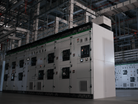
The industrial port town of Sines, Portugal, has quietly become home to one of Europe's most ambitious technology projects to date.
Here, on repurposed land where a decommissioned power station once stood, Schneider Electric and Start Campus have constructed SIN01 – a 26MW AI data centre that is the first phase of a planned 1.2GW campus designed specifically for AI workloads.
What sets this facility apart isn't just its scale, but its fresh approach to sustainability. SIN01 is the world's first AI data centre to use ocean water as its primary cooling method, drawing directly from the Atlantic and returning it just one degree warmer.
For those who witnessed its journey from concept to reality, the transformation has been remarkable.
“The first time I discussed this project was in 2021 – and at that time, people did not believe in it,” recalls Pablo Ruiz Escribano, Senior Vice President of Secure Power and Data Centre Business at Schneider Electric Europe.
“Some people were even making fun of the concept. Now five years later, being in my new position, I started the new role in March and the first event I did was in Iberia, opening this data centre.
“For me it is really emotional. Emotional because it was an idea and now it's a reality.”
How SIN01 tackles the AI infrastructure challenge
The challenge of accommodating AI workload demands in a sustainable way has grown from concern to a global issue.
Traditional facilities, designed for steady workloads, now struggle to accommodate the intensive processing demands of AI applications – and the challenge now extends beyond raw computational power to the fundamental architecture of how data centres operate.
“When you look at the difference between an AI data centre and a traditional one, the main difference is in the cooling,” Pablo explains.
“The difference is in how you cool down and extract the heat because the heat is higher. The size of the data hall we had usually had 150 racks – and the power was pretty much around one dot between one mega to two megas per two, two and a half megas.
“Now in the same size, we are able to bring much more IT capacity, but it is pretty much the same look and feel. The only difference is how you extract the heat.”
As liquid cooling emerges as the preferred solution for high-density AI workloads, traditional data centre operators face infrastructure overhauls as well cost implications – especially since cooling typically accounts for 60% of a data centre's operational expenditure, with half of that energy consumption directly linked to cooling solutions.
“The more you can optimise the cooling piece, the more efficient you can be,” Pablo says.
The blueprint for sustainable AI infrastructure
The other genius of Start Campus's approach lies in its integration with existing infrastructure.
Rather than constructing an entirely new facility, the developers recognised the potential of repurposing the decommissioned power station's maritime connections.
The facility utilises solutions from Schneider Electric's EcoStruxure portfolio, providing real-time monitoring and control systems that optimise energy usage across the entire operation.
“It's amazing how integrated it is and leveraging the piping system that was taking water from the sea to cool down the power plant that has been decommissioned,” Pablo says.
“You don't need to rebuild from scratch full infrastructure. It's just adapting it – and the fact that it's also using water coming from the regasification plant that was thrown away, cold water thrown away, then they're reusing it for this purpose.
“Also, the heat that we're extracting from the data centre can be reused in other applications close by.”
This means that the environmental monitoring programme surrounding the facility is comprehensive and ongoing.
“We do have two research institutes that are monitoring and they're monitoring not only chemicals and the physical side of the water discharge, but the impact on the ecosystem,” says India Oliveira, Sustainability Manager at Start Campus. “The two researchers, biologists and engineers, have scuba diving events every other month and every quarter they have a pre-report for us.
“It is part of our environmental impact assessment requirements. So we do have to present a massive proposal for compensation measures. They told us a minimum of three years, but we're committed to the full lifecycle of the project, so 25 years minimum.”
Furthermore, the research findings have already validated the environmental approach, with India adding: “These researchers predict that the one degree Celsius and the plume of influence is very small.
“The discharge is very concentrated in this area on the discharge area and the bay, but it diffuses a lot. So we don't release any chemicals. We are releasing warmer water, which will have some impact – but there will be some wildlife who will benefit and others that will probably migrate to other places – yet the predicted impact is minimal.”
AI at SIN01: From tracking sustainability to predicting it
Perhaps the most intriguing aspect of SIN01 lies in how AI itself has become integral to both its construction and operation.
“AI is an industrial revolution like electricity was or steam in the past,” Pablo says.
“Now it's AI with the IT revolution revolutionising every single industry – and the way we build data centres.”
AI is everywhere at SIN01, from assisting the construction and operations, to the robo-guard dog that greets visitors, takes pictures of the site and automatically compares them to 3D models to see how the site is operating the data centre, to predicting the site’s future sustainability goals.
“Now if we want to be efficient, to save CO2 emissions and to increase the reliability of the data centre, we should just send people onsite when it is really needed,” Pablo continues.
“We are applying AI to see whether the equipment is aging in the proper way, or if there is a deviation that triggers some activities from the FSRs or from the field services engineer, to take action to repair it.”
Start Campus has also developed perhaps the most sophisticated application of AI in sustainable data centre design: a comprehensive carbon modelling system integrated into their Building Information Model (BIM).
This system is a fundamental shift in how environmental impact is assessed and managed throughout a facility's lifecycle.
“I think that the most impactful aspect of the sustainability design really is the groundbreaking carbon model integrated into our BIM design – the Building Infrastructure Model,” India says.
“We can, through layers, have a clear view of which infrastructure has the most emissions or most carbon impact through scope one, two and three. So I think having built this unique system using this BIM system means we can predict the emissions and then reorder any other material or look at local suppliers.
“We can test the emissions before we actually start building.”
The system's sophistication additionally extends to detailed supply chain analysis.
“For example, we had one option of steel structure. There's a huge database that gives us their own raw material sourcing, how much travel needs to happen to come here, what are the materials that they use, their energy – is it renewable, is it diesel-based, etc – and all of these little aspects are implemented in this BIM system,” India continues.
“We can then change materials in order to see, as a cost-benefit analysis. We can look at how much emissions we can avoid by paying more or less.”
Start Campus and Schneider Electric: Transparency being the secret to success
The relationship between Schneider Electric and Start Campus exemplifies how traditional infrastructure companies are adapting to AI's demands – as their collaboration extends further than hardware supply to comprehensive consulting services.
“From the very beginning, it's been an open discussion,” Pablo explains. “One of the things that I like about the partnership is that Start Campus were putting some challenges on the table and we were discussing the solution.
“For example, at that time we didn't have a strong position on liquid cooling and they worked with an alternative supplier.”
“Now, we have incorporated liquid cooling into our portfolio.”
The facility's designation as a Project of National Interest by the Portuguese government also reflects its broader economic significance.
Start Campus plans to create up to 1,200 direct jobs and an estimated 9,000 indirect roles throughout the project's duration. The company additionally recently announced an €8.5bn (US$8.8bn) investment to accelerate campus development.
Furthermore, Portugal's strategic advantages extend to competitive energy costs compared to other European markets, backed by significant renewable energy capacity – and this combination has enabled Start Campus to secure over 1GW of grid power – a rare achievement in a European market where power availability constraints have become the primary limiting factor for data centre growth.
The future of AI data centre infrastructure
As the AI revolution accelerates, the construction methodology pioneered at SIN01 is already influencing how the industry approaches large-scale deployment. The traditional approach of on-site construction is proving inadequate for the speed and scale demanded by AI infrastructure development.
“What we see is that the way we're constructing data centres doesn't change the equipment itself, but the way that we build data centres,” Pablo says. “We are moving into more standardised and more prefabricated solutions so we can, when deploying such a large infrastructure, see logistics become a real topic.
“The more you can standardise, the more you can really replicate standard modules – and the faster you're going to be able to deploy onsite, the more you're going to reduce the time to start up and commission the data centres.”
He continues: “If you go to a traditional data centre that is under construction, you see plumbers working with electricians and a lot of people interfering at the same time.
“If you want to deploy at scale with the speed that we need, it's no longer possible to have that traditional way of building. So moving in with the same equipment, but having these standardised and prefabricated solutions for me is the only way to do it.
“Which by the way, also reduces the CO2 emissions because you can simplify all the logistic flows and you can also optimise those logistic flows.”
How SIN01 has achieved balancing growth with responsibility
The integration of AI workloads into SIN01 has actually improved its environmental efficiency.
“When we first designed this building, we didn't have AI in our model or in our slogan,” India explains.
Yet when discussing that SIN01 is built largely off existing infrastructure, she says: “A year later, AI comes and we say, right, let's do an expansion. Why? Because building creates emissions, full stop – but the impact on power usage, for example, is not equivalent to the additional workload. It's the same space.
“The environmental impact is already studied. So all of the compensation measures are done based on the demand from the energy grid, but the physical space that this occupies: the habitats, the seawater monitoring, all of the bird watching and mitigation strategies that we have put in place for noise pollution – wouldn't change having AI or having more IT capacity, because we already predict the impact itself on the place.”
This perspective – that AI can increase computing density without proportionally increasing environmental impact – offers a path forward for an industry grappling with sustainability pressures.
As India puts it: “SIN01 shows how quickly AI is coming up and that it can help. How do we have AI in the same space? We're using AI to put AI inside the racks.”
When asked to summarise the whole project in one word, Pablo concludes: “For me it's disruption. SIN01 is a clear example of how we can build data centres in a completely different way – and I'm proud because we've been part of it.”
To read the full article in the magazine, click HERE.