
The Role of Steel in Today’s Data Centre Industry
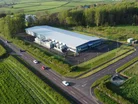
Steel remains an integral part of data centre construction, used for load-bearing structures, server racks and cooling systems. With data centre construction having more than tripled in some parts of the world in recent years, steel is more in demand than ever before.
However, in light of recent developments, the industry’s reliance on the alloy could be called into question. In 2025 already, the global steel market has become increasingly volatile in the wake of US tariff changes and the UK making the decision to nationalise its steel industry in April 2025.
With insights from leading data centre and construction experts, we examine if the data centre industry needs to move away from steel, or if it can learn to embrace the material in a new way.
Confronting a changing global market
Tariffs under US President Donald Trump’s administration have inflated steel by as much as 20%, forcing countries like the UK to scramble to make an economic deal to remove such increases. Elsewhere, however, this could make it more challenging to get steel or other materials delivered on time, leading to the slowing of projects and higher costs.
“Meanwhile, the UK’s move to nationalise steel production has so far avoided immediate
supply shocks, but has kept domestic prices high in the absence of substantial subsidies,” says John Archer, Senior Deliver Principal and Supply Chain Transformation Leader at Slalom. “Both approaches have constrained supply chain flexibility, increased uncertainty and challenged developers to manage rising costs and elongated planning cycles.”
Gavin Bollan, Director - New Energy Systems and Technology at SLR Consulting, adds: “Nationalisation of British Steel means that the UK keeps its last and currently only means of producing primary steel from ore. All of the rest of our steel production is now electric arc furnaces, which essentially melts scrap steel into new – a secondary rather than primary product.
“The UK construction industry has long since established multiple supply lines and the majority of construction steel is now imported. The UK government is very cautious about the application of tariffs on a raw material so closely linked with economic activity and growth.”
Despite such challenges, recent investments in the UK into data centre infrastructure could lead to long-term investments in regional capacity or even encourage countries to be more self-sufficient, John explains.
“It is likely that these moves made by the US and UK governments will encourage companies to begin pivoting investment in local steel production and manufacturing, so they aren’t heavily reliant on international suppliers,” he says. “This could help protect such companies from future global disruptions or price spikes.“
For the data centre industry, developers will be able to better focus on building facilities that are closer to where materials and critical equipment are made. This approach, known as ‘regional capacity’ makes supply chains shorter and that much more reliable.
Over time, these moves could lead to faster construction timelines, more stable prices and greater control over required resources.”
Is the role of steel in data centre construction changing?
Steel remains a critical material for data centre construction, with steel frames offering cost-effective and flexible solutions for building large facilities.
Currently, hyperscale facilities can use upwards of 20,000 tonnes of steel – equivalent to 30 to 40 pounds per square foot. This is due to their massive structural loads, multi-story configurations and dense internal infrastructure.
“Unlike typical commercial buildings, data centres require significantly more steel not just for the primary frame, but also for subsystems such as raised floors, cable trays and conduit,” John notes. “This heavy reliance, changes in steel prices or supply can have a significant impact on how much a project can cost and how long it would take to build, making steel availability and cost a critical factor in data centre development.”
With data centres facing increased sustainability challenges and growing scrutiny over environment governance – or lack thereof – industry leaders are ramping up their exploration of alternative materials and methods of construction.
“While steel remains a practical and efficient choice for many data centre builds, a more flexible and future-focused approach could help manage risk and support sustainability goals,” suggests Peter Bartley, Head of Sustainability at AEW Architects.
“The recent turbulence around US tariffs and the UK's steel nationalisation points to a deeper issue: unpredictability. Whether or not specific policies remain in place, it’s the volatility they create – in pricing and availability – that’s most disruptive to projects. It makes long-term cost planning difficult and exposes the industry’s heavy reliance on a limited material supply chain.”
Steel remains integral to the data centre industry, with plenty of buildings being framed entirely by the material.
“Given the engineering properties, price point and availability of steel, it currently seems unlikely that any other material will supplant steel for data centre structures for the foreseeable future,” Gavin notes.
Such a reliance on one material has led to companies exploring alternative steel solutions to avoid design and build challenges. For instance, Pure Data Centres Group has incorporated low-carbon steel into the core of its design to achieve an average recycled content percentage for structural steel at its London Brent Cross data centre campus.
The company’s Chief Technology Officer, Ian Whitfield, explains: “We require our supply chain to certify and validate the carbon footprint associated with the sourcing, transport and manufacturing of their product through Environmental Product Declarations (EPDs). At our Brent Cross site, 98% of our structural steel has been certified.
“We set a carbon budget, defining how we can achieve our project-specific carbon targets. Key elements required to achieve the targets include low-carbon steel and concrete. Low-carbon steel options we consider for our projects range from recycled steel, EAF (electric arc furnace) use, and new/alternative technologies.”
Encouraging sustainable construction
With increased demand for AI workloads and other disruptive operations, the data centre industry is having to reckon with how to reduce energy consumption whilst also catering to power-hungry technology. The solution lies in sourcing renewable energy, but also now more sustainable materials.
“We’re now seeing a shift – developers are starting to look more seriously at embodied carbon and there’s a lot that can be done without moving away from steel entirely,” Peter says. “Specifying lower carbon steel, such as that produced using electric arc furnaces and renewable energy, already available from the US and Scandinavia, is a key short-term step.”
Engineered timber is also a promising alternative, or prefabricated modular solutions – think Vertiv TimberMod, where the material is used in data centre construction instead of steel. But these ideas are still in the early stage and can prove to be complex in data centre construction currently – especially in the UK currently, as Peter explains, as a limited manufacturing base for timber leaves the country exposed to international supply and price concerns.
He explains: “Ultimately, this isn’t about abandoning steel, it’s about using it more intelligently and supporting the decarbonisation of its production. In parallel, we need to develop a more resilient, diversified material supply chain.
“The right material, in the right place, with the right spec is what will drive sustainable progress in the sector.”
John adds: “Big tech companies like Microsoft, AWS and EcoDataCenter have already demonstrated the viability of these methods on a larger scale. With policy support such as the UK's green steel investments initiative and the US Inflation Reduction Act, as well as the rising influence of environmental regulations and certifications, the data centre sector is increasingly aligning its growth with sustainability imperatives.
“By integrating material innovation, efficient design and resilient supply strategies, the industry can build more responsibly while maintaining momentum in an era of rising complexity.”
Steel or no steel?
As the data centre industry moves closer to its sustainability goals, assessing greenhouse gas emissions during the construction phase is vital.
“As energy supply decarbonises, construction and materials will reasonably attract more scrutiny,” Gavin says. “Data centre developers are not currently mandated to apply more sustainable construction techniques, though some local planning authorities encourage this. The drive to improve sustainability is therefore mostly voluntary, which never leads to huge traction or uptake.”
Looking ahead, as digital innovation continues to surge, data centres will be heavily prioritising uptime and efficiency. This could mean that changing construction methods may not be favoured yet, so as to avoid any potential risks, but the need for sustainability may soon usurp those concerns.
“Pure DC is already investing in the development of products where conventional materials that have a higher carbon footprint are replaced with certifiable materials which capture and lock-in carbon such as biochar,” Ian says. “We’ve been in discussion with companies that can offer a reduction to concrete slab thicknesses and rebar tonnages by using an innovative, chemical post tensioning process.”
Gavin adds: “Steel to the required grade can be made by more than one technique and by an array of manufacturing sites. A drive toward the specification of more sustainable, lower emission steel would be a more impactful strategy than investigating alternative materials.”
To read the full article in the magazine, click HERE.