Gibraltar Perimeter Security (Gibraltar) applies the company’s ‘smart fence’ thinking and AI-driven analytics to national borders, stadiums and critical infrastructure such as roads and hyperscale campuses.
The company evolved from metal and steel fabrication into a manufacturer serving myriad industry verticals where high-level, advanced security solutions are non-negotiable.
Gibraltar Perimeter Security is AISC-certified for steel and metal fabrication and manufactures anti-crash vehicle barriers including wedges, sliding gates, swing gates and bollards. The company is the only US manufacturer with American and European certification for fencing.
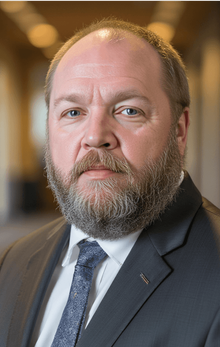
Douglas Dreher, Director of Data Center Development at Gibraltar Perimeter Security, brings decades of security experience to the data centre sector. He outlines a security-first model built from the perimeter in.
From steel fabrication to certified perimeter specialist
Douglas explains that the company’s evolution is guided by a clear north star: “The core mission and our vision statement is: provide the best that we possibly can for our customers.”
And these customers span an array of sectors, from defence to digital infrastructure.
“We are the only US manufacturer that is both American and European certified for fencing,” Douglas adds, setting out a portfolio that covers military, diplomatic, data centre and event environments.
The company holds US Department of State certification and manufactures segments of the US southern border wall as part of a joint venture. Douglas has been involved with projects involving government agencies to focus on what Customs and Border Protection and the Department of Homeland Security term “attributes” – the security systems that sit on and behind the fence line.
Gibraltar’s customer base includes military bases and data centres, as well as event venues such as the Las Vegas Strip, where Douglas notes that 10,000 vehicle bollards are deployed and the majority are Gibraltar systems designed to be crash-rated to support crowd and event management, including Formula 1.
The company’s equipment is present at NFL stadiums including the Raiders’ and Broncos’ facilities, where vehicle barriers manage fan access, vehicle stand-off and perimeter resilience.
But what strategies and technologies underpin Gibraltar’s approach?
According to Douglas, they are unified by a marriage of AI and physical innovation.
‘Smart fence’ thinking for hyperscale data centre defence
When Douglas turns to data centres, he describes a model that starts with the perimeter and works inward, in contrast with environments such as retail that design security from the inside out.
“Does the theft part concern me for data centres? Yes, but we have to start from outside in,” he says, framing Gibraltar’s approach as a layered defence-in-depth concept that begins at the fence and gate line.
That perimeter-centric model combines crash-rated barriers, fencing and access controls with sensors and video to create what Douglas calls a “smart fence concept”, drawing directly on Gibraltar’s experience with the southern US border “smart wall”.
Douglas explains how the economic context for this perimeter-first stance is crucial. The scale and risk profile of modern hyperscale projects, where general contractors are liable until customer acceptance on nine‑figure build sites and emerging 10‑figure projects.
“The general contractor no longer has a percentage to play with that they normally would if somebody breaks in and steals some tools,” he says, pointing out that large‑scale events can turn construction losses into major financial and contractual exposures.
Douglas argues that general contractors want a single point of contact for security – covering internal and external fencing, perimeter intrusion detection, external and internal cameras and access control – rather than six or seven separate project managers who have to be present at every coordination meeting and emergency discussion.
Weather‑driven disruption, from ice storms such as “Snowmageddon” in the US to hurricanes and typhoons, makes this consolidation more attractive, he adds, because construction managers do not want to be “herding cats” across multiple suppliers during an incident.
By translating the smart wall architecture into a plug‑and‑play perimeter system for data centres, Gibraltar aims to offer general contractors a single quote and integrated design that consolidates these functions.
This raises what Douglas calls “the security bar” while keeping build times on track and reducing coordination overhead. Douglas links this to the compression of data centre construction schedules from roughly a year for a single‑storey building in 2018 to around seven months for multi‑storey, multi‑building campuses with dozens of electrical rooms and pods inside a single fence line today.
Smart fence, access control and defence‑in‑depth
Within the fence, Douglas outlines a model in which access control at gates mirrors and links to controls inside the data centre, with increasing assurance levels as users approach critical systems and customer data.
“If I have access controls, which you should have at your gates, that should be the same access controls that I’m running in the building,” he says, adding that authentication factors can be stepped up closer to the servers, moving from card‑based systems at the perimeter to biometric controls at critical internal access points.
The integration of perimeter and building systems is positioned as a security and efficiency measure, supporting defence in depth by ensuring that authentication, logging and response follow the same model from fence line to rack.
Douglas emphasises that hyperscale environments are protecting customer intellectual property and the provider’s own IP, making consistent access control and monitoring a central part of the design rather than a bolt‑on.
He also notes insider threat as one of the most significant risks in data halls and stresses that conventional HR screening cannot realistically be extended to the level of classified facilities, underlining the need for automated, layered controls that track who is at which rack, at which time.
This is where Gibraltar’s interest in advanced video analytics, AI and, increasingly, artificial general intelligence intersects with its physical perimeter systems, especially when applied to control rooms and operational security teams.
Douglas links these developments back to the smart fence and smart defence concepts, arguing that integrated sensing and AI‑driven analysis can extend both the reach and utility of perimeter infrastructure while also affecting staffing models in security operations centres.
VLMs, Ambient.ai and Matroid in the control room
Douglas says he has been speaking about AI in physical security for years, including presentations at ISC West, DICE and ASSA ABLOY events.
He now sees generative AI tools such as ChatGPT, Gemini, Copilot, xAI and Grok as part of a broader landscape that also includes video‑focused models.
In physical security, he explains, “we rely on what’s called a VLM, the vision language model” and notes recent advances in VL‑JEPA (Vision Language - Joint Embedding Predictive Architecture) systems, citing work he has seen out of New York that he describes as “mind-blowing” because the models teach themselves and infer intent more like humans do.
He points to Ambient.ai as “probably the closest” example of an AI company in the physical security space that delivers behavioural detection over video, likening it to the way customs and border agents are trained to look for behavioural clues at airports and borders.
Douglas also highlights Matroid, a partner on the US southern border where its video management system can track a swimmer in the Rio Grande even when they move behind a patrol boat and disappear from direct camera view, with the targeting box “intuitively” following until the subject reappears.
Douglas describes this as “a game changer in the physical security space, especially in the control room space,” because it enables more targeted response and potentially changes the role of guards.
Most hyperscalers, he says, rely on unarmed security guards whose function is “observe and report”, with the largest operational cost in the data centre space being salaries and hourly pay.
If AI can take on much of the monitoring load, Douglas argues, operators can move experienced staff into the field for response while consolidating control rooms into centralised facilities designed to oversee multiple campuses from a 40‑seat operations centre.
In one design he created for a previous employer, the control room was built to support five to six campuses, configured in a tiered model similar to an emergency operations centre or combat information centre.
This was modelled on a system where Tier 1 monitors feeds and escalates to Tier 2 for deeper assessment, including decisions on whether to call emergency services.
Douglas stresses that AI can improve safety for unarmed guards, allowing them to respond only when necessary while leveraging VLMs to maintain situational awareness. He links this to the concept of reactive perimeter lighting. This identifies response zones with high‑intensity illumination and colour‑coded LEDs that trigger behavioural responses and pre‑recorded warnings as an intruder approaches the fence.
AI, AGI and evolving risk for data centre operators
For context, Douglas says that last year ChatGPT ran at about 54% accuracy, whereas the latest version, ChatGPT-5.2, runs at around 74% accuracy.
These advancements are not limited to the AI companies which are fast becoming household names in their own right.
Douglas cites generative AI with VLM‑based tools which now not only break motion into frames, but infer actions in a more human way, such as recognising that someone reaching for a cup of tea is going to drink from it.
This, he says, is artificial general intelligence (AGI) in early form, capable of teaching itself, and he expects to see some form of AGI at ISC West this year.
In data centres, Douglas sees AI applied to a range of use cases, from behavioural detection at the perimeter to medical response inside the data hall.
He also cites applications in insider threat detection, verifying that the right person with the right technology is at the right rack at the right time, as well as fire safety, where AI and thermal cameras can validate fire alarms, identify pull‑station misuse and detect hot spots on electrical transfer switches.
Looking ahead, Douglas identifies AGI as the next major driver of return on investment for data centre operators, arguing that it is distinct from IoT and marks what he describes as the fifth industrial revolution.
He says Gibraltar is exploring how to leverage AI with different packages according to how secure a site needs to be. These include the potential use of drones and drone detection, as well as custom cage builds aligned with regulations such as GDPR and HIPAA where AI overlays video management systems to support three‑factor authentication based on cards, PINs and body morphology rather than facial recognition.
“What can’t be scammed is the shape of your body,” Douglas says, adding that body morphology combined with other factors can reach 96% accuracy in access control.
Beyond AGI, Douglas is candid about the security impact of quantum computing, citing Apple’s plans for a quantum chip factory near Chicago and his own experience working on security for quantum labs where scientists and engineers resist friction in access controls.
He refers to Alphabet’s Willow quantum chip and a random circuit sampling problem that classical computing would take more than 10 septillion years to solve. Willow completed it in under five minutes, which he says throws existing encryption schemes into question and raises the stakes for physical and cyber security around quantum facilities.
Community engagement and innovation at Gibraltar Perimeter Security
Gibraltar is a privately held, Texas‑based company led by owner and CEO Bill Neusch, who Doug characterises as an entrepreneur and “true servant leader” who channels a large share of profits into community initiatives.
At a company Christmas party in Austin, Douglas says he learnt that “about 90% of the profit of our company is given back to the community in some shape, form or fashion and different endeavours”, with activity ranging from flood response in the Hill Country to wider charitable projects.
At the Data Centre Anti‑Conference in Austin and other locations, Gibraltar used its LPS‑certified, ASTM‑certified breach fencing to construct a “jail” experience where employees could pay to have colleagues or bosses placed in the cage, with fees starting at US$50 for 10 minutes and rising with time, and optional early release for double the cost.
Douglas says all of the money went to charity and presents the initiative as an example of how the company links its core products with community engagement in a way that raises funds while keeping security topics visible in industry settings.
On a personal level, Douglas emphasises the role of informal industry networks and introductions as another strand of giving back, saying that after 43 years in the sector he makes electronic introductions to connect companies with potential partners and did three or four such introductions in the past week alone.
“I’m just doing the e-intro so people can advance their business models together. It’s a form of giving back,” he says, adding that he sees this as repaying the support he received earlier in his career.
Looking to the next 12 to 18 months, Douglas sums up Gibraltar’s focus in a single word – “Innovation” – and explains that the company will not advertise a product as certified until it has passed all testing and holds the relevant crash or breach certifications, even though it can sell uncertified products where customers do not require formal certification.
The company’s certification records are made easily available, he adds, with all directors able to share documentation with partners and prospective customers, rather than requiring manual retrieval from archives.
Partnership strategy and Matroid as an exemplar
Gibraltar’s partner strategy begins with evaluating a potential partner’s mission, vision and performance, Douglas explains. Important factors include whether they give back to their communities and if there is a clear fit on capabilities and expectations.
“Do we mesh, right? Is it a smart idea to become a partner with them? What do they bring to the table? What do we bring to the table for them?” Douglas says, adding that the decision typically sits with directors and senior business development leaders because senior leadership is heavily committed across Gibraltar’s three business units.
Where partnerships do align, Douglas says Gibraltar can offer benefits such as pricing discounts for fence installers and other integrators that specialise in data centre, distribution centre and industrial work, creating mutually beneficial relationships that help perimeter specialists gain earlier visibility of new projects.
Because perimeter providers are often among the last to be informed of new builds, Douglas argues that these partnerships move Gibraltar “up on the knowledge ladder” and improve its ability to support general contractors and end users.
Matroid sits at the centre of this strategy on the US southern border, where the company manufactures servers and VMS systems used in Gibraltar’s deployments.
Douglas lauds Matroid’s attention to detail, citing a recent instance where the company responded directly to border agent feedback. When border agents requested Starlink backup rather than solely 4G LTE or cellular backup, Douglas recalls that Matroid’s CEO Reza Zadeh “ordered his manufacturing company to install a Starlink on every server”, illustrating a responsiveness that helped convince Gibraltar of the partnership’s value.
Douglas says Matroid’s servers, which integrate two or three NVIDIA GPUs and are significantly more expensive than standard off‑the‑shelf servers, have impressed him with their capabilities and that he sees them as “the future” in VMS for high‑demand environments.
In a joint demo for other partners, he says, Matroid committed to delivering behavioural analytics by the end of the month when asked if they could support it. The company then met that timeline, reinforcing Douglas’s view of the team – which he describes as composed of Stanford, Berkeley and Caltech engineers – as strong collaborators for future hyperscale campus deployments.
“I can’t wait to get their first deployment on a hyperscale campus. And I think AGI is what will drive that,” Douglas says.
Security, safety and the message to CFOs
For Douglas, the link between security and safety in data centre environments comes down to a straightforward principle: “They work synchronously – the more physical security you have, the safer your environment is,” he says. He adds that when employees know they are safe in their environment, it generally increases morale and output, drawing a direct line between perimeter investment, staff confidence and operational performance.
He also seeks to reframe how financial leaders view security budgets, drawing on his core message for data centre decision‑makers.
“The core message is security matters. It’s not a hole in the floor where money gets thrown. The return on investment for security is like an insurance policy. If a security professional goes to work and they’re bored, that’s a good day, because frequently, you’re overcome by events,” Douglas says.
He concludes that current world environments and safety considerations make security spending justifiable in terms of avoided loss and human impact. “My message to CFOs, COOs, CEOs – the money is well worth the spend, especially with the current world environments and safety considerations. My question is simply this: what is the cost of one human life?” Douglas says.
Company portals

Executives
Douglas Dreher
Director, Data Center Development