
How Castrol Targets Liquid Cooling's Infrastructure Layer
There is a moment in every emerging technology cycle when a peripheral concern becomes a central one. For data centre operators deploying AI infrastructure at scale, that moment has arrived for liquid cooling. The hardware no longer allows for ambiguity: rack densities that once peaked at 40 or 50 kilowatts are now brushing 200 kilowatts, and the thermal load that accompanies the shift has made cooling a fundamental constraint on what operators can extract from their investments.
Peter Huang, Global President of Data Center and Thermal Management at Castrol, has watched this transition from the inside. He has spent 15 years in the data centre industry, working across power, infrastructure and now thermal management, and he is direct about what has changed. "For the past two years, this is the first time that I've observed that there's a deep, deep integration between IT and facilities," he says. "We are no longer talking about individual designs – we're talking about a system-level redesign, a structural redesign of the data centre."
That redesign is being driven by the pace at which AI chips are evolving. Server generations are turning over every few months. Power densities are rising in step. And the infrastructure layer – cooling, piping, power – must keep pace with hardware that was designed with performance, not thermal compatibility, as its primary constraint.
Stranded power and the economics of heat density
The commercial stakes of poorly executed cooling strategies are high. Peter frames the issue not in engineering terms but in revenue terms, which reflects a broader shift in how operators are beginning to think about thermal management. "Think about AI as an accelerator," he explains. "You want to make sure it runs at full capacity. If you have 30MW running on AI, and your cooling is not up to the standard required for those 30MW, you're only going to generate 15MW. What's going to happen to the other 15MW? It's going to be stranded power."
Stranded power – capacity that exists on paper but cannot be utilised because the cooling infrastructure cannot handle the load – is emerging as one of the defining problems in high-density AI deployments. For operators selling compute capacity, this efficiency issue evolves into a direct drag on revenue. "Once you're able to cool those usable watts, it's revenue for you and it's cash for the operators and the end customer," Peter says.
The bottlenecks extend beyond stranded power. Peter identifies scalability – the ability to match the newest rack densities – as the first challenge, followed by water supply and closed-loop design readiness for infrastructure at scale, and then execution reliability. That last point carries particular weight. Liquid cooling introduces failure modes that air cooling does not, and the consequences of those failures in a live AI environment are severe. "We have seen so many situations on the ground," Peter says. "We have seen people, without the proper execution and on-site services, where things are leaking. When the water and the liquid cooling start leaking, it damages the expensive chips and the servers, and it becomes a mess."
Castrol's orchestrator model and global service capability
Castrol's positioning in this market is deliberately distinct from that of a conventional product supplier. Peter describes the company's ambition as becoming a "liquid cooling orchestrator" — an entity that sits across the thermal infrastructure layer and integrates the various components, partnerships and services that operators need to execute deployments reliably. The coolant product itself, he says, is the foundation rather than the totality.
"Our main mission with the product is also inherently tied to the services dynamic as well," Peter says. "How do we enable customers to adopt liquid cooling right now? Because it's not an option any more – it's a must. So we are on the way to becoming their preferred partner and orchestrator within that journey."
That model depends heavily on local execution capability, which is where Peter believes Castrol has a practical advantage. The company has built a presence across South-East Asia, Europe, the US, China and the Middle East, and is expanding into India, South America and parts of Eastern Europe. Peter’s team itself came predominantly from within the data centre industry — from Schneider, Vertiv, Intel, IBM, NVIDIA and AMD — which Peter argues gives Castrol credibility at the technical and operational level that a product-first supplier cannot replicate.
The global footprint matters most when hyperscaler customers are trying to extend deployments into new geographies. "Local service capability, local design and execution, and the risks of executing locally become extremely important when you want to expand," Peter explains. "With our team, currently, we have a presence in all these different markets. From that foundation, we are so well-integrated with local service partners that we're able to help customers mitigate risk and truly execute locally."
Upstream integration is also central to the strategy. Peter's presence in Taipei is not incidental – TSMC manufactures the AI chips that underpin the entire market, and Castrol is working to ensure its coolants and systems are embedded into the design process at the OEM level, before product decisions are locked in further down the supply chain. Chip warranty certification – verifying that a cooling configuration is compatible with the warranty of NVIDIA, Intel or AMD silicon – is an outcome of that upstream work that Peter regards as foundational to ecosystem credibility.
Industry consolidation and the role of AI in AI infrastructure
Peter's view of where the market is heading over the next two to three years is measured but pointed. The number of companies entering liquid cooling has risen sharply as the opportunity has become visible, but he expects that wave to recede as the demands of actual deployment become clearer. "We are going to see a consolidation of the industry very soon," he says. "The companies that have both manufacturing excellence and the expertise in execution and services will be the ones that survive."
Beyond consolidation, Peter points to two developments he considers close to inevitable.
The first is the integration of AI into the management of AI infrastructure itself – using digital twin technology and intelligent monitoring to optimise the thermal infrastructure layer in real time.
The second is the expansion of Castrol's own portfolio through active investment in the venture capital space, targeting early-stage companies working on next-generation cooling technologies.
Those technologies include two-phase cooling and precision fluid formulations designed to closely match water's viscosity while delivering meaningfully better heat dissipation. "We partner with labs, startups and customers to develop the next phase of cooling, the next standardised product," Peter says. "For instance we have developed a fluid that's very close to water in viscosity but with 10% to 20% better heat dissipation and efficiency than what we have today — this is our area of expertise in terms of innovation."
For operators preparing for the next generation of AI infrastructure, Peter's counsel is to resist the assumption that every deployment needs to be a large-scale campus facility. The reality, he argues, is that most will be hybrid environments combining cloud, storage and AI workloads in varying proportions.
"Being purely a supplier is no longer enough," Peter says. "Having supply chain readiness, ecosystem readiness, and execution and service readiness – to me, those are the three key elements that forward-looking operators need to focus on."
Company portals

Executives
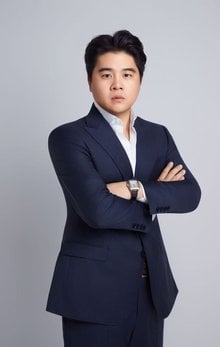
Peter Huang
Global President of Data Center and Thermal Management at Castrol