
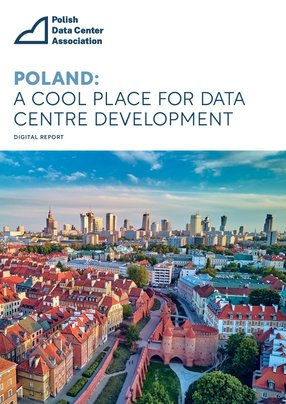
The European data centre market faces mounting pressure from AI workloads, renewable energy requirements and land constraints in traditional hubs.
FLAP-D markets in particular (Frankfurt, London, Amsterdam, Paris and Dublin) have encountered a range of grid capacity limitations and planning restrictions as demand continues to rise. These constraints have led to operators now being pushed to consider alternative locations for large-scale developments.
It is against this backdrop that Poland is emerging as a strong presence in the European data centre market. With the country’s ongoing investments in grid development, alongside its rapid renewable energy transition and its ability to support digital infrastructure, it is attracting both regional and international data centre operators.
“We see Poland as a contender for Tier 2 market status, allowing European data centre capacity expansion outside of the FLAP-D region and serving as a gateway to Central and Eastern Europe,” says Piotr Kowalski, Managing Director of the Polish Data Centre Association (PLDCA).
Wojciech Stramski, Beyond.pl CEO, adds: “When it comes to AI training, the mainland Europe position of Poland allows it to serve the whole continent within the required latency range.”
Prioritising sustainability and opportunity
To support such growth, the PLDCA was founded in May 2023 by five major colocation operators. The organisation represents companies across the data centre value chain, from site acquisition through design engineering, general contractors, MEP system integrators, equipment vendors, commissioning agents and facility management providers.
The mission of the association is to ultimately become a go-to representative of the Polish data centre industry, whilst also acting as a driving force behind the sustainable growth of the industry within Poland.
On this, Piotr says: “The mission of PLDCA has quickly been recognised and supported by various data centre industry stakeholders, both national and international. As of February 2025, PLDCA consists of 45 companies representing a full range of data centre value chain.
Sławomir Koszołko, Atman CEO, adds: “The diverse expertise of our partners allows the Association to identify and tackle the strategic aspects of market growth and be recognised by the policy makers and other industry stakeholders as a go-to body when it comes to data centre related topics.”
Having established its position, PLDCA has been working closely with the Ministry of Digital Affairs, the Ministry of Climate and Energy as well as other stakeholders involved in the legislative process affecting the industry across Poland.
For instance, national High Voltage grid operator, PSE, has incorporated data centre growth into its infrastructure planning and has allocated capacity for 1200MW of data centre development by 2034.
Already, PLDCA has supported public consultations of the country’s 2035 Digitalisation Strategy led by the Ministry of Digital Affairs as well as the updated National Plan for Energy and Climate led by the Ministry of Climate and Environment, where the association advocated for grid decarbonisation and the wide utilisation of waste heat recovery from data centres.
For Piotr, the association will continue to champion Polish data centre growth.
“The next initiative we're currently discussing is focused around expedited planning and permitting procedures for data centres,” he shares. “There’s been a special, streamlined pathway approved by the government for the purpose of developing the National Data Centres (KCPD) project. Having a standard process approved for the wide data centre industry would expedite the country's digitalisation and attract international investors.”
With this level of support, Poland is maintaining growth within the EU, which is supported by a highly-skilled workforce across the technology sector. Technical expertise, alongside competitive salary structures, provides a range of operational advantages for data centre operators.
PLDCA is also focused on educating the public about the data centre industry to present its long-term potential for career building and attracting further talent.
Cooperation with the Combined Heat & Energy sector and establishing data centres at the heart of the modern energy ecosystem will present opportunities for qualified engineering and operations staff to transition into the data centre industry. Here, they can use their mission-critical experience to streamline the adoption of large-scale waste heat recovery projects.
“Poland operates the second largest district heating network in Europe, which presents unique opportunities for exploiting the industry synergy, achieving improved data centre energy efficiency and optimum resource utilisation. On top of that, the decarbonisation process of combined heat&power plants releases new, attractive locations for data centre investments with direct access to high voltage grid connections and access to district heating systems.”
The European data centre market faces mounting pressure from AI workloads, renewable energy requirements and land constraints in traditional hubs.
FLAP-D markets in particular (Frankfurt, London, Amsterdam, Paris and Dublin) have encountered a range of grid capacity limitations and planning restrictions as demand continues to rise. These constraints have led to operators now being pushed to consider alternative locations for large-scale developments.
It is against this backdrop that Poland is emerging as a strong presence in the European data centre market. With the country’s ongoing investments in grid development, alongside its rapid renewable energy transition and its ability to support digital infrastructure, it is attracting both regional and international data centre operators.
“We see Poland as a contender for Tier 2 market status, allowing European data centre capacity expansion outside of the FLAP-D region and serving as a gateway to Central and Eastern Europe,” says Piotr Kowalski, Managing Director of the Polish Data Centre Association (PLDCA).
Wojciech Stramski, Beyond.pl CEO, adds: “When it comes to AI training, the mainland Europe position of Poland allows it to serve the whole continent within the required latency range.”
Prioritising sustainability and opportunity
To support such growth, the PLDCA was founded in May 2023 by five major colocation operators. The organisation represents companies across the data centre value chain, from site acquisition through design engineering, general contractors, MEP system integrators, equipment vendors, commissioning agents and facility management providers.
The mission of the association is to ultimately become a go-to representative of the Polish data centre industry, whilst also acting as a driving force behind the sustainable growth of the industry within Poland.
On this, Piotr says: “The mission of PLDCA has quickly been recognised and supported by various data centre industry stakeholders, both national and international. As of February 2025, PLDCA consists of 45 companies representing a full range of data centre value chain.
Sławomir Koszołko, Atman CEO, adds: “The diverse expertise of our partners allows the Association to identify and tackle the strategic aspects of market growth and be recognised by the policy makers and other industry stakeholders as a go-to body when it comes to data centre related topics.”
Having established its position, PLDCA has been working closely with the Ministry of Digital Affairs, the Ministry of Climate and Energy as well as other stakeholders involved in the legislative process affecting the industry across Poland.
For instance, national High Voltage grid operator, PSE, has incorporated data centre growth into its infrastructure planning and has allocated capacity for 1200MW of data centre development by 2034.
Already, PLDCA has supported public consultations of the country’s 2035 Digitalisation Strategy led by the Ministry of Digital Affairs as well as the updated National Plan for Energy and Climate led by the Ministry of Climate and Environment, where the association advocated for grid decarbonisation and the wide utilisation of waste heat recovery from data centres.
For Piotr, the association will continue to champion Polish data centre growth.
“The next initiative we're currently discussing is focused around expedited planning and permitting procedures for data centres,” he shares. “There’s been a special, streamlined pathway approved by the government for the purpose of developing the National Data Centres (KCPD) project. Having a standard process approved for the wide data centre industry would expedite the country's digitalisation and attract international investors.”
With this level of support, Poland is maintaining growth within the EU, which is supported by a highly-skilled workforce across the technology sector. Technical expertise, alongside competitive salary structures, provides a range of operational advantages for data centre operators.
PLDCA is also focused on educating the public about the data centre industry to present its long-term potential for career building and attracting further talent.
Cooperation with the Combined Heat & Energy sector and establishing data centres at the heart of the modern energy ecosystem will present opportunities for qualified engineering and operations staff to transition into the data centre industry. Here, they can use their mission-critical experience to streamline the adoption of large-scale waste heat recovery projects.
“Poland operates the second largest district heating network in Europe, which presents unique opportunities for exploiting the industry synergy, achieving improved data centre energy efficiency and optimum resource utilisation. On top of that, the decarbonisation process of combined heat&power plants releases new, attractive locations for data centre investments with direct access to high voltage grid connections and access to district heating systems.”
A strategic edge
Poland’s market expansion comes as hyperscale data centre companies seek locations that can accommodate high-density AI workloads while meeting environmental commitments.
The data centre market in Poland has reached 180MW of live capacity and has maintained a compound annual growth rate of 19.8% since 2020. Hyperscalers like Google Cloud, AWS and Microsoft Azure have established their presence in Poland since the COVID-19 pandemic, including Microsoft’s own built data centre campus in Warsaw. The company has further strengthened their commitment to the region with its February 2025 announcement of a €720 million (US$753.96m) investment to develop data centre infrastructure in Poland.
PLDCA’s market analytics partners project data centre capacity will reach 500MW by 2030 and 1200MW by 2034, positioning Poland as a strong European Tier 2 location.
“The market has experienced explosive growth in recent years, having quickly developed from telco and retail colocation to a strong European Tier 2 market contender,” Piotr explains. “When combined with the passion and skills demonstrated by the companies associated with PLDCA, it’s a truly inspiring initiative to lead. Our ambition for proving the market worth to the data centre community is very strong.”
The market divides between local operators including Atman, Beyond.pl, 3S / Play and Polcom, alongside international providers such as Data4 Group, Equinix, EdgeConneX, Vantage Data Centers, T-Mobile and Orange.
Currently, the city of Warsaw hosts 80% of the country's data centre capacity, with Poznan and Krakow emerging as secondary locations.
Development projects of PLDCA members include Atman's WAW-3 facility in Warsaw (720mEUR), Data4 Group's Warsaw development (500mEUR) and Beyond.pl's 150MW AI-Ready Campus in Poznan.
Supporting the energy transition
While investing in renewable energy infrastructure, Poland has successfully been growing its data centre industry. PLDCA is also eager to challenge the world’s perception of the country as coal-based and unsustainable.
“It takes a few years to develop a large scale data centre campus from site acquisition, through permitting and construction process till Ready For Service stage,” he notes. “So for an investor considering new locations for its data centre campus, a forward looking perspective is more appropriate.”
Poland continues on its steep pathway towards decarbonisation, aiming at 50% lower CO2 emissions vs. 2023 by 2030 with 72% green energy, including natural gas. The country rapidly moves away from coal-based generation and is instead investing in renewables like PV and wind power, including the development of off-shore wind farms in the Baltic Sea.
“The power generation potential of the Polish Baltic Sea shoreline is estimated at 33GW, one of the biggest in Europe, which when fully utilised could cover approximately 50% of total power demand in the country. The investments in progress aim at delivering 6GW capacity by 2030 and total of 18GW by 2040.” Piotr adds “Energy generation systems require a fine balance between the emissions profile and power availability – securing the base load demand in periods of limited sun and wind exposure. For base-load security, the country is investing in natural gas as well as nuclear power generation, with the country's strategic goal to reduce CO2 emission of energy systems by 98% till 2040.”
Nuclear power, with 93% public support (based on the latest survey from the Ministry of Industrialization) forms a strategic part of the country's decarbonisation pathway. The nuclear power development pipeline includes 6-9GW power plant in the North of Poland, with a €15 billion (US$15.7bn) budget having recently been approved by the government, in addition to a second location being discussed in the centre of Poland and a fleet of 24no. BWRX-300 small modular reactors scattered across the country.
“What we’re also highlighting is that location choice should not be single dimensional, emissions-centric only, as data centres are a complex power and thermal management ecosystem,” Piotr shares. “For example, countries that benefit from the frequent sun exposure, like the south of Europe, suffer from significantly higher ambient temperature profiles, increasing the PUE and overall energy consumption of data centres. That same high ambient temperature profile is limiting the heat reuse opportunities.”
He adds: “When looking at the big picture, Poland offers a competitive mix of new, low emissions energy generation and power transmission assets, great PUE – stemming from the lowest annual average ambient temperature in Europe outside of the Nordics – and huge heat-reuse opportunities with the second largest district heating network in Europe.
“The demand for green data centres aligns with the country’s strategic direction for energy and digital transformation, creating a perfect storm for sustainable growth.”
Future-proofing European data centres
PLDCA is advocating for expedited planning and permitting procedures for data centres, similar to processes approved for the National Data Centres (KCPD) project. The association is also collaborating with organisations like Forum Energii, an independent Polish think tank, to facilitate workshops between data centre operators and energy (heat & power) utilities.
“The mission of the association allows companies to think strategically towards the overall benefit of the market, with their individual companies leveraging from the growth,” Piotr shares.
Like the rest of the world, the development of AI-specific infrastructure has emerged as a focus area for Polish data centres. For instance, site selection for AI facilities prioritises access to high-voltage grid connections, low-emission power generation, competitive electricity costs and heat reuse opportunities.
“Having great engineering Partners in the association, both international design power-houses as well as strong local experts, allows PLDCA to identify and promote cutting edge technologies benefiting from the AI revolution,” Piotr explains.
“PLDCA collaborates with the Ministry of Digitalisation to support and facilitate the development of AI Factories in Poland as well as ensuring the clarity and focus for required infrastructure development in the ‘2035 Digitalisation Strategy for Poland’ document, which is currently being developed.”
Additionally, cybersecurity is a significant priority for Poland, with the Polish Ministry of Digitalisation working closely with the PLDCA to identify and implement the necessary steps to ensure full security of Polish data centre assets, which is especially critical when considering the context of the Russia-Ukraine conflict and EU-related cyber threats.
“We are also highlighting the importance of combined public-private efforts to meet the scale and pace of the emerging AI revolution,” Piotr adds.
To support Poland further on its digital transformation journey, the PLDCA has launched the Gateway Poland conference, with its first edition scheduled for 8th April 2025. This event will be to facilitate dialogue between industry stakeholders, policy makers and business representatives.
“What we’ve noticed is that from the outsider perspective Poland is often perceived through the lens of high CO2 emissions of its electricity generation system,” Piotr says. “As much as it has been true historically, this fact may lead to false conclusions when considering medium and long-term data centre investments.” says Piotr.
“Poland is a cool place for data centres and we hope to have as many people as possible to leverage the country's potential to meet the growing infrastructure needs of digital Europe.”
Explore the latest edition of Data Centre Magazine and be part of the conversation at our global conference series, Tech & AI LIVE.
Discover all our upcoming events and secure your tickets today.
Subscribe to our Weekly Newsletter for the latest insights, trends and expert analysis.
Data Centre Magazine is a BizClik brand
Company portals

Executives

Piotr Kowalski
Managing Director, Polish Data Centre Association