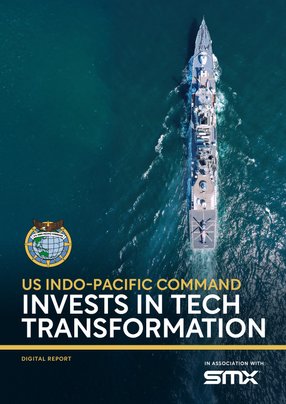
The vast expanse of the Indo-Pacific region, described as the “epicenter of 21st-century geopolitics”, serves as the operational backdrop for the United States Indo-Pacific Command (INDOPACOM). Designated by the Department of Defense (DoD) as the “priority theater”, INDOPACOM oversees an area staggering in scale — encompassing roughly half the Earth’s surface, 38 nations, over half the world’s population and immense cultural and economic diversity. Within this vibrant yet volatile landscape, INDOPACOM’s core mission is clear: deter aggression, maintain regional stability, strengthen alliances, respond to crises and, if deterrence fails, be prepared to fight and win: a mission which hinges on partnership, presence and military readiness.
However, executing this mission faces extensive challenges. The region is marked by significant geopolitical competition, most notably the rise of the People’s Republic of China, identified by the DoD as the “most comprehensive and serious challenge” to US national security. Beyond China, threats from North Korea’s nuclear and missile programmes, transnational issues like terrorism and piracy and the long-term security risks posed by climate change further complicate the security environment.
As a result, INDOPACOM is undertaking an expansive technological modernisation programme deemed essential to maintain strategic advantages in a region characterised by intensifying geopolitical competition. The command’s initiatives focus on cybersecurity architecture, AI capabilities, human-machine teaming and integrated command systems that collectively represent a fundamental shift in military operational concepts.
Zero Trust architecture forms foundation for INDOPACOM cyber defence systems
The Indo-Pacific region has become the primary theatre for persistent cyber conflict, with state actors regularly conducting espionage operations, targeting critical infrastructure and attempting to disrupt defence networks. This shifting digital battleground has prompted INDOPACOM to rebuild its cybersecurity approach around Zero Trust architecture, moving beyond traditional perimeter defences that have proved inadequate in today’s distributed operational environment.
The US Department of Defense first released its Zero Trust Strategy and Roadmap in 2022, establishing a target for components to implement 91 specific activities by the end of Fiscal Year 2027. This framework operates on core principles of assuming networks are already compromised and requiring continuous verification of users and devices regardless of their location within the network.
Traditional security models, relying heavily on perimeter defences, are increasingly insufficient in today’s distributed, interconnected operational environment where adversaries may already be inside the network. Zero Trust represents a significant cultural shift, moving personnel away from ingrained habits of implicit trust towards a mindset of continuous verification and adherence to stricter security protocols.
The command is pioneering Zero Trust approaches through initiatives such as its International Mission Network (IMN), designed for secure data sharing with coalition partners. However, implementation faces challenges in establishing federated identity management solutions and standardising data classification across the enterprise.
The Department of the Navy, with significant forces under INDOPACOM, has aligned its own cyber strategy with this approach, leveraging cloud environments like Flank Speed to accelerate Zero Trust deployment. This proactive posture reflects the recognition of cyberspace as a contested warfighting domain and the need to deter and counter adversary actions effectively.
Beyond defensive architecture, INDOPACOM is integrating AI and machine learning into cyber defence strategies. These technologies analyse vast amounts of network traffic in real-time to detect anomalies and identify sophisticated threats that might evade traditional signature-based defences. The goal is to enable responses at machine speed, crucial for staying ahead of cyber threats.
The focus on cyber resilience — the ability of systems to withstand attacks, continue essential functions and recover quickly — has become a cornerstone of INDOPACOM’s approach. This involves integrating cybersecurity into mission assurance planning, hardening critical systems and developing rapid recovery capabilities.
AI systems enhance INDOPACOM decision-making capabilities
In an environment as data-saturated as the Indo-Pacific, processing information and making decisions faster than adversaries has become a strategic imperative. INDOPACOM Commander Admiral Samuel Paparo has stated that future conflicts will be won by those who can “see, understand, decide and act faster” — a recognition that has placed AI at the centre of the command’s technology strategy.
This approach aligns with the Department of Defense’s 2023 Data, Analytics and AI Adoption Strategy, which prioritises accelerating AI adoption to achieve “enduring decision advantage”. The strategy balances technological advancement with ethical considerations, emphasising responsible AI development and deployment.
AI applications within INDOPACOM span multiple operational domains. Intelligence analysis has been transformed through algorithms that sift through massive data streams from diverse sensors — satellites, drones, unmanned surface vessels, underwater vehicles and traditional platforms — identifying patterns and flagging potential threats in near real-time. Techniques like algorithm fusion and sensor-data fusion help reconcile potentially conflicting information from multiple sources to generate more comprehensive operational pictures.
Companies like Ultra Intelligence & Communications have deployed systems such as ADSI RAIN™ to help intelligence analysts identify difficult-to-detect activities. The system uses machine learning models to nominate events of interest within seconds, allowing human analysts to focus their expertise on verification and decision-making rather than raw data processing.
Decision support tools represent another growth area. The Defense Innovation Unit's Thunderforge programme uses AI agents and large language models for wargaming, simulating scenarios, and refining courses of action for commanders at INDOPACOM and European Command. Similarly, the Defense Information Systems Agency has experimentally deployed a generative AI chatbot on classified networks within INDOPACOM to explore how language models can assist commanders and staff.
Palantir Technologies has contributed to this ecosystem through experiments at the Shadow Operations Center — Nellis (ShOC-N) where its Maven Smart System and Maverick AI assist with dynamic targeting processes, incorporating inputs from coalition partners. These systems embody the “human-in-the-loop” framework, ensuring human oversight while benefiting from machine processing speed.
Perhaps the most visible application is in autonomous systems proliferation. AI-powered drones, unmanned surface vessels, and underwater vehicles are increasingly deployed for intelligence, surveillance and reconnaissance, extending sensor coverage in contested areas where manned platforms would face unacceptable risk. These systems often provide value through their lower cost and potential attritability, allowing for deployment in greater numbers.
ERM version 4 maintenance system aboard USS Fitzgerald demonstrates predictive capabilities
Maintenance operations across INDOPACOM are being transformed through AI-enabled predictive systems. By analysing sensor data collected from shipboard systems, aircraft components and other equipment, algorithms can identify subtle patterns indicating potential failures before they become critical problems.
The USS Fitzgerald (DDG-62) serves as a prime example with its Enterprise Remote Monitoring Version 4 (ERM v4) system. This technology analyses thousands of sensor readings per second from hull, mechanical and electrical systems, providing maintenance recommendations directly into the ship’s planning system.
This condition-based approach moves beyond traditional interval-based maintenance, reducing unexpected equipment casualties, creating less disruptive maintenance scheduling, optimising logistics through predicting parts needs in advance and ultimately increasing operational availability and readiness of platforms.
The result is increased operational availability and readiness of platforms — a critical factor for maintaining credible deterrence in the Pacific.
The maintenance transformation extends beyond surface vessels to aircraft and land-based systems. The Naval Air Systems Command has implemented similar predictive capabilities for F/A-18 Super Hornets and P-8 Poseidon maritime patrol aircraft operating in the INDOPACOM area of responsibility. These aircraft generate terabytes of performance data during each mission, which is then processed to identify maintenance requirements before traditional inspection schedules would detect them.
The vast expanse of the Indo-Pacific region, described as the “epicenter of 21st-century geopolitics”, serves as the operational backdrop for the United States Indo-Pacific Command (INDOPACOM). Designated by the Department of Defense (DoD) as the “priority theater”, INDOPACOM oversees an area staggering in scale — encompassing roughly half the Earth’s surface, 38 nations, over half the world’s population and immense cultural and economic diversity. Within this vibrant yet volatile landscape, INDOPACOM’s core mission is clear: deter aggression, maintain regional stability, strengthen alliances, respond to crises and, if deterrence fails, be prepared to fight and win: a mission which hinges on partnership, presence and military readiness.
However, executing this mission faces extensive challenges. The region is marked by significant geopolitical competition, most notably the rise of the People’s Republic of China, identified by the DoD as the “most comprehensive and serious challenge” to US national security. Beyond China, threats from North Korea’s nuclear and missile programmes, transnational issues like terrorism and piracy and the long-term security risks posed by climate change further complicate the security environment.
As a result, INDOPACOM is undertaking an expansive technological modernisation programme deemed essential to maintain strategic advantages in a region characterised by intensifying geopolitical competition. The command’s initiatives focus on cybersecurity architecture, AI capabilities, human-machine teaming and integrated command systems that collectively represent a fundamental shift in military operational concepts.
Zero Trust architecture forms foundation for INDOPACOM cyber defence systems
The Indo-Pacific region has become the primary theatre for persistent cyber conflict, with state actors regularly conducting espionage operations, targeting critical infrastructure and attempting to disrupt defence networks. This shifting digital battleground has prompted INDOPACOM to rebuild its cybersecurity approach around Zero Trust architecture, moving beyond traditional perimeter defences that have proved inadequate in today’s distributed operational environment.
The US Department of Defense first released its Zero Trust Strategy and Roadmap in 2022, establishing a target for components to implement 91 specific activities by the end of Fiscal Year 2027. This framework operates on core principles of assuming networks are already compromised and requiring continuous verification of users and devices regardless of their location within the network.
Traditional security models, relying heavily on perimeter defences, are increasingly insufficient in today’s distributed, interconnected operational environment where adversaries may already be inside the network. Zero Trust represents a significant cultural shift, moving personnel away from ingrained habits of implicit trust towards a mindset of continuous verification and adherence to stricter security protocols.
The command is pioneering Zero Trust approaches through initiatives such as its International Mission Network (IMN), designed for secure data sharing with coalition partners. However, implementation faces challenges in establishing federated identity management solutions and standardising data classification across the enterprise.
The Department of the Navy, with significant forces under INDOPACOM, has aligned its own cyber strategy with this approach, leveraging cloud environments like Flank Speed to accelerate Zero Trust deployment. This proactive posture reflects the recognition of cyberspace as a contested warfighting domain and the need to deter and counter adversary actions effectively.
Beyond defensive architecture, INDOPACOM is integrating AI and machine learning into cyber defence strategies. These technologies analyse vast amounts of network traffic in real-time to detect anomalies and identify sophisticated threats that might evade traditional signature-based defences. The goal is to enable responses at machine speed, crucial for staying ahead of cyber threats.
The focus on cyber resilience — the ability of systems to withstand attacks, continue essential functions and recover quickly — has become a cornerstone of INDOPACOM’s approach. This involves integrating cybersecurity into mission assurance planning, hardening critical systems and developing rapid recovery capabilities.
AI systems enhance INDOPACOM decision-making capabilities
In an environment as data-saturated as the Indo-Pacific, processing information and making decisions faster than adversaries has become a strategic imperative. INDOPACOM Commander Admiral Samuel Paparo has stated that future conflicts will be won by those who can “see, understand, decide and act faster” — a recognition that has placed AI at the centre of the command’s technology strategy.
This approach aligns with the Department of Defense’s 2023 Data, Analytics and AI Adoption Strategy, which prioritises accelerating AI adoption to achieve “enduring decision advantage”. The strategy balances technological advancement with ethical considerations, emphasising responsible AI development and deployment.
AI applications within INDOPACOM span multiple operational domains. Intelligence analysis has been transformed through algorithms that sift through massive data streams from diverse sensors — satellites, drones, unmanned surface vessels, underwater vehicles and traditional platforms — identifying patterns and flagging potential threats in near real-time. Techniques like algorithm fusion and sensor-data fusion help reconcile potentially conflicting information from multiple sources to generate more comprehensive operational pictures.
Companies like Ultra Intelligence & Communications have deployed systems such as ADSI RAIN™ to help intelligence analysts identify difficult-to-detect activities. The system uses machine learning models to nominate events of interest within seconds, allowing human analysts to focus their expertise on verification and decision-making rather than raw data processing.
Decision support tools represent another growth area. The Defense Innovation Unit's Thunderforge programme uses AI agents and large language models for wargaming, simulating scenarios, and refining courses of action for commanders at INDOPACOM and European Command. Similarly, the Defense Information Systems Agency has experimentally deployed a generative AI chatbot on classified networks within INDOPACOM to explore how language models can assist commanders and staff.
Palantir Technologies has contributed to this ecosystem through experiments at the Shadow Operations Center — Nellis (ShOC-N) where its Maven Smart System and Maverick AI assist with dynamic targeting processes, incorporating inputs from coalition partners. These systems embody the “human-in-the-loop” framework, ensuring human oversight while benefiting from machine processing speed.
Perhaps the most visible application is in autonomous systems proliferation. AI-powered drones, unmanned surface vessels, and underwater vehicles are increasingly deployed for intelligence, surveillance and reconnaissance, extending sensor coverage in contested areas where manned platforms would face unacceptable risk. These systems often provide value through their lower cost and potential attritability, allowing for deployment in greater numbers.
ERM version 4 maintenance system aboard USS Fitzgerald demonstrates predictive capabilities
Maintenance operations across INDOPACOM are being transformed through AI-enabled predictive systems. By analysing sensor data collected from shipboard systems, aircraft components and other equipment, algorithms can identify subtle patterns indicating potential failures before they become critical problems.
The USS Fitzgerald (DDG-62) serves as a prime example with its Enterprise Remote Monitoring Version 4 (ERM v4) system. This technology analyses thousands of sensor readings per second from hull, mechanical and electrical systems, providing maintenance recommendations directly into the ship’s planning system.
This condition-based approach moves beyond traditional interval-based maintenance, reducing unexpected equipment casualties, creating less disruptive maintenance scheduling, optimising logistics through predicting parts needs in advance and ultimately increasing operational availability and readiness of platforms.
The result is increased operational availability and readiness of platforms — a critical factor for maintaining credible deterrence in the Pacific.
The maintenance transformation extends beyond surface vessels to aircraft and land-based systems. The Naval Air Systems Command has implemented similar predictive capabilities for F/A-18 Super Hornets and P-8 Poseidon maritime patrol aircraft operating in the INDOPACOM area of responsibility. These aircraft generate terabytes of performance data during each mission, which is then processed to identify maintenance requirements before traditional inspection schedules would detect them.
Project Overmatch and Talisman Sabre exercises test network interoperability solutions
The advanced capabilities being pursued by INDOPACOM cannot function in isolation. Their potential is unlocked only when effectively networked across domains, services and coalition partners — integration that forms the core objective of the Department of Defense’s Joint All-Domain Command and Control (JADC2) concept.
JADC2 aims to connect “any sensor to any shooter,” empowering commanders to sense the battlespace, process information and act decisively across all domains at relevant speed. The strategy focuses on establishing common data standards, resilient technical infrastructure, human enterprise adaptation, integration with nuclear command and control, and modernising information sharing with mission partners.
Project Overmatch represents the Navy’s primary contribution to this framework. It focuses on building resilient communications networks and digital ecosystems needed to support Distributed Maritime Operations and provide decision advantage to a hybrid fleet of manned and unmanned platforms. Given INDOPACOM’s vast distances, reliance on naval forces and the need to counter sophisticated adversaries, successful implementation of Project Overmatch is considered vital for the theatre.
Project Overmatch represents a fundamental shift towards a “system-of-systems” perspective, where the network itself, and the integrated capabilities it enables, become more important than any single platform.
Integral to both JADC2 and INDOPACOM’s strategy is the seamless integration of allies and partners. The command has established formal Project Arrangements with Five Eyes partners (Australia, Canada, New Zealand and the United Kingdom), allowing personnel to embed directly within the Overmatch team to accelerate interoperable technology development.
Major multinational exercises serve as proving grounds for these integration efforts. Events like the Rim of the Pacific Exercise (RIMPAC), Valiant Shield, Talisman Sabre and Northern Edge bring together joint US forces and numerous allied nations. These exercises test and validate new technologies — including AI algorithms, unmanned systems, JADC2 components and human-machine interfaces — in realistic operational settings.
During Talisman Sabre 23, over 500 personnel across domains were equipped with wearable devices like smartwatches, using algorithms to monitor and predict risks such as heat stress, fatigue and illness. This Wearables Pilot Program demonstrated how individual health data could provide a “check engine light” for personnel wellbeing and inform leadership decisions about unit readiness.
Despite the drive towards automation and AI, these initiatives demonstrate that human operators remain central to INDOPACOM’s technology strategy. Technology is being developed primarily to augment human capabilities — improving decision speed, enhancing situational awareness, making training more effective and monitoring wellbeing — rather than seeking full replacement in complex operational environments.
As INDOPACOM continues its technological transformation, the command faces significant implementation challenges. Integrating complex technologies across legacy systems and diverse platforms presents technical difficulties. Ensuring robust security against determined adversaries remains a constant requirement. Cultural adaptation within the force to embrace new technologies requires persistent effort. Moreover, maintaining pace with rapid commercial technological advancements and securing sustained funding and skilled personnel are enduring requirements.
The scale of investment reflects recognition that technological advantage has become inseparable from military effectiveness in the Indo-Pacific region. For defence companies and technology firms, this transformation represents substantial business opportunities in cybersecurity architecture, AI applications, autonomous systems and network integration solutions that will continue to shape military priorities for years to come.
Explore the latest edition of Data Centre Magazine and be part of the conversation at our global conference series, Tech & AI LIVE.
Discover all our upcoming events and secure your tickets today.
Subscribe to our Weekly Newsletter for the latest insights, trends and expert analysis.
Data Centre Magazine is a BizClik brand