Clean Energy Capital & IBM's Data Centre Solar Partnership
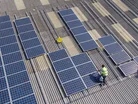
IBM may soon connect a solar farm directly to its Hursley data centre in the UK, as part of the company's decarbonisation strategy.
Clean Energy Capital has submitted a planning application for a solar development approximately 500 metres from the IBM Hursley site in south-east England.
The proposed facility “would generate almost five million kWh of energy annually, saving the equivalent of around 46,000 tonnes of CO₂ or planting circa 60,000 trees over the scheme's lifetime,” according to Clean Energy Capital.
The company shares: “We have submitted a planning application seeking permission for a solar development for a time limited 40-year term on land at Home Farm, around 500 metres from the IBM Hursley site.
“The energy produced would directly power the IBM Hursley site, including IncuHive and the Hursley Sport and Social Club, providing further local benefits.”
Adopting a strong approach to sustainability
The application includes landscape buffers between adjacent woodlands and proposes additional screening to filter views of the site.
The Hursley research and development laboratory has been operational since 1958 and is housed in an 18th-century Queen Anne-style mansion. It has been the home of numerous IBM software technologies, including the Customer Information Control System (CICS), which became the first Hursley product to generate annual revenue exceeding US$1bn. CICS technology is now used in ATMs worldwide, as the lab continues to have a strong impact on everyday technology.
In recent years, IBM Hursley has shifted focus towards corporate sustainability, aligning with IBM's commitment to achieve net zero greenhouse gas emissions by 2030.
“The IBM Hursley Data Centre is already making remarkable strides towards carbon neutrality by implementing practices like removing redundant infrastructure, adopting innovative cooling systems and leveraging AI to optimise performance,” Colin Holyoake, Data Centre Design and Sustainability Manager at IBM, explains.
“The approach has been holistic and systematic. Reevaluating existing infrastructure is crucial and the industry should prioritise operational efficiency over constructing new buildings.”
Confronting data centre energy consumption
This news comes as data centres continue to consume substantial energy resources, with the International Energy Agency (IEA) estimating global data centre electricity consumption in 2022 was between 240TWh and 340TWh, approximately 1% to 1.3% of global electricity demand.

The IEA now reports data centres consume between 2% and 3% of the world's electricity, a significant increase from previous assessments.
Industry research also suggests emissions from in-house data centres operated by Google, Microsoft, Meta and Apple may be more than seven times higher than official figures, raising concerns about the industry's environmental impact.
IBM operates approximately 60 data centres around the world and has committed to procuring 75% of its global electricity consumption from renewable sources by the end of 2025, increasing to 90% by 2030.
The company made its first renewable electricity purchase in 2001 and continues to expand its sustainable energy portfolio.
“I am proud that IBM is leading the way by taking actions to significantly reduce emissions.”
“The climate crisis is one of the most pressing issues of our time,” shares Arvind Krishna, Chairman and CEO of IBM. “IBM's net zero pledge is a bold step forward that strengthens our long-standing climate leadership and positions our company years ahead of the targets set out in the Paris Climate Agreement.”
In 2023, nearly 75% of electricity consumed in IBM data centres came from renewable sources, compared to 66% in 2022. Likewise, 28 data centres were supplied with 100% renewable electricity last year.
IBM shares: “Even though we strive to do so one day, it is not possible today or in the foreseeable future for IBM to actually consume 100% of electricity from renewable sources given our physical presence in more than 100 countries along with the need for uninterrupted power, which is usually only made possible today by the use of fossil fuel and nuclear generation sources.”
Explore the latest edition of Data Centre Magazine and be part of the conversation at our global conference series, Tech & AI LIVE and Data Centre LIVE.
Discover all our upcoming events and secure your tickets today.
Data Centre Magazine is a BizClik brand