Rio AI City: Elea Data Centers’ 3.2GW Renewable Pledge
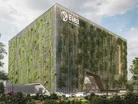
Rio AI City is proposed to have an initial energy capacity of 1.5GW, with the first delivery starting in 2026.
The development is a critical part of Rio de Janeiro City Hall’s innovation and urban revitalisation project and will be supplied with 100% renewable and certified energy. It will also operate with waterless systems – a necessity, given recent demands of AI in the global data centre industry.
Elea Data Centers, one of the leading sustainable infrastructure providers, is responsible for the project and has announced up to 3.2GW of energy capacity in the country to support the accelerated growth of AI and cloud computing systems.
“We see Brazil and Rio de Janeiro positioning themselves at the global epicentre of digital transformation.”
The company currently has the most extensive geographic distribution in Brazil and hopes to support Rio AI City in becoming an epicentre of connectivity, energy and strategic logistics for the data centre sector.
“We are talking about a data centre city designed for the future, creating an ecosystem between community, sustainability and technological innovation,” says Alessandro Lombardi, President and Founder of Elea Data Centers. “Rio AI City is born with energy available and connectivity and it is a project capable of attracting the brains that will design the world to come.
“We see Brazil and Rio de Janeiro positioning themselves at the global epicentre of digital transformation.”
Creating a competitive edge with sustainable strategy
The initiative will involve several billion dollars, making it one of the largest digital infrastructure initiatives in Latin America (LATAM) and the world.
Crucially, it will prioritise efficiency and sustainability, using waterless cooling systems, as part of Rio’s revitalisation plans.
Waterless cooling systems have been discussed somewhat in the data centre industry, but are now gaining even more traction given the urgent need for sustainability. Now more than ever, operators are concerned that rising technology demand is leading to negative environmental consequences.
- Initial energy capacity of 1.5 GW dedicated to AI and cloud workloads, potentially expanding up to 3.2 GW
- Operational from day one: It stands as the most interconnected site in the Rio de Janeiro region
- A certified Tier 3, world-class facility
- 100% renewable energy
- Uses waterless cooling systems and green skin design
- Strategic location, connected to the submarine cable hub
Microsoft is one example of a company that has planned for zero water cooling systems, with its design eliminating water evaporation for cooling purposes through implementing chip-level cooling solutions. The design is expected to reduce water consumption by 125 million litres per year per data centre facility.
The first phase of Rio AI City, which already includes the operation of the RJO1 data centre, is now in the construction phase of the RJO2 site, which will begin delivering capacity of approximately 80 MW in 2026.
This will subsequently be followed by the RJO3 and RJO4 sites being delivered, which will add another 120MW. Elea says expansions will continue until it reaches an additional 1.3GW, with the potential to reach up to 3.2GW in future phases.
According to Elea, the project has been designed based on the highest sustainability standards, with infrastructure for high-density racks and green skin architecture, which combines energy efficiency, design, construction and sustainable operations.
The model also aligns with the principles of community support, sustainability and urban revitalisation as advocated for by the city of Rio de Janeiro.

Alessandro adds: “The digital transformation requires a solid, sustainable infrastructure connected to the city. Rio AI City represents Elea’s commitment to the innovation ecosystem, and reinforces the role of Rio as one of the global capitals of AI and the new digital economy.”
How Rio AI City could change the LATAM data centre industry
Launching Rio AI City comes at a pivotal moment for Brazil, as it continues to experience rapid technological progress.
The city of Rio de Janeiro is home to the country’s second-largest GDP and boasts a range of popular initiatives such as Porto Maravalley, Latin America’s new technology education hub.
In 2023, Brazil was leading data centre investments in LATAM and accounted for around 40% of the region’s total investment.
As the LATAM data centre industry expands, São Paulo is currently one of the leading locations, particularly as it benefits from access to 10 of the main submarine cable routes connecting South America. As a result, the Brazilian market has significantly increased, with international operators like Equinix, Microsoft and OData leading in the area.
Eager to generate economic value for the city, Rio AI City is anticipated to create more than 10,000 jobs and billions of dollars in direct and indirect investments. It also hopes to advance digital inclusion and attract a broad range of technology and innovation companies.
Inspired by Rio’s history and beauty, the public-private venture will also reforest and revitalise more than 200,000 square metres, including a digital zone dedicated to green technology.
The initiative is institutionally supported by the Rio de Janeiro City Hall.
“Rio is consolidating its position as the capital of the new economy,” says Eduardo Paes, mayor of Rio de Janeiro. “Projects like Rio AI City show we are ready to lead the digital revolution with sustainability, inclusion, and innovation.
“This initiative reinforces our commitment to transforming Rio into a major global technology hub, attracting investment, generating quality jobs and connecting our city to the future.”
Explore the latest edition of Data Centre Magazine and be part of the conversation at our global conference series, Tech & AI LIVE.
Discover all our upcoming events and secure your tickets today.
Subscribe to our Weekly Newsletter for the latest insights, trends and expert analysis.
Data Centre Magazine is a BizClik brand