


Peter Huang: From Engineering to Liquid Cooling's Frontline

Peter Huang: From Engineering to Liquid Cooling's Frontline
Peter Huang, Global President of Data Center and Thermal Management at Castrol, did not intentionally set out to work in data centres. Graduating with a degree in electrical engineering from a US university at a time when classmates were gravitating towards semiconductors and software, he ended up in power and cooling – the mechanical side of the discipline – largely by circumstance.
"Back in the day when I was graduating, everyone wanted to go into semiconductors or software engineering," he says. "My grades weren't good enough, so I went into power and cooling." He would later add a master's degree in business and attend law school, stopping short of sitting the bar exam but acquiring enough grounding in legal concepts to navigate complex contracts in a commercial role. The combination was intentional. "I always wanted to move into more of a business development type of role," he explains, "which is why I pursued the business master's and law school."
That trajectory led him to Schneider Electric, where he built relationships with data centre customers and colocation operators across emerging markets in Asia. When those clients began pushing to increase capacity and improve efficiency, the path forward became clear. "A lot of data centre customers and colocation operators were already my customers," Peter says. "From there, it was a very natural progression into this industry."
Building something from scratch
Peter now leads Castrol's data centre and thermal management division globally – a unit focused on immersion and liquid cooling fluids as the industry grapples with the heat demands of AI-driven infrastructure. It is, in his opinion, a zero-to-one problem: building a credible business in a market where the company is still establishing itself. "I always tell the team: one to 100 is easy, but zero to one is the hardest," he says.
He draws on prior experience to make the point. Among the achievements he considers most significant in his career is stewarding a spin-off within a large organisation over seven to eight years – turning it cash-positive, doubling both revenue and EBITDA, and rationalising the portfolio by divesting assets that were not delivering returns. "I was able to turn the spin-off entity cash-positive," he says. "I was able to grow both revenue and EBITDA together – doubling them. We were able to diversify our portfolio and sell off some of the assets that weren't generating returns."
The experience has shaped how he approaches Castrol's current push. The company is positioning its fluids portfolio – including single-phase and two-phase immersion cooling products – as a response to the power density challenges that conventional air cooling can no longer adequately address. For Peter, the commercial and operational complexity of that task is familiar territory.
Patience, process and staying hungry
Away from the office, Peter's approach to his own development is characteristically methodical. He spent years as a boxer and played football and basketball, but as he has got older, he has shifted towards individual sports. Golf, specifically, has become a regular fixture – and something of a framework for how he thinks about work.
"I feel like golf is like life," he says. "You hit a bad shot, you have to take it – it is what it is. You have to suck it up and deal with that shot. It teaches you patience, it teaches you not to micromanage things, not to force things. Sometimes you cannot control nature – if the wind is blowing one way, the ball is going to fly in that direction. Just like any market."
The other constant is a deliberate effort to keep learning – not within his field, but well outside it. "I try to learn different, random things. Really random things," Peter says. "I'll read something at the weekend and look it up, just trying to understand what it's about. You want to stay hungry and not become too comfortable with what you already have."
Company portals

Executives
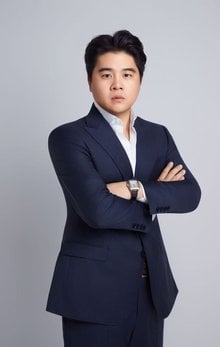
Peter Huang
Global President of Data Center and Thermal Management at Castrol