AI Is Scaling Faster Than Power: Now What?
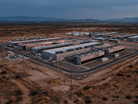
The data centre industry has spent the better part of a decade solving for scale. Hyperscale campuses and modular construction have made it possible to deploy capacity faster than ever before. But as AI workloads accelerate, a new constraint is emerging, one that cannot be solved with speed alone: power.
AI is fundamentally reshaping demand profiles. Higher rack densities, continuous processing, and always-on environments are placing sustained pressure on infrastructure originally designed for far more predictable workloads. At the same time, grid constraints and interconnection delays are limiting how quickly new capacity can come online. In many markets, this is creating a growing mismatch between how fast the industry can build and how reliably it can power what it builds.
Power is becoming the defining constraint
This is no longer a theoretical challenge. Across key markets, power availability is already dictating development timelines. Projects are being delayed not by land, capital, or demand, but by access to energy. Interconnection queues are stretching into years, and in some regions, capacity simply cannot be delivered at the pace required. The question is no longer “can we build it?” but “can we power it?” That shift is redefining what it means for a data centre project to be truly ready.
Traditional power models were not designed for this moment. Backup systems were built around rare outages and stable demand, functioning as insurance rather than active infrastructure. AI workloads disrupt that model entirely, operating at sustained, high-density loads with little tolerance for disruption. Power systems are no longer a safeguard. They are continuous performance enablers that directly influence uptime, efficiency, and long-term reliability.
Keeping data alive requires a new power model
As a result, power is no longer a background utility. It is mission-critical infrastructure, directly tied to uptime risk. Even minor fluctuations can have outsized consequences in AI environments, where interruptions can impact processing timelines, degrade service delivery, or compromise outputs. Keeping data alive is no longer about redundancy on paper. It is about how systems perform under constant pressure, where the margin for error is effectively eliminated.
Addressing this shift requires a fundamental rethink of how power infrastructure is designed and deployed. Static systems are giving way to more adaptive approaches that prioritise flexibility alongside capacity. Hybrid architectures that integrate generation and storage, along with systems capable of responding dynamically to changing load conditions, are becoming essential. Power can no longer be addressed late in the process or treated as a constraint to work around. It must be embedded from the outset as a core input into development strategy, a shift reflected in integrated energy approaches, including those developed at Rehlko.
Resilience and sustainability are now linked
At the same time, resilience and sustainability are now directly linked in meaningful ways. In always-on, high-density environments, sustainability without resilience is fragile by definition. An energy strategy that reduces emissions but cannot perform under sustained load, volatile grid conditions, or real-world disruption ultimately fails both operationally and environmentally. Resilience has become the foundation on which meaningful sustainability is built. Systems that cannot endure stress, adapt to variability, or operate reliably over time will not deliver lasting efficiency gains or credible emissions reductions. Downtime, inefficiency, and emergency interventions carry hidden environmental costs that erode the very benefits sustainability initiatives aim to achieve.

Conversely, energy systems designed with sustainability at their core, through higher efficiency, cleaner fuel pathways, and lifecycle-informed design, introduce new forms of resilience. They reduce reliance on constrained grids, increase operational flexibility, and enable more predictable performance in an increasingly uncertain energy landscape. In this context, sustainability is no longer a downstream consideration. It becomes a source of operational advantage. Transparency and lifecycle thinking are moving to the centre of infrastructure decision-making.
Power is now a strategic priority
For industry leaders, this shift elevates power from a technical consideration to a strategic one. It requires earlier planning, closer coordination across teams, and a willingness to rethink traditional development timelines. Power can no longer be addressed late in the process or treated as a constraint to work around. It must be embedded from the outset as a core input into development strategy.
AI is advancing faster than the infrastructure built to support it, and power has emerged as the defining constraint of this next phase of growth. In this environment, uptime is no longer guaranteed by redundancy alone. It depends on how effectively power is secured, integrated, and managed from the outset. The industry’s ability to scale will ultimately be defined not just by how quickly capacity is deployed, but by how reliably it can be sustained over time. In the age of AI, sustainability is no longer about intent alone… it is about endurance.
Francis Perrin is the Chief Brand and Sustainability Officer for Rehlko. He oversees all corporate communications and marketing to execute and create Rehlko's strategic brand strategy. Francis also leads sustainability and oversees the company's environmental and social impact to drive Rehlko's purpose forward.
Company portals

Executives
Francis Perrin
Chief Brand and Sustainability Officer