Allianz: Mitigating Sustainability Risks for Data Centres
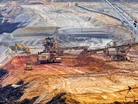
AI adoption and the transition into clean energy is accelerating, and the global mining industry is under unprecedented pressure to deliver the metals and minerals behind data centre capacity.
If mining cannot scale responsibly and quickly, data centre build timelines, costs and sustainability targets will feel the impact.
Allianz’s latest analysis, Mining for the future: Addressing liabilities and unlocking sustainable transition opportunities, explores how this impact could be mitigated.
Data centre materials
AI and high-performance computing are multiplying compute density and power draw, with the IEA projecting global data centre electricity demand to rise from roughly 415 TWh in 2024 to about 945 TWh by 2030.
Building that capacity depends on vast quantities of copper, aluminium, steel, rare earth elements and battery materials embedded across servers, power distribution, switchgear, cooling, UPS and onsite or grid-scale storage.
Opening new mines alone will not be enough; processing and refining capacity, transport infrastructure and a skilled workforce must scale in parallel to prevent sharp price spikes that ripple through build schedules and total cost of ownership.

A demand surge in critical materials
Electrification, renewables deployment and grid buildout, paired with AI-driven digital infrastructure, are reshaping the demand for data centre materials.
According to the IEA, lithium demand is set to increase fivefold by 2040; graphite and nickel are expected to double; cobalt and rare earth elements to rise by roughly 60%; and copper by about 30%.
Mineral extraction and processing have already expanded significantly in the 21st century as manufacturers race to secure inputs for high-performance compute.
“The green and digital transition won’t fail for lack of ambition – but it could stall for lack of materials,” says Ludovic Subran, Group Chief Investment Officer at Allianz.
“Our latest report, Mining for the future: Addressing liabilities and unlocking sustainable transition opportunities, looks at mining as both a critical enabler and a potential bottleneck.”
The reality of mining and sustainability
New mining projects take years to finance, permit and build, and they face ever tighter environmental and social requirements.
This lag, set against surging demand, heightens exposure to chokepoints in extraction and refining. Overdependence on a small number of countries for critical inputs elevates geopolitical, regulatory and community-related risks that can quickly translate into equipment shortages and cost escalation for data centres.
At the same time, sustainability liabilities are intensifying. Mining contributes an estimated 4-7% of global greenhouse gas emissions and is a significant driver of deforestation. Gold mining accounts for 41.7% of total mining-driven deforestation, followed by coal at 26.3%.
While the shift away from coal reduces some impacts, pressure is rising in regions extracting minerals for clean energy and digital supply chains.
Regional dependence and environmental costs
Supply is struggling to keep pace as projects contend with financing hurdles, permitting complexity and heightened community expectations.
Mineral depletion is increasing globally but is highly concentrated in specific geographies.
In resource-rich countries such as the Democratic Republic of Congo, Zambia and Mali, extraction dominates the economy but depletion levels are high, raising the risk of a resource trap if short-term gains give way to long-term sustainability and structural vulnerabilities.
Domestic environmental costs, from land degradation to air pollution and acidification, can be severe. Rwanda, for example, demonstrates a high ratio of environmental damage to economic gain driven by informal tantalum mining and low local value retention.
These dynamics underscore the importance of responsible sourcing and transparent value chains for data centre developers seeking to meet ESG commitments.
Diversifying supply and digitising operations
Building resilience across the transition requires aligning geological potential with political stability and strong sustainability performance.
In Europe, the Geological Service for Europe has mapped hard-rock deposits on the EU’s 2023 critical raw materials list, highlighting opportunities to diversify extraction, production and sourcing within and beyond the bloc.
The EU’s expanding network of strategic raw materials partnerships aims to pair diversification with stronger sustainability standards throughout the value chain.
Diversification, however, must avoid simply shifting reliance to other vulnerable regions or unsustainable operations. Mining itself is also digitising, as it adopts advanced monitoring and analytics to improve safety, intertwining the sector’s evolution with the data centre ecosystem.
What data centre leaders can do now
Data centre owners and operators can reduce exposure by mapping material dependencies across servers, powertrain components, cooling and storage, and by stress-testing build plans against supply, price and permitting risks.
Responsible sourcing should be embedded in procurement, specifying recognised schemes such as IRMA/ICMM for mines, the Copper Mark, Aluminium Stewardship Initiative, the Responsible Minerals Assurance Process for 3TG and emerging battery passports.
For IT hardware, requiring EPEAT or TCO and supplier minerals due diligence can strengthen assurance.
Diversification strategies, spanning multi-region suppliers, recycled-content requirements and selective long-term agreements with miners, refiners and recyclers can improve resilience.
Designing for circularity by extending server lifecycles where feasible, standardising for refurbishment and contracting high-yield recycling of metals in IT, batteries and power gear can lower dependence on primary materials.
Given tight markets for copper and electrical steel, planning early for long-lead equipment for data centres such as transformers, switchgear and high-voltage cabling will be an essential move.


Executives
Ludovic Subran
Chief Investment Officer