AMD and HPE Team Up on Open Rack-Scale AI Infrastructure

AMD has announced a broader collaboration with Hewlett Packard Enterprise (HPE) to accelerate scalable data centre infrastructure for AI.
HPE has become one of the first OEMs to adopt Helios – AMD’s new rack-scale AI architecture – which combines CPUs, GPUs and networking technology into a unified, open-source AI platform.
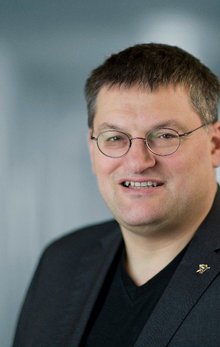
Professor Dr Michael Resch, Director of the High-Performance Computing Center Stuttgart, says: “This platform will not only make it possible for our users to run larger, more powerful simulations that lead to exciting scientific discoveries, but also to develop more efficient computational methods that are only feasible with the capabilities that such next-generation hardware offers.”
A new rack-scale AI architecture for data centres
The AMD Helios platform brings together EPYC CPUs, Instinct GPUs, Pensando advanced networking and the ROCm open software stack.
It delivers a high-performance, efficient and scalable AI infrastructure designed for rapid deployment of large-scale AI clusters. It also aims to meet the needs of a wide range of users across enterprise, research and cloud.
Helios offers up to 2.9 exaFLOPS (floating point operations per second) of FP4 (floating point 4-bit precision) performance per rack, which is crucial for AI workloads that rely on parallel processing power.
The platform is based on the Open Compute Project (OCP) Open Rack Wide standard, which supports open-source, interoperable hardware systems across data centres. The networking backbone of Helios includes a scale-up Ethernet switch developed by HPE in partnership with semiconductor firm Broadcom.
The switch supports Ultra Accelerator Link over Ethernet (UALoE), a standard aimed at enabling low-latency, high-bandwidth communication within AI clusters.
As a result, the system design supports scale-out networking using AMD Pensando Vulcano network interface cards (NICs), also integrated under the ROCm software stack.

Antonio Neri, President and Chief Executive Officer at HPE, says: “With the introduction of the new AMD ‘Helios’ and our purpose-built HPE scale-up networking solution, we are providing our cloud service provider customers with faster deployments, greater flexibility and reduced risk in how they scale AI computing in their businesses.”
HPE confirms that the AMD Helios AI Rack-Scale Architecture will be available globally in 2026.
Partnering to expand supercomputing capabilities
As part of the collaboration, AMD and HPE also announced the “Herder” supercomputer, built on HPE’s Cray Supercomputing GX5000 platform. Located at HLRS in Stuttgart, Germany, Herder integrates AMD Instinct MI430X GPUs and next-generation AMD EPYC “Venice” CPUs.
Designed to advance both traditional HPC and AI, Herder reflects Europe’s growing focus on sovereign AI infrastructure.

It will support research institutions and industry in building and running larger hybrid HPC/AI workloads.
This hybrid capability is especially important for users who need to run numerical simulations and machine learning processes within the same environment.
Michael says: “Our scientific user community requires that we continue to support traditional applications of HPC for numerical simulation.
“At the same time, we are seeing growing interest in machine learning and artificial intelligence.
“Herder's system architecture will enable us to support both of these approaches, while also giving our users the ability to develop and benefit from new kinds of hybrid HPC/AI workflows.”
Herder is scheduled for delivery in the second half of 2027 and is expected to enter service by the end of that year, replacing HLRS’s current system, Hunter.
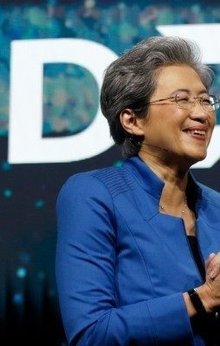
Dr Lisa Su, Chair and CEO of AMD, says: “HPE has been an exceptional long-term partner to AMD, working with us to redefine what is possible in high-performance computing.
“With ‘Helios’, we’re taking that collaboration further, bringing together the full stack of AMD compute technologies and HPE’s system innovation to deliver an open, rack-scale AI platform that drives new levels of efficiency, scalability and breakthrough performance for our customers in the AI era."
Company portals


Executives
Antonio Neri
President & CEO
Lisa Su
Chair & CEO
Michael M. Resch
Deputy Chairman of the University Council