
Analysing AWS’ Wastewater Reuse in its Hong Kong Data Centre
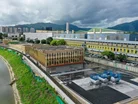
Water use in data centres remains a prominent discussion point as operators face constraints linked to supply, regulation and community impact. Cooling systems account for a significant share of operational water demand, particularly in regions where ambient temperatures and density requirements drive mechanical cooling.
Against this backdrop, reusing wastewater has emerged as a method to reduce reliance on potable water while maintaining operational continuity.
One shining example is how Amazon Web Services (AWS) is pioneering recycled water use in Hong Kong as part of its global water stewardship drive.
Hong Kong recycled water project

AWS’ Hong Kong deployment represents a case where wastewater reuse is integrated into a dense urban environment with established infrastructure constraints.
The system, which is the first of its kind in the city, is designed to reduce reliance on freshwater supplies by sourcing treated water from a government reclamation facility. Once operational, AWS states the project could offset freshwater demand equivalent to the daily consumption of more than 3,000 residents.
The Hong Kong Region, first launched in 2019, serves financial services, enterprise and public sector workloads. Integrating wastewater reuse into this data centre environment reflects a shift in how operators address resource constraints in cities where land, power and water are closely managed.
Government and AWS collaboration
The project is structured through coordination with the Government of the Hong Kong Special Administrative Region (HKSARG). In May 2025, the Water Supplies Department, the Electrical and Mechanical Services Department and the Building Technology Research Institute agreed to support the use of recycled water for cooling in the AWS facility.
Roger Wong, Director of Water Supplies at Hong Kong Special Administrative Region Government (HKSARG), stated: "We are excited to support AWS' initiative to use recycled water for data centre cooling for the first time in Hong Kong, which closely aligns with our strategy to expand the use of recycled water for non-potable uses."
This alignment reflects an existing policy direction within Hong Kong to expand reclaimed water use beyond limited applications. Data centres, with predictable and continuous demand, present a use case where treated water can be deployed without affecting potable supply.
From AWS’ perspective, the project required alignment across regulatory, engineering and operational domains.
Gunalan Kaniasan, Water Infrastructure Manager for Asia Pacific at AWS, explains: "The facility will source recycled water from a government’s water reclamation plant, using reverse osmosis technology and advanced treatment processes to meet stringent data centre cooling requirements. The system is currently in its detailed design phase."
Wastewater reuse in this context depends on treatment standards that meet cooling system requirements, particularly in relation to scaling, corrosion and biological control.
Technical approach to water reuse
The Hong Kong system relies on tertiary-treated effluent processed at a government reclamation plant. This water undergoes further treatment, including reverse osmosis, before being introduced into cooling infrastructure.
This approach reflects a layered treatment model. Initial municipal processing removes solids and contaminants, while subsequent stages refine water quality to meet operational thresholds required for data centre cooling systems. These thresholds are defined by equipment tolerances and long-term maintenance considerations.
The integration of reclaimed water into cooling loops requires adjustments in system design, including materials compatibility, monitoring systems and contingency planning. Operators must ensure that fluctuations in input water quality do not affect uptime or equipment performance.
AWS’ decision to proceed with this model in Hong Kong indicates that the company views wastewater reuse as viable within tightly regulated urban systems. It also suggests that engineering constraints, while present, can be addressed through standardised treatment processes.
Regional water replenishment projects
The Hong Kong initiative is linked to upstream water replenishment efforts in Guangdong Province. AWS is advancing two constructed wetland projects in partnership with GreenCity Guangzhou, targeting water quality in river systems that supply Hong Kong.
The first project in Xiankeng Village focuses on treating sewage flows that enter the Dongjiang River, which serves as Hong Kong’s primary water source. The second project in Zuotan Village aims to prevent untreated sewage discharge into the Xijiang River, a secondary supply source.
Together, these projects are expected to return more than 40 million litres of clean water annually. Both have completed due diligence and design phases, with construction scheduled for completion by 2026.
These efforts extend the concept of wastewater reuse beyond facility boundaries. Instead of focusing solely on reducing consumption at the point of use, AWS is investing in watershed-level interventions that affect supply quality and availability.
Will Hewes, Global Water Sustainability Lead at Amazon, says: "At Amazon, we aim to be a good water steward everywhere we operate. We are delighted to grow our efforts in Hong Kong."
Scaling wastewater reuse strategy
The Hong Kong project functions as a pilot within AWS’ wider plan to expand the use of recycled water across its global data centre portfolio. The company has stated its intention to increase the number of facilities using recycled water by four times by 2030.
This scaling effort depends on regulatory alignment, infrastructure availability and economic feasibility. Not all regions have access to reclamation facilities capable of supplying treated water at required volumes. In such cases, operators may need to invest in dedicated treatment systems or pursue alternative strategies.
Bryan Ha, Head of Public Policy, Hong Kong, AWS Greater China Region, positions the project within a longer-term framework: "I am grateful for the opportunity to work with my multidisciplinary colleagues at Amazon and former colleagues in the HKSARG to incubate this pilot project over the past year, which could potentially be scaled up across the territory and bring long-term impact on preserving our precious freshwater resources. This is a classic example of creating synergy to advance our common agenda."
As data centre demand grows in Asia Pacific, operators face increasing scrutiny over resource use. Wastewater reuse offers a pathway to reduce freshwater dependency while maintaining service delivery. The AWS Hong Kong case study shows how this approach can be implemented through coordination between operators and public authorities, supported by treatment technology and upstream investment.
Company portals


Executives

Bryan Ha
Head of Public Policy, Hong Kong
Gunalan Kaniasan
Principal, Water Resources
Will Hewes
Global Water Sustainability Lead