Can Qualcomm Disrupt Nvidia’s Data Centre AI Chip Dominance?
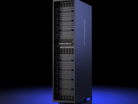
Qualcomm Technologies has announced two AI inference accelerators for data centres, marking its return to the server market it exited in 2018 and coming as analysts project the AI inference market will up to US$253.75bn by 2030, according to Grand View research.
Targeting inference workloads that run trained models, the AI200 and AI250 chips represent a strategic refocus for Qualcomm, which previously pursued general-purpose server processors with its Centriq chips before concentrating on mobile and edge computing.
“With Qualcomm AI200 and AI250, we’re redefining what's possible for rack-scale AI inference,” says Durga Malladi, SVP and General Manager of Technology Planning, Edge Solutions and Data Centre at Qualcomm Technologies. “These innovative new AI infrastructure solutions empower customers to deploy generative AI at unprecedented TCO, while maintaining the flexibility and security modern data centers demand.”
Qualcomm accelerators targets data centre inference
In May 2025 Qualcomm said that it would be re-entering the data centre market, saying it would be developing custom data centre CPUs that use Nvidia technology to connect to Nvidia’s AI chips. The AI200 and AI250 products take a different approach, positioning Qualcomm as a direct competitor in AI acceleration rather than a complementary CPU supplier.
The AI200 architecture centres on memory designed for inference operations. Each card carries 768 GB of LPDDR memory, which offers different performance characteristics than the HBM3 memory used in training-focused GPUs.
Each rack runs at 160 kW and uses direct liquid cooling, connecting via PCIe within racks and Ethernet between them.

The AI250 uses near-memory computing, an architecture that places processing elements closer to memory to reduce data movement. Qualcomm states this delivers 10 times higher effective memory bandwidth than traditional approaches.
The AI250 will support disaggregated inference, allowing memory and compute resources to be allocated independently. Both the AI200 and AI250 rack configurations operate at 160 kW and include direct liquid cooling, PCIe and Ethernet connectivity, and confidential computing features.
Software stack supports machine learning frameworks
Qualcomm has developed a software stack spanning from application layer to system software, supporting existing machine learning frameworks and providing integration with Hugging Face for model deployment. The stack supports machine learning frameworks, inference engines, and generative AI frameworks used in production environments.
Developers can deploy models from Hugging Face through the Qualcomm Efficient Transformers Library and Qualcomm AI Inference Suite. The software includes APIs, libraries and tools for organisations operationalising AI systems.
“Our rich software stack and open ecosystem support make it easier than ever for developers and enterprises to integrate, manage and scale already trained AI models on our optimized AI inference solutions,” Durga says. “With seamless compatibility for leading AI frameworks and one-click model deployment, Qualcomm AI200 and AI250 are designed for frictionless adoption and rapid innovation.”
Qualcomm data centre AI accelerators target 2026 market entry
The AI200 ships in 2026, with the AI250 following in 2027. The company has committed to annual product releases for its data centre line, building on neural processing unit technology from its mobile and edge devices.
“Our hyperscaler-grade AI software stack, which spans end-to-end from the application layer to system software layer, is optimised for AI inference,” Durga says.
With seamless compatibility for leading AI frameworks and one-click model deployment, Qualcomm AI200 and AI250 are designed for frictionless adoption and rapid innovation.
As Qualcomm CEO Cristiano Amon said in May, the data centre market represents a sizable market that will “see a lot of investment for decades to come.
“As long as...we can build a great product, we can bring innovation and we can add value with some disruptive technology, there’s going to be room for Qualcomm, especially in the data centre,” he said in an interview with CNBC.
HUMAIN partnership brings Qualcomm AI infrastructure to Saudi Arabia
Qualcomm announced alongside the AI200 and AI250 products that HUMAIN, a Saudi Arabia-based AI firm, will deploy the solutions in the kingdom. HUMAIN is targeting 200 megawatts of Qualcomm AI200 and AI250 rack solutions starting in 2026 to deliver AI inference services in Saudi Arabia and globally.
The collaboration follows an announcement the two companies made at the US-Saudi Investment Forum in May 2025. HUMAIN operates under Saudi Arabia’s Public Investment Fund and has developed AI models called ALLaM, which will be integrated with Qualcomm's platforms.
“By establishing advanced AI data centers powered by Qualcomm's industry-leading inference solutions, we are helping the Kingdom create a technology ecosystem that will accelerate its AI ambitions of becoming a hub of intelligent computing,” says Cristiano Amon. “Together with HUMAIN, we are laying the groundwork for transformative AI-driven innovation that will empower enterprises, government organisations and communities in the region and globally.”
Tareq Amin, CEO at HUMAIN, says the collaboration combines regional expertise with Qualcomm's technology. “This collaboration combines our deep regional expertise and full AI stack and infrastructure capabilities with Qualcomm's decades of semiconductors technology and product leadership,” he says.
Company portals

Executives
Durga Malladi
Senior Vice President & General Manager