
Can Verse Help Solve the Data Centre Power Problem?
Power availability is becoming one of the biggest challenges facing AI data centre development today, prompting infrastructure companies to look beyond traditional grid connections.
US energy software company Verse believes it has a solution.
The company has raised US$54m in a Series B funding round to expand its platform and launch Dispatch Intelligence, a product designed to help data centre operators bring new facilities online by making greater use of on-site energy resources.
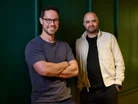
Founded in 2022 by Matt Penfold and Seyed Madaeni, Verse develops software that helps large organisations manage electricity contracts, utility bills and power purchase agreements through its Aria platform. Customers already include Fortune 500 companies such as Walmart, Meta and BASF.

Its latest product moves beyond energy management into power availability. Rather than focusing solely on tracking energy assets, Dispatch Intelligence is designed to help operators secure usable power for new data centres while navigating lengthy interconnection timelines.
The funding round attracted backing from Bessemer Venture Partners, NVIDIA, GV and other investors, reflecting growing attention on technologies that address power availability for AI infrastructure.
Power becomes the constraint
As AI deployments continue to expand, developers increasingly face delays caused by electricity infrastructure rather than shortages of computing hardware or investment capital.
Generation capacity, transmission infrastructure and grid interconnection queues are extending project timelines across many markets, slowing the delivery of new data centre capacity.
“Today the energy industry is facing an entirely new set of challenges,” says Matt Penfold, Co-Founder and CCO of Verse.
“AI has driven an unprecedented surge in demand for power. Time to connect to the grid has gone from a couple of years to seven, eight, nine years,” he adds, underlining the scale of the challenge.
According to Verse, hundreds of planned data centres are currently waiting for grid connections, representing an estimated US$500bn in annual revenue that remains unavailable while projects are delayed.
Dispatch Intelligence is intended to reduce those delays by enabling operators to make greater use of energy resources located on-site.
Using on-site energy
The platform is designed to coordinate batteries and other on-site energy systems so facilities can operate without reducing computing performance during periods of grid stress.
“The race to AI is now a race to power, and developers are losing time they don't have,” says Seyed Madaeni, Co-Founder and CEO of Verse.
“Most approaches to data centre flexibility ask you to throttle your workloads, but Dispatch Intelligence takes a different approach.
“By orchestrating physical storage on-site, we deliver flexibility without impacting compute so systems run full-tilt while the grid sees a flexible load, letting operators skip the queue without ever slowing performance."
The company says this approach allows developers to improve operational flexibility while avoiding the need to reduce AI workloads when electricity demand is high.
Dispatch Intelligence is also being integrated with NVIDIA's DSX AI Factory reference design, which provides guidance for building and operating large-scale AI data centres.
Partnership expands offering
Alongside the product launch, Verse has entered a strategic partnership with Calibrant Energy, which develops on-site energy infrastructure including battery storage, solar generation and microgrids for commercial customers.
Calibrant is backed by Macquarie Asset Management, whose infrastructure portfolio exceeds US$580bn.
Philip Martin, CEO of Calibrant, says: “The main limiting factor for AI supremacy is access to power. To ensure success, data centre developers and operators need a path to deploy infrastructure quickly and at scale.
“Together with Verse, we're enabling a new model where power can be delivered on-site, on-demand, without waiting years for grid upgrades – and without impacting electricity costs for others.”
The partnership combines Verse's software platform with Calibrant's experience delivering distributed energy systems for large electricity users.
Funding supports expansion
Bessemer Venture Partners led the oversubscribed funding round, with investors backing the company's plans to expand both its software platform and its deployment footprint.
"Verse is building the kind of technology every AI infrastructure company will need in a world increasingly constrained by power,” says Lindsey Li, Vice President at Bessemer Venture Partners. “Their platform continues to evolve to meet the moment.
“Now, with Calibrant Energy, the company is delivering a full-stack solution that helps data centre developers bring new capacity online faster and more cost-effectively."
Verse says the new funding will support continued product development while expanding the number of sites using its platform. The company plans to add more than 100 locations over the next 12 months and increase the amount of on-site battery capacity it manages.
“This team knows how to do this,” affirms Matt. “We've spent our careers building software to operate some of the world's largest batteries and energy storage systems.
“We've picked the people that we know can execute against this challenge and meet the moment. And we built this team here in San Francisco, the epicentre of the AI revolution.”
Company portals






Executives

Lindsey Li
Vice President

Matt Penfold
Co-Founder and CCO

Philip Martin
CEO

Seyed Madaeni
Co-Founder and CEO