Computex 2026: ASUS Bets Big on AI Factory Infrastructure

"AI factory" has perhaps become one of the technology sector's favourite phrases.
Behind it, though, lies a growing market for the data centre infrastructure needed to train, deploy and operate AI at scale.
Training and deploying advanced AI systems now requires vast amounts of compute, power, cooling, networking and storage.
As organisations race to operationalise AI, the ability to build and run what NVIDIA calls "AI factories" is emerging as a critical competitive advantage.
At Computex 2026, ASUS made clear that it wants to be at the heart of that shift.
The company unveiled a broad portfolio of AI infrastructure technologies spanning rack-scale systems, storage platforms, networking and enterprise software.
ASUS is positioning itself as a provider of end-to-end AI factory capabilities designed to support customers throughout the entire AI lifecycle.
S.Y. Hsu, ASUS Co-CEO, said: "At Computex 2026, we are bringing our vision of ubiquitous AI to life by connecting powerful infrastructure with meaningful, real-world experiences at the edge.
"From enterprise systems to everyday devices, ASUS is focused on making AI practical, secure and accessible – empowering people and businesses to innovate with confidence."
The strategy reflects a wider change taking place across the industry.
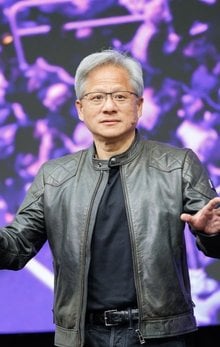
During his Computex keynote, Jensen Huang, Founder and CEO of NVIDIA, said: "NVIDIA has really become an infrastructure company. Not just a GPU company. Not just a systems company."
"Becoming incredibly good at helping customers build AI factories and deploy AI factories is incredibly important, and the reason for that is this: compute is revenue now. Compute is profit," he added.
From hardware supplier to AI infrastructure partner
A key part of ASUS' announcement is its adoption of the NVIDIA DSX AI factory platform.
Designed to help organisations plan and deploy large-scale AI environments, DSX enables customers to simulate infrastructure requirements before construction begins.
Factors such as power distribution, cooling systems, networking architecture, storage integration and facility readiness can all be evaluated through digital modelling before equipment is installed.
For operators facing growing pressure to accelerate deployment timelines while controlling costs, the ability to identify infrastructure challenges before buildout could become especially valuable.

ASUS says the approach is enhanced through OpenUSD-based digital twin workflows that allow infrastructure designs to be modelled and optimised in advance.
The company's flagship AI factory platform, the XA VR721-E3 AI POD, is built on NVIDIA Vera Rubin NVL72 architecture.
Featuring a fully liquid-cooled design, the system is engineered to support trillion-parameter AI models and the demanding workloads associated with next-generation AI deployments.
Alongside the Rubin-based platform, ASUS is introducing additional systems powered by NVIDIA HGX Rubin NVL8, NVIDIA HGX B300 and Intel Xeon 6 processors, giving customers a range of deployment options depending on workload requirements.
Solving the infrastructure bottlenecks
As AI deployments mature, infrastructure challenges extend far beyond compute.
Inference workloads, particularly those supporting agentic AI applications, increasingly depend on rapid access to large volumes of contextual information. Managing that data efficiently has become a growing concern for infrastructure operators.
To address this, ASUS introduced its new CMX storage server, the UF920-E3-RS24.
Powered by NVIDIA Vera CPUs alongside NVIDIA BlueField-4 DPUs and NVIDIA ConnectX-9 SuperNICs, the platform is designed to accelerate access to key-value cache data used during inference processing.
ASUS says the system helps improve GPU utilisation and overall compute efficiency by reducing storage bottlenecks.
The company is working alongside partners including WEKA and IBM to deliver integrated data management and high-performance storage capabilities as part of a broader AI infrastructure stack.
Turning infrastructure into enterprise AI
Beyond data centre hardware, ASUS is also focusing on how organisations can translate infrastructure investment into practical business outcomes.
At Computex, the company demonstrated ASUS AI Hub, an enterprise platform designed to help organisations deploy agentic AI assistants within secure on-premises environments. Potential use cases include HR, legal and software development workflows.
ASUS also highlighted healthcare-focused AI deployments that combine medical devices, healthcare platforms and AI models to support clinical decision-making and operational efficiency within hospitals.
These initiatives reflect a broader ambition to move beyond traditional hardware markets and participate more directly in enterprise AI adoption.
That ambition was outlined by ASUS' S.Y. Hsu, who said: "At ASUS, we're committed to becoming a comprehensive AI enterprise.
"We're fostering an AI-empowered culture and transforming internally to deliver a full spectrum of AI solutions, from hardware to software, cloud services and much more.
"The future of computing is one where AI seamlessly integrates into our lives, and ASUS is at the forefront of building this future."
As demand for AI infrastructure continues to accelerate, vendors are increasingly competing to provide complete platforms rather than individual technologies.
Through its combination of compute, storage, software and deployment services, ASUS is positioning itself to capture a larger share of the rapidly expanding AI factory market.


Executives
Jensen Huang
Founder and CEO

S.Y. Hsu
Co-CEO

Samson Hu
Co-CEO