CPR Fire Cables for Data Centre Infrastructure Risk
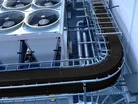
In a Data Centre, every second during a fire is critical. The cables installed throughout the facility can either help contain a fire or contribute to its spread. Understanding the differences between LSZH (Low Smoke Zero Halogen) B2ca, Cca, and Dca cables isn't just about compliance – it's about protecting people, safeguarding infrastructure, and reducing potentially enormous downtime costs.
The "LSZH" designation confirms that a cable will not release toxic halogen gases, when burning. However, it does not indicate how quickly fire spreads (FIGRA), how much heat the cable contributes (THR), or how much smoke is produced (TSP). These measurable performance criteria distinguish minimum compliance from high-performance fire safety.
1.The CPR fire classification hierarchy
EU Construction Products Regulation (CPR) and EN 50575 norm rank cables based on strict fire testing standards:
- B2ca (highest LSZH tier)
- Cca (mid-tier LSZH)
- Dca (minimum LSZH tier)
2. Key cable fire performance metrics
CPR classifications are based on rigorous fire tests:
2.1. EN 6033-2-1-2: vertical flame propagation test. This test verifies individual cables do not act as vertical “wicks” that carry fire through a building. All B2ca , Cca , Dca, must pass this baseline requirement.
2.2. EN 50399: the single burning item (SBI) test. This is the primary test that separates B2ca and Cca cables from Dca cables. Cables are bundled to similate real installations.
FIGRA (Fire Growth Rate Index) measures how fast a fire develops.
- B2ca ≤ 150 W/s
- Cca ≤ 300 W/s
- Dca ≤ 1300 W/s
A lower FIGRA significantly slows fire development, this can mean the difference between a contained incident and a facility-wide disaster in environments where cable densities are high.
THR1200s (total heat release in 20 minutes)
- B2ca ≤ 15 MJ
- Cca ≤30MJ
- Dca ≤ 70 MJ
Lower heat release protects people and equipment from severe damage.
Smoke production (s1, s2, s3 ratings) Total Smoke Production (TSP1200s) determines visibility during evacuation
- B2ca-s1a and Cca-s1 ≤ 50 m². (maintain visibility at 10+ metres during fire conditions)
- Dca-s3 > 400 m² (reduce visibility to under 3 metres during fire conditions)
Heavy smoke reduces visibility, creating life-threatening conditions in critical places like data centres.
2.3. EN 61034-2: smoke density test. This test measures optical smoke density when cables burn in a closed chamber:
- S1 rating (B2ca, Cca s1): Light transmittance ≥ 60% (you can see through the smoke)
- S2 rating (Cca s2): Light transmittance ≥ 60% but < s1 performance
- S3 rating (Dca s3): Light transmittance < 60% (dense smoke)
2.4. EN 60754-2: Halogen acid content test (the "a" designation). This is what separates B2ca-s1a from Cca-s1 cables.
- “a” designation (acidity) requires ≤ 0.5% halogen acid gas content
- Non “a” cables can release up to 10x more corrosive gases
When cables burn, they release hydrochloric acid gas that reacts with sprinkler water to form indoor acid rain, corroding servers and equipment rooms. B2ca-s1a are halogen free, stopping this effect.
3. Why B2ca and Cca cables deliver superior fire protection
Within the LSZH category, B2ca and Cca specifications dramatically outperform Dca across five key parameters:
- Slower fire growth
- Lower heat release
- Less smoke production
- Less flaming droplets
- Reduced corrosive emissions
These differences can determine whether a fire remains contained or escalates into a major incident.
4. Why CPR classification matters in data centres
The LSZH label alone does not guarantee equivalent fire performance. Specifying CPR classification as part of a data centre’s passive fire protection strategy allows engineers and facility managers to align fire safety performance and operational risk and regulatory requirements.
The TOXFREE® LSZH N2XH Flex range, manufactured by Top Cable, is designed to meet B2ca and Cca cable fire safety classification requirements. For applications requiring electrical circuit continuity during a fire, Top Cable also offer fire-resistant cables designed to keep critical systems operational when it matters most. For technical specifications or project enquiries, Top Cable can be contacted directly.