Data Centre LIVE: Is Europe's Grid Ready for AI Factories?
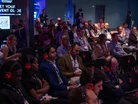
The conversation at Data Centre LIVE moved quickly through the most pressing questions shaping digital infrastructure in Europe.
This "Neo Cloud & AI Factories" panel brought together the most critical design, delivery and operational perspectives that rarely sit in the same room.
What the discussion made the most clear is that neo cloud providers, hyperscalers and colocation operators are all competing for the same scarce resources, all while trying to interpret what AI demand means in practical terms.
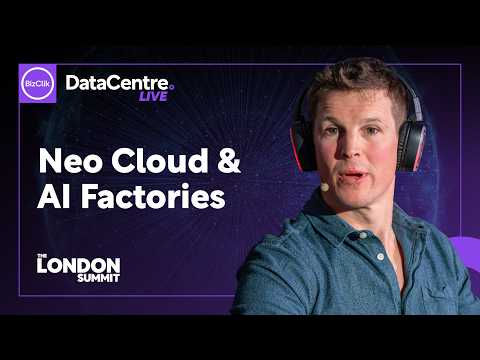
What defines an AI factory in the neo cloud era?
The discussion opened with a question that set the tone for the session: how AI factories, hyperscale AI campuses and traditional data centres differ, and where neo cloud fits into the picture.
Lewis Cobb, Head of Modular Data Centre Projects at Durata, framed the shift directly, linking it to NVIDIA’s influence.
He said: “AI factory" is a term really driven by NVIDIA.
“If you look back to GTC 2025, when they really pushed the product, that term started to become far more commonly used.
“As Jensen Huang talks about, this is an environment that is manufacturing data – it's creating its own source as part of the modelling and training systems, which sets it apart from a traditional data centre.
“Data centres, if they're colocation, have been a source of storage, processing, send and receive. They have a different mentality in how they treat data.”
He also placed neo cloud providers into a wider ecosystem shaped by energy-first companies and GPU-heavy workloads:
“The neo clouds themselves are fascinating, because they're predominantly companies that come from an energy background. Look at the likes of CoreWeave, Giga Scale – they've really focused on energy at their core.”
The result is a market that no longer fits neatly into old categories.
Neo cloud, hyperscale and colocation now overlap as GPU demand scales and inference workloads become more distributed across regions.
Is Europe’s grid ready for AI demand?
Power was the unavoidable pressure point of the discussion.
As AI workloads intensify, the panel repeatedly returned to grid capacity, location constraints and the growing role of alternative energy strategies.
Christian Goldsmith, Global Data Center Solution Lead at Arcadis, was direct about the near-term challenge: “No — not in the near term.
“In the next 5 to 10 years, grid connectivity is going to be the biggest constraint. It will catch up, but not in time for what we want to build at the edge of Europe for the future.”
Falk Weinreich, CEO of Portus Data Centers, added that sovereignty and latency are reshaping where infrastructure lands.
He said: “For inference, people want to be much closer to their workloads for latency reasons. That's another driver – they want sovereignty, they don't necessarily want to depend on other geographies or on foreign government control.”
Can speed to market outrun talent and trust?
If power is the constraint, talent is the pressure multiplier.
Across design, construction and operations, the panel returned to the same tension: AI infrastructure is moving faster than the ecosystem supporting it.
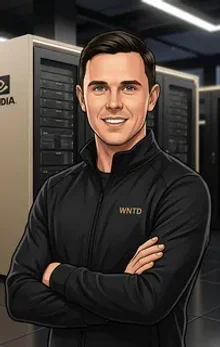
Blaine Daws, Solutions Director at WNTD, discussed the scale of the workforce challenge: “The number one thing keeping most founders in the neo cloud and AI space up at night is, one, power, and two, talent.
“From a talent perspective – as Jensen said at GTC a while back – there are tens of thousands of people needed just on the electrical side to get these AI factories built in the first place. Where are you going to find these people?”

The talent shortage links directly to commissioning risk, where systems are installed faster than they can be properly validated or operated. Christian Goldsmith warned of the consequences:
“You've done everything to get the chips in and deployed, but you're not operationally ready and you've got that asset just sat there stranded because we moved too fast.”
Andrew Harrison, Director of Master Planning at nLighten, brought the discussion back to delivery expectations and commercial reality, stressing the importance of clarity between providers and customers:
“Clarity, yes. It can be tempting to say, "We'll have that ready in six weeks," when the reality is that things sometimes take longer.”
The wider message was that speed is critical, but misalignment between expectation and delivery creates risk across financing, construction and long-term operation.
Cooling adds another layer of complexity, as Falk Weinreich commented: “In five years, when we sit here again, I think air cooling will be the exception rather than the rule — at least for AI and high-density requirements.”
It is safe to conclude from the panel that hybrid infrastructure, flexible deployment and regional adaptation will define the next phase of AI infrastructure in Europe.
Demand is accelerating, but the systems supporting it are still being built in real time.
Register Your Interest
If you enjoyed this year's Data Centre LIVE event, or missed out and would love to be involved next year, make sure to register your interest in the LIVE World Tour.
Attendees from sustainability, procurement, supply chain, data centre and AI sectors can gain insights from other experts in the field, with the opportunity to network.






Executives

Andrew Harrison
Director of Master Planning
Blaine Daws
Solutions Director

Christian Goldsmith
Global Data Center Solution Lead

Falk Weinreich
CEO
Lewis Cobb
Head of Modular Data Centre Projects

Madeline Sherratt
Europe Data Centre Reporter