
Data Centres to Orbit Earth in 2026 by PowerBank & Orbit AI
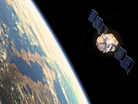
PowerBank Corporation and Smartlink AI, the company orchestrating Orbit AI have announced plans to launch the world’s first “Orbital Cloud” – a network of solar-powered data centres and decentralised communications infrastructure in low Earth orbit (LEO).
The first satellite, DeStarlink Genesis-1, is scheduled for launch in December 2025.
The mission combines three core technologies: DeStarlink, a decentralised LEO network; DeStarAI, a suite of orbital AI data centres; and blockchain-powered verification nodes.
These are integrated into one orbital platform that runs on solar energy and delivers compute, communication and blockchain verification beyond the limitations of terrestrial infrastructure.
Dr Richard Lu, CEO of PowerBank, says: “The next frontier of human innovation isn’t just in space exploration, it’s in building the infrastructure of tomorrow above the Earth.
“The combined markets for orbital satellites, in-orbit data centres, blockchain verification and solar-powered digital infrastructure are projected to exceed US$700bn over the next decade.
“By integrating solar energy with orbital computing, PowerBank is helping create a globally sovereign, AI-enabled digital layer in space, which is a system that can help power finance, communications and critical infrastructure.”
Integrating data, compute and power in orbit
Orbit AI is behind the development of the Orbital Cloud and intends to run compute and verification processes entirely from space.
DeStarlink creates the decentralised communications layer while DeStarAI handles the AI workload.
These are supported by solar arrays and use space’s natural environment for cooling, making energy efficiency a central feature.
Through its collaboration, PowerBank provides the solar energy systems and thermal control solutions necessary to power the satellite’s execution layer. As a result, it reflects PowerBank’s broader strategy to move into digital asset and data centre infrastructure powered by solar technologies.

Gus Liu, Co-Founder and CEO of Smartlink AI, says: “Orbit AI is creating the first truly intelligent layer in orbit — satellites that compute, verify and optimise themselves autonomously.
“The Orbital Cloud turns space into a platform for AI, blockchain and global connectivity. By leveraging solar-powered compute payloads and decentralised verification nodes, we are opening an entirely new potentially US$700+bn dollar market opportunity – one that combines energy, data and sovereignty to reshape industries from finance to government and Web3.
PowerBank’s expertise in advanced solar energy systems will be significant in supporting this initiative.”
From launch to constellation deployment
Genesis-1, the first satellite in the project, includes a blockchain node and Ethereum wallet and is equipped with initial AI inference capabilities.
The roadmap projects five to eight additional satellites launching in 2026, with full-scale constellation deployment and commercial service availability between 2027 and 2028.
Autonomous governance and expanded orbital operations are scheduled between 2028 and 2030.
The orbital infrastructure is designed to operate independently from terrestrial data centres, avoiding geopolitical and network constraints while benefiting from uninterrupted solar exposure.
Orbital Cloud’s capabilities include solar-powered compute, decentralised blockchain verification and resilient communications, all delivered outside of Earth’s atmosphere.
As Jeff Bezos commented at Italian Tech Week in Turin, October 2025: “We will be able to beat the cost of terrestrial data centres in space in the next couple of decades.
“These giant training clusters will be better built in space, because we have solar power there, 24/7 – no clouds, no rain, no weather.
“It has already happened with weather and communication satellites. The next step is going to be data centres and then other kinds of manufacturing.”
Market size and technology partners
The Orbital Cloud targets multiple overlapping sectors. Forecasts estimate the global satellite market to reach US$615bn by 2032, with in-orbit data centres growing from US$1.77bn in 2029 to US$39.1bn by 2035.
Satellite data services are projected to expand from around US$12.16bn in 2024 to US$55.24bn by 2034. Combined, these segments point to a total market opportunity over US$700bn in the coming decade.
PowerBank plans an initial investment of US$50,000 in Orbit AI with an option to increase its stake up to US$10m for 20% equity, subject to final terms and Orbit AI approval, ahead of the Genesis-1 launch.


Executives

Richard Lu
President, CEO