DCL: Why Cleaner Backup Power Makes for Greener Data Centres
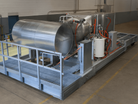
DCL has introduced a new emissions control solution designed for backup power systems in European data centres, targeting the challenge of reducing nitrogen oxide emissions during generator use.
The system is engineered for diesel and hydrotreated vegetable oil (HVO) fuelled engines, which are widely used to maintain uptime in mission-critical environments.
As data centre capacity expands to support cloud computing and AI workloads, operators continue to depend on backup generators to ensure continuity during outages and testing cycles.
While these systems typically run for short periods, they can produce elevated emissions during startup, particularly nitrogen oxides, known as NOx – a group of gases that contribute to air pollution and are subject to tightening regulation across Europe.
DCL’s new solution focuses on improving emissions performance during these short operating windows, when conventional systems often struggle to deliver effective reduction.
Addressing emissions during startup cycles
The technology is built on DCL’s Metalcor metallic catalyst substrate, which differs from traditional ceramic-based systems by enabling faster thermal activation.
This process – often referred to as light-off – determines how quickly the emissions control system becomes effective once the engine starts.

By reaching optimal operating temperature more quickly, the system reduces NOx emissions earlier in the run cycle. This is particularly relevant for data centres, where backup generators are frequently tested in short intervals and may not run long enough for slower systems to reach full efficiency.
In addition to selective catalytic reduction (SCR) which lowers NOx emissions by converting them into nitrogen and water, the solution can incorporate oxidation catalysts and particulate control technologies.
These elements address other pollutants including hydrocarbons, carbon monoxide, formaldehyde and particulate matter, offering a broader emissions control approach for diesel-powered infrastructure.
“Data centre backup engines operate very differently from continuous power systems, and emissions platforms need to reflect that reality,” says Khalil Saikaly, Managing Director of DCL Europe. “With our Metalcor technology, we’re able to deliver faster activation, high reliability and measurable emissions reduction when it actually matters.”
Designed for data centre environments
The system maintains high conversion efficiency across a wide temperature range, supporting performance under varying engine loads and exhaust conditions. This is important in data centres, where backup systems must respond quickly to changing demand and operate reliably under different scenarios.
Its compact footprint is another consideration, particularly in facilities where space is limited. Data centre operators often need to integrate emissions control systems into existing layouts, making size and flexibility key factors in deployment.
DCL offers the solution in multiple configurations, including plug-and-play modules, skid-mounted systems and custom-engineered designs. These options allow operators to install the system in new builds or retrofit it into existing infrastructure.
A simplified urea injection system – used in SCR processes to enable the chemical reaction that reduces NOx – removes the need for compressed air, lowering system complexity and maintenance requirements.
Built-in redundancy is also included to support reliability, a critical requirement for backup power systems where failure is not an option.
Supporting sustainability and lifecycle goals
Beyond emissions reduction, the Metalcor platform introduces a reusable catalyst design. Unlike conventional ceramic substrates that are typically discarded at the end of their lifecycle, these metallic substrates can be recharged and reused.
This approach allows systems to be redeployed in other stationary engine applications if a data centre is upgraded or decommissioned, reducing waste and extending the useful life of the components.
The system is positioned to help operators meet sustainability targets while preparing for evolving regulatory standards across Europe. As emissions requirements tighten, technologies that address real-world operating conditions – particularly during startup and testing – are becoming more relevant.
Khalil adds: "With this launch, DCL reinforces its commitment to delivering engineered solutions that balance performance, reliability and sustainability, helping European data centre operators future-proof their backup power infrastructure as demand for digital services continues to accelerate."
Company portals

Executives
Khalil Saikaly
Managing Director - Europe