Deutsche Telekom: Quantum Teleportation & Data Centres

Quantum teleportation, a concept most often associated with science fiction, is fast becoming a very real thing in the world of telecoms.
Deutsche Telekom’s T-Labs, along with quantum networking company Qunnect, has, for the first time, managed to successfully teleport quantum data across a live network in Berlin.
For the project, the companies used commercially available hardware to address interference and instability in existing fibre networks, proving that quantum teleportation can indeed coexist with normal data traffic.
In January 2026, the teams teleported information over a 30km loop of live fibre, combining Qunnect’s entanglement distribution platform with Deutsche Telekom’s Berlin quantum infrastructure.
This test run represents the first practical deployment of the components needed for future teleportation-based services.
Preparing fibre networks for quantum
Quantum teleportation transmits information by recreating the exact quantum state of a particle at a distant location, rather than moving the particle itself.
A quantum state encodes all information about a system, such as a photon, the particle of light used in the experiment. The process depends on pre-shared quantum entanglement, which links two particles so that the state of one correlates instantly with the other, even across distance.
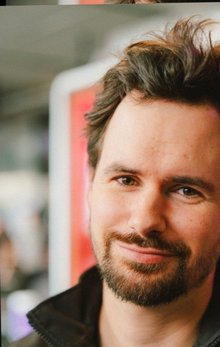
Abdu Mudesir, Telekom Board Member for Product and Technology, says: “Our fibre optic network is quantum ready.
"In Berlin we have now proven that quantum information can be transmitted over 30km of commercial Telekom fibre optics outside of a laboratory."
“This is done in parallel with regular data traffic and with a very high average accuracy of 90%.
"With quantum teleportation, we are laying the technical foundation for networking quantum computers over longer distances in the future and pooling computing power in more than one location.
"This will create the next generation of secure communication and a building block for Europe's technological sovereignty."
Teleportation fidelity measures how accurately the transmitted state matches the original.
Achieving 90% on active fibre indicates that quantum information can move reliably alongside classical data.
For operators and data centres, this shows that existing network infrastructure can host quantum applications without isolation or dedicated dark fibre.

From lab experiments to network racks
Mael Flament, CTO at Qunnect, describes teleportation as a "novel tool for moving information around networks leveraging quantum physics".
He adds: “We are showing the building blocks of teleportation can operate inside a real network, in real racks, under operator control, advancing it from a laboratory experiment to something a telecommunications provider can deploy.”
In the Berlin trial, qubits from a weak coherent source travel over a 30km fibre loop linking T-Labs’ Quantum Lab to a testbed node.
Qubits, or quantum bits, can exist in multiple states simultaneously, a property known as superposition, unlike classical bits which are either 0 or 1.
Qunnect’s Carina platform generates entangled photon pairs and includes a polarisation compensation system that corrects environmental disturbances in aerial and buried fibre.
The compensation system ensures high-fidelity transport of quantum bits.
The team reports average teleportation fidelity of 90%, peaking at 95%, using a 795nm wavelength compatible with neutral-atom quantum computers, atomic clocks and quantum sensors.
This wavelength allows quantum systems to connect with telecom infrastructure without additional conversion.

Building metropolitan quantum networks
The Berlin trial builds on previous experiments showing quantum networking over city-scale fibre.
Deutsche Telekom and Qunnect plan to expand to multi-node setups and longer distances, exploring use cases within metropolitan-scale networks. Multi-node networks connect more than two sites, reflecting the distributed architectures of modern data centres.
Quantum teleportation supports applications such as quantum cryptography, distributed quantum computing, secure cloud-based quantum services and networks of sensitive quantum sensors.
Quantum cryptography secures communication with quantum principles. Distributed quantum computing links separate quantum processors into one system. Secure cloud-based quantum services enable remote access to quantum resources, while quantum sensors detect minute physical changes with precision.
By deploying commercial quantum hardware on live networks, Deutsche Telekom and Qunnect show operators can integrate quantum systems without a lab.
The Berlin demonstration positions the city as a testing ground for quantum communications and offers a model for linking data centres and metro-scale networks with advanced quantum infrastructure.
Company portals


Executives

Abdu Mudesir
Board Member for Product and Technology
Mael Flament
Chief Technology Officer (Co-Founder)