Energy Storage: Powering the Next-Gen Data Centre
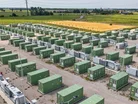
Energy storage has become a core design variable in hyperscale and AI campus planning, with direct implications for sustainability, time-to-power and grid relations. Battery systems, microgrids and long-duration storage are being specified at the masterplanning stage, rather than value-engineered in later, as developers confront multi‑year interconnection queues and escalating scrutiny of diesel reliance.
The most immediate trend is the pivot to behind-the-meter architectures that combine large-scale storage with on-site generation. Cleanview’s project tracker found 46 US data centres, totalling 56 GW of capacity, planning to build their own power plants behind the meter. This is roughly 30% of all planned US data centre capacity. For operators, co‑located storage is becoming the ticket to faster energisation, grid‑services revenue and a more credible decarbonisation narrative. For regulators and utilities, the question is how these private power islands integrate with wider system planning.

Battery energy storage is now an increasingly critical component of the data centre infrastructure for operators willing to pay a premium for resilience and faster time to power, with new voluntary standards emerging to normalise designs.
- As data centres scale, the reliance on lithium-ion is being challenged by supply chain constraints and fire safety protocols. In 2026, Sodium-ion and Nickel-Zinc (NiZn) have started gaining traction and attention. These non-lithium alternatives offer highly competitive discharge rates essential for AI load ramping, while mitigating thermal runaway risks.
In January 2026, National Electrical Manufacturers Association (NEMA) published Data Center Design Considerations for Energy Storage Systems (NEMA US 80074‑2025) and a companion guide on microgrid integration, providing blueprints for integrating battery energy storage systems (BESS) into campus power topologies while preserving safety, interoperability and grid-support capabilities. This is significant: it begins to move storage away from bespoke, proprietary schemes towards repeatable, standards‑aligned reference architectures.
AI is acting as the accelerant. ZincFive’s 2025 Data Center Energy Storage Industry Insights report shows 55% of industry respondents citing higher energy efficiency requirements as AI’s biggest impact on power and storage, with 54% highlighting the need for higher power density and smaller footprints. Nearly 86% expect a shift toward more customised power designs tailored to AI workloads. Those designs increasingly include denser, longer-duration and sometimes alternative‑chemistry storage, particularly where diesel runtime expectations are being reassessed in light of ESG targets and permitting pressure.
On the macro side, stationary storage deployment is scaling rapidly in lockstep with digital infrastructure. S&P Global data shows US battery storage developers added 4.5 GW in Q3 2025 alone, a 24.5% year‑on‑year increase, bringing installed capacity in 2025 to nearly 11.6 GW and total cumulative capacity to around 41.5 GW, mostly four‑hour lithium‑ion. UBS meanwhile projects a “boom cycle” in global energy storage demand over the next five years, with demand potentially surging 40% year‑on‑year by 2026 as AI data centres drive the need to balance variable renewables. For operators, this translates into a richer ecosystem of grid‑scale storage projects to contract with – but also higher competition for cells, inverters and skilled EPC capacity.
At the cutting edge, AI data centre (AIDC) storage architectures are evolving beyond traditional UPS‑plus‑diesel paradigms. HiTHIUM’s analysis of the AIDC segment forecasts lithium‑ion battery shipments into AIDC power systems growing from 12 GWh in 2025 to 61 GWh in 2027 and 272 GWh by 2030, with long‑duration energy storage (LDES) of around eight hours emerging as a core trend for high green‑power penetration sites. Vendors are already planning for 800V HVDC architectures and “energy router” concepts that treat storage as a programmable hub rather than an emergency-only asset.

For sustainability‑minded operators, several considerations now dominate RFPs and board conversations:
- Runtime strategy: right‑sizing storage (e.g. two‑hour vs eight‑hour) against realistic outage scenarios, grid‑services ambitions and carbon budgets.
- Chemistries and safety: weighing lithium‑ion variants against alternatives such as nickel‑zinc, sodium‑ion or flow batteries for improved safety, lifecycle and embodied carbon.
- Grid interaction: designing controls so storage can participate in frequency regulation, congestion relief and capacity markets without compromising mission‑critical uptime.
- Standardisation and compliance: aligning with emerging guidance such as NEMA’s storage and microgrid design documents to reduce permitting friction and engineering risk.
Perhaps the clearest signal is cultural: a growing share of expert operators now view energy storage procurement as a strategic discipline on par with network or cooling, rather than a commodity UPS line item. In a market where time‑to‑power often trumps time‑to‑build, the facilities that master energy storage – technically, commercially and politically – are likely to enjoy a durable competitive advantage.
ZincFive
ZincFive is a specialist champion of alternative chemistries for mission‑critical storage, leveraging nickel‑zinc batteries to address safety, sustainability and performance concerns associated with traditional lead‑acid and some lithium‑ion designs.
The company has established itself as a trailblazer in alternative battery chemistries, specifically championing Nickel-Zinc (NiZn) technology for data centres. According to its 2026 Data Center Energy Storage Industry Insights Report, managing AI dynamic power and guaranteeing chemistry safety are top priorities for modern operators.
ZincFive’s NiZn systems represent best practice by offering a significantly higher power density than traditional lead-acid or standard lithium-ion batteries, meaning they take up less valuable white space on the data centre floor.
Crucially, NiZn batteries do not exhibit thermal runaway, eliminating the need for complex, space-consuming fire suppression systems. Their high reliability and lower environmental footprint make them a premier choice for hyperscalers balancing dense AI workloads with strict ESG targets.
By advocating for diversified chemistries and modular, customisable storage architectures, ZincFive is pushing the conversation beyond lithium vs diesel toward a more nuanced portfolio view of backup and grid‑interactive storage.
Exide Technologies
At the forefront of the European market, Exide Technologies represents best practice through its comprehensive, multi-chemistry approach to data centre energy storage.
Showcased extensively throughout late 2025 and early 2026, their flagship Solition Data Center system uses advanced lithium-ion technology to cut operating footprints by 60% and operating and maintenance (O&M) costs by up to 80%. This highly modular architecture allows operators to rapidly scale power density alongside demanding AI workloads.
However, what truly sets Exide apart in a constrained market is its parallel innovation in proven legacy chemistries. Its next-generation Sprinter Pure Power AGM battery range is engineered specifically for modern UPS integration and dynamic grid support. By providing 20% more power at high-rate discharge and an extended 12-year design life, Exide offers highly reliable, scalable solutions that significantly reduce Total Cost of Ownership (TCO).
Furthermore, Exide addresses the industry’s growing e-waste crisis by championing the circular economy. Their advanced lead-acid technologies boast an industry-leading near-100% recycling rate, directly assisting data centres in minimising Scope 3 supply chain emissions and meeting aggressive ESG compliance mandates. Through this dual-pathway approach, Exide seamlessly balances cutting-edge operational performance with long-term, verifiable environmental stewardship, ensuring facilities withstand grid instability sustainably.
Schneider Electric
Schneider Electric exemplifies best practice through integrated, software-driven ecosystem management. Rather than merely supplying standalone batteries, Schneider delivers end-to-end Battery Energy Storage Systems (BESS) that seamlessly integrate with their advanced EcoStruxure Microgrid Operation and Advisor platforms. This architecture allows data centres to intelligently orchestrate energy flows, switching between grid power, on-site renewables and battery storage in real-time based on pricing and grid stability.
To meet the extreme power density demands of 2026's AI workloads, Schneider couples these BESS deployments with their new AI-ready Galaxy VXL UPS, which delivers up to 1.25 MW in a radically reduced 1.2-square-metre footprint.
By utilising cloud-based predictive analytics, Schneider’s systems optimise battery charging cycles and enable facilities to actively participate in grid-interactive services like demand response, peak shaving and frequency regulation. This strategic capability transforms energy storage from a sunk operational cost into a revenue-generating asset. Ultimately, Schneider Electric is driving the industry's crucial transition, enabling data centres to operate as active, resilient grid participants rather than passive energy consumers.