Financing the Future: Trends in 2025 Data Centre Investment
The global data centre sector is experiencing an unprecedented investment surge as AI fundamentally reforges the world’s digital infrastructure.
From hyperscale campuses in the US to high-density sites in Asia and new capacity clusters in Europe, billions of dollars are being channelled into facilities capable of meeting surging AI workloads, high-performance computing (HPC) needs and evolving digital ecosystems.
This momentum is underpinned by demand for new data centre capabilities: higher rack densities, advanced cooling, rapid expansion, and — above all — the ability to run and train large-scale AI models.
Leading investors, technology providers and analysts agree this is an inflection point.
As 2025 unfolds, all signs indicate data centre investments will not merely continue but accelerate exponentially.
Record investment and a new strategic focus
Among major operators, Equinix stands out for its ambition and scale. The company is increasing capital expenditure and targeting rapid growth across all regions.
“We had a strong first half of 2025, achieving robust bookings and strong financial results — further indication that our strategy is meeting the opportunity,” said Adaire Fox-Martin, CEO and President of Equinix, in the company’s Second-Quarter 2025 Results.
“Looking ahead to the next six months, we are confident in Equinix’s trajectory and the strength of our distinct and resilient market position.
“We believe we continue to stand apart with a powerful combination of differentiators: our diverse and carrier-neutral ecosystems, rich interconnection capability and unparalleled global presence in key metros position us exceptionally well to deliver continued value to our customers, growth to our business and returns for our shareholders”.
Equinix’s results are reflective of a broader trend across the industry: capital expenditures among colocation and hyperscale providers have risen rapidly, with energy efficiency and AI-readiness now central to expansion plans.
The tech behind the capital: hardware’s defining role
The explosion in demand for high-performance AI infrastructure has placed a spotlight on the companies supplying the backbone of this transformation.
Nowhere is this clearer than at Nvidia, whose chips — and leadership — are seen as pivotal for enabling accelerated AI workloads in data centres worldwide.
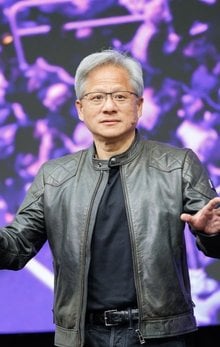
Nvidia’s founder and CEO, Jensen Huang, offers a vision of how these facilities are evolving:
“AI is now infrastructure, and this infrastructure, just like the internet, just like electricity, needs factories,” he explains.
“These factories are essentially what we build today. They’re not data centres of the past. These AI data centres, if you will, are improperly described. They are, in fact, AI factories. You apply energy to it, and it produces something incredibly valuable, and these things are called tokens”.
Jensen’s framing reflects the unique role of contemporary data centres — not merely as digital warehouses, but as engines of economic and technological productivity, reshaped to synthesise intelligence at scale.
And advances in hardware directly translate to new investment requirements.
According to JLL’s 2025 Global Data Center Outlook, GPU improvement cycles are driving up rack densities at a record pace — from 41kW to 130kW today, to upwards of 250kW per rack in the future. This not only means higher capital cost per square metre, but a dramatic increase in operational and energy demands.
Forward-thinking operators are rushing to address these needs, with suppliers and technologists competing to deliver breakthroughs in power delivery and cooling.
Transforming asset values and capital flow
Consultancies tracking the sector are nearly unanimous about what comes next. JLL, in its 2025 Global Data Center Outlook, summarises:
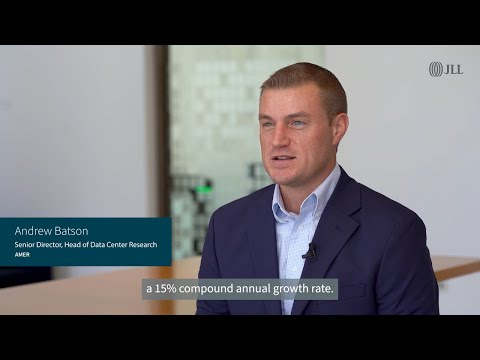
“The data centre industry stands at the dawn of a transformative era, driven by the relentless advancement of artificial intelligence. This technological revolution is not merely evolving the digital infrastructure landscape, it is fundamentally redefining it.”
JLL’s analysis projects a compound annual growth rate (CAGR) of 15% for the global data centre market through 2027, with an upside scenario reaching 20%. The firm estimates that roughly US$170bn of data centre asset value will require new construction lending or permanent financing in 2025 alone.
While asset trades are anticipated to increase moderately, the real headline is the flood of capital into new facilities, upgrades, and strategic land acquisitions.
Significantly, the demands of AI mean the distinction between training and inference is fuelling new investment patterns: hyperscale “training” data centres cluster near robust power sources, while edge and inference-oriented sites move closer to major population centres for lower latency. This “decoupling” is shaping both where and how capital is spent.
By 2030, McKinsey expects data centres will need US$6.7tn in global investments to meet the surging demand.
But for companies across the compute power value chain, making investment decisions is challenging and hinges on forecasting global demand for data centre capacity.
So what are some of the fundamental factors data centre operators and the investors behind them must consider as they define their strategies for the rest of 2025 and beyond?
- Surging capital expenditure: Major operators are raising capex targets by billions, channelling money toward hyperscale campuses and high-density expansions.
- AI as investment catalyst: The scale and urgency of AI training are dramatically increasing funding — JLL forecasts data centre energy demand will double within five years.
- Private equity momentum: Private equity’s role is set to expand, underwriting both new builds and acquisitions as institutional investors chase long-term digital infrastructure returns.
- Sustainability and power: With energy demands and environmental scrutiny rising, next-generation cooling, power procurement (including interest in nuclear SMRs) and efficiency are central to investment strategies.
- New ecosystems: Interconnection, carrier-neutrality and hybrid workloads require diverse asset portfolios.
From capex to capability: The next frontier
High-profile initiatives among technologists and solution providers reinforce the sector’s ongoing transition.
Schneider Electric, for example, has highlighted the mission-critical status of cooling in making high-density AI data centres feasible.
Discussing the company’s partnership with Nvidia, Olivier Blum, CEO of Schneider Electric, emphasises the importance of collaboration for the future of AI and the data centre investments this will entail.
“Schneider Electric and NVIDIA are not just partners – our teams are driving advanced R&D, co-developing the infrastructure needed to power the next wave of AI factories globally.
“Together, we’ve seen tremendous success in deploying next-generation power and liquid cooling solutions, purpose-built for AI data centres.”
Meanwhile, modular approaches by companies like Vertiv are accelerating delivery of fully operational sites and enabling flexibility for investors.
Vertiv recently unveiled OneCore, a global prefab solution to cut deployment time and simplify high-density data centre builds for AI and HPC infrastructure.
"Vertiv OneCore is our answer to the need for reducing complexity and enabling speed in building data centre capacity at scale,” says Viktor Petik, Senior Vice President of Infrastructure Solutions at Vertiv.
“We know the challenge isn't just designing for today's needs but building an adaptable foundation for the future. This solution reduces project complexity by standardising key components while preserving the flexibility to scale and evolve, expand easily and integrate new technologies as business and IT requirements evolve."
But what do these changes mean for the next wave of data centre investment?
Asset managers, operators and technologists are converging on one conclusion: future-ready capacity is non-negotiable.
As new AI models outpace existing infrastructure, those unable to invest quickly risk slipping behind in both capability and profitability.

An era of acceleration
The surge in data centre investment is not simply about keeping up with present needs, but anticipating the next generation of digital and AI innovation.
The convergence of AI demand, hardware advancements, and vast new capital flows ensures this sector will remain not just a destination for money, but a driver of global economic and technological evolution.
The data centre sector’s growth is staggering — and in a world where AI’s limits remain undefined, there is every indication the torrent of industry investment in 2025 is only just the beginning.
Company portals



Executives
Adaire Fox-Martin
Chief Executive Officer & President
Jensen Huang
Founder and CEO

Olivier Blum
Chief Executive Officer