
How AI Data Centres Are Exposing US Power System Limits
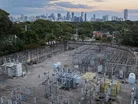
The race to scale AI is placing data centres at the centre of an energy challenge that the US power system struggles to match.
As global investment in data centres has reached a forecast of US$6.7tn by 2030 with US$2.7tn concentrated in the US, operators face a simple constraint: power availability is not keeping pace with digital infrastructure demand.
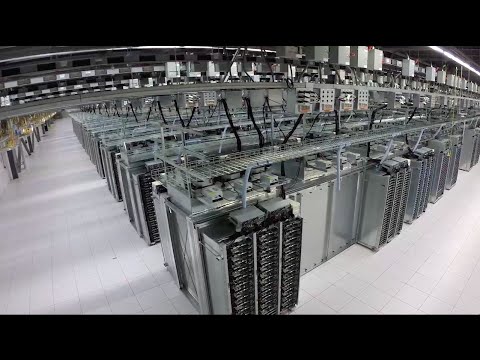
AI workloads are redefining how data centres consume energy. Traditional server racks operate at between 5kW and 10kW, yet AI-optimised racks now reach between 50kW and 100kW.
This rapid increase places pressure on both power delivery and cooling systems, reshaping how facilities are designed and located.
Jon Clark, Associate Director at consultancy Gleeds, explains how the technology itself dictates infrastructure decisions.
"The chips are driving the power, the cooling, the infrastructure, the sites, where the availability is, where the customers need to be, where the customers are then buying that technology and where they need to be placed," he explains.
This shift is visible in markets such as Texas, where the Electric Reliability Council of Texas projects that data centre demand may reach around 78GW by 2031, accounting for roughly 36% of statewide load.
It signals a growing gap between data centre expansion and grid capacity.
Interconnection delays reshape data centre strategy
As demand increases, interconnection queues are becoming a defining barrier. Construction can face multi-year delays when data centre operators attempt to connect large campuses to the grid, slowing deployment timelines for AI infrastructure.
The constraint pushes operators towards breaking free from the grid with alternative energy models. Off-grid, or 'island-mode' systems allow data centres to generate and manage their own power independently of the utility network.
Maura Yates, CEO of Mothership Energy, highlights how congestion accelerates this trend.
"We're seeing this increased demand for it because the grid-tied interconnect queue is congested and this alternative may provide a way to bypass it," she says. "We're going to see this demand for off-grid projects because the juice is now worth the squeeze."
However, this trend also shifts responsibility for reliability and infrastructure investment directly onto operators and their partners.
Gas generation underpins AI infrastructure growth
In the near term, natural gas plays a central role in supporting off-grid data centres. Operators require dispatchable power to meet the “five nines” reliability standard, meaning 99.999% of uptime.
Intermittent renewable sources such as wind and solar do not have the power to deliver this level of consistency at scale without extensive storage systems.
Peter Perri III, Managing Partner at Jupiter Island Capital, says: "What we've seen over the last couple of years is that movement from chips being the primary scaling constraint to power generation being the primary scaling constraint."
A 1GW gas plant may occupy around 40 acres, whereas equivalent renewable capacity requires far more land, often distant from fibre networks that data centres rely on for connectivity.
Yet supply chains for gas infrastructure are also under pressure. Whitney Switzer, CEO at Sorellis, points to limited availability of proven equipment and expertise.
"Even when you're thinking about gas generation, there are only a couple of companies that produce the equipment that is validated and tried and true to deploy," she explains.
"When you're in these big projects, especially in remote areas, everybody on site is dependent on certain processes and timelines in these contracts."
Regulation, community pressure and operational risk
Regulatory frameworks are evolving alongside this rapid expansion. In Texas, Senate Bill 6 introduces stricter requirements for large energy users above 75MW, including disclosure of on-site generation and participation in grid support during emergencies.
At federal level in the US, Donald Trump's proposed legislation such as the Decentralized Access to Technology Alternatives Act of 2026 aims to exempt fully off-grid systems from certain regulatory oversight, provided they remain separate from the main grid.
At the same time, community resistance is growing. By early 2025, around US$64bn of US data centre projects faced delays or opposition linked to concerns about energy use, water consumption and local impact.
Sam Lai, Head of Development at Sorellis, acknowledges the visibility of the sector. "There's no getting around the fact that data centres are not super-popular right now," he says.
As projects scale, execution risk increases. Large AI data centre campuses may consist of multiple buildings, each costing more than US$1bn. Without grid backup, reliability depends entirely on the performance of on-site systems and partners.
Brandon Lobb, a Partner in Troutman Pepper Locke’s Energy Transactional Practice Group, outlines the shift in priorities. "AI has shifted the centre of gravity in the energy market," he suggests. "Power availability – not just price – is now the defining variable in digital infrastructure strategy."
For the data centre sector, this places energy infrastructure at the core of decision-making, reshaping how facilities are powered and delivered across the US.





Executives

Brandon Lobb
Partner

Jon Clark
Associate Director

Maura Yates
CEO

Peter Perri III
Managing Partner

Whitney Switzer
CEO