
How are Data Centres Shifting to Zero-Water Cooling Tech?
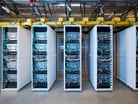
As data centre power density grows, so too does its environmental footprint. Water consumption, in particular, has become a critical concern in the context of climate change and rising global demand.
Traditional evaporative cooling systems used by hyperscale facilities can consume up to 1.5 million litres of water per day, putting pressure on water-stressed regions and raising concerns about long-term sustainability.
To address this, companies including Microsoft, Evolution Data Centres, Vertiv and Bridge Data Centres are moving towards zero-water cooling.
Using closed-loop systems, engineered fluids and hybrid designs, these operators are replacing evaporative methods with alternatives that conserve resources without compromising performance.

Microsoft pushes closed-loop cooling across global estate
In August 2024, Microsoft began deploying a closed-loop, chip-level liquid cooling system that eliminates the need for evaporative water entirely.
Once filled at construction, the system recirculates coolant continuously, reducing annual water use by more than 125 million litres per facility.
The new system marks a major step forward in Microsoft’s sustainability targets, following a steady reduction in its Water Usage Effectiveness (WUE) from 0.49 L/kWh in 2021 to 0.30 L/kWh by 2024.
Pilot sites in Phoenix, Arizona and Mt. Pleasant, Wisconsin are already using the system, with all future builds to follow the zero-water design from August 2024 onwards.
“These new liquid cooling technologies are designed to circulate water within a closed network,” says Steve Solomon, Vice President of Data Centre Infrastructure Engineering at Microsoft. “Once the initial setup is complete, the system operates independently, dissipating heat efficiently without additional water intake.”
Microsoft reports an 80% improvement in WUE compared to older data centres and plans to scale the system across its global infrastructure.
The closed-loop model is also engineered to maintain temperature stability at the chip level, aligning with the demands of high-density AI computing.

Evolution Data Centres builds for dry environments
Singapore-based Evolution Data Centres is applying a similar strategy across Southeast Asia.
Its data centres operate with air-cooled, closed-loop systems designed for high temperature and humidity environments.
These do not require evaporative water and remove reliance on local infrastructure, making them suitable for emerging markets facing water scarcity and digital growth pressures.
The company’s deployment approach is tailored to urban growth areas, helping new facilities to scale while remaining compliant with environmental and regulatory standards.
Immersion cooling reaches maturity
Firms such as Iceotope and LiquidStack are leading on immersion cooling – a method that submerges servers in non-conductive fluids to remove heat directly.
These fluids either circulate passively or follow a two-phase process, evaporating to absorb heat and condensing for reuse. There are no pumps, fans or water involved.
This method delivers cooling energy reductions of more than 90%, especially in AI training environments with high thermal output.
“Data centre operators recognise the benefits of liquid cooling but need assurance around long-term fluid management,” says Peter Huang, Global Vice President of Data Centre Thermal Management at Castrol.
“Castrol has delivered fluid services for the automotive industry for decades – we're now bringing this proven expertise to data centres with a service model that supports optimal performance throughout the entire lifecycle.”
Immersion cooling also allows for silent, compact builds and is increasingly adopted in edge and retrofit scenarios.
Vertiv and Bridge Data Centres explore hybrid solutions
Vertiv, Bridge Data Centres and Chindata Group are collaborating on X-Cooling, a hybrid system that combines ambient air cooling and closed-loop technology to eliminate water use.
In Hebei Province, China, deploying X-Cooling is expected to save 1.2 million tons of water annually for every 100MW of capacity.
Vertiv’s Liebert XDU is another hybrid model that recycles coolant internally, supports lighter air-cooled loads and can repurpose captured heat for district-level heating schemes.
This type of modular system helps operators transition from legacy facilities to water-free environments without full infrastructure replacement.
Quantifying the savings
Across the board, these technologies offer measurable gains:
- Over 125 million litres saved per data centre annually
- WUE reduced to near-zero in new builds becomes achievable
- Improved Power Usage Effectiveness (PUE), since the ability to operate at higher temperatures allows the use of more efficient chillers
- Lower dependence on municipal water supply and infrastructure
With Microsoft, Vertiv, Evolution DC, Iceotope and LiquidStack at the forefront, the transition to zero-water data centres is reshaping how hyperscale infrastructure is planned, cooled and sustained.
