How Closed-Loop Cooling Is Reshaping Data Centre Design
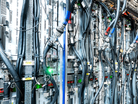
The data centre industry is undergoing a fundamental shift in how it approaches thermal management, driven by the dual pressures of AI-driven density requirements and mounting concerns over resource consumption.
Closed-loop cooling systems, once considered a specialised solution, are rapidly becoming the standard architecture for operators seeking to balance performance with environmental responsibility.
At the heart of this transformation is a simple principle: circulating coolant through sealed systems that eliminate the need for constant water replenishment.

Unlike traditional evaporative cooling, which loses millions of gallons annually through tower operations, closed-loop architectures recirculate fluid continuously, removing dependency on freshwater resources whilst simultaneously enabling far higher rack densities.
The waterless target for data centres
Edged US has positioned waterless cooling at the centre of its expansion strategy. In 2025, the company broke ground on its second Aurora, Illinois facility, a high-density AI data centre designed to save more than 277 million gallons of water annually compared to conventional evaporative approaches. The site has been designed to deploy closed-loop, waterless cooling capable of supporting densities up to 200kW per rack using its ThermalWorks liquid-to-chip system.
"Safety and performance are at the core of everything we do," said Bryant Farland, President and CEO of Edged US. "From design through construction and operations, we hold ourselves and our partners to the highest standards of safety excellence. This new facility demonstrates our commitment to building ultra-efficient, resilient and secure data centres that protect both people and the planet."
The Chicago campus, where Edged's first facility opened in February 2025, will consume zero water for cooling. Portfolio-wide, the operator targets an average design power usage effectiveness (PUE) of 1.15, placing its facilities among the most efficient in operation. The second Aurora site is scheduled to come online in Q2 2027 as part of a gigawatt-scale roadmap spanning Atlanta, Columbus, Council Bluffs, Dallas, Des Moines, Kansas City and Phoenix.
Bryant emphasised the strategic importance of Aurora's infrastructure. "We are proud to continue our partnership with the City of Aurora as we deliver world-class infrastructure that advances innovation, supports the local economy and preserves critical natural resources."
AI-powered optimisation at OVHcloud
While eliminating water consumption addresses one sustainability challenge, the energy efficiency of cooling infrastructure remains paramount.
OVHcloud has introduced what it calls ‘Smart Datacenters’, combining redesigned hardware with AI to reduce cooling electricity consumption by up to 50% and water usage by up to 30%.
The European cloud provider's fifth-generation server rack features a serial cooling configuration within clusters, while maintaining parallel server organisation for maintenance access.
Hardware components including CPUs and GPUs are cooled through direct-to-chip waterblocks designed by OVHcloud, with heat dissipated through a closed-loop water circuit extending across the entire data centre.
"We are delighted to unveil a new generation of evaporative cooling solutions, including Smart Racks," said Miroslaw Klaba, R&D Director at OVHcloud. "With our one integrated cooling loop design, we are paving the way for Smart Datacenters that leverage our most advanced technologies as well as artificial intelligence to tackle what was once an impossible equation."
The cooling module, now approximately 50% more compact than previous generations, sits outside the rack and can cool multiple rows whilst monitoring more than 30 sensors. These track pressure, flow speed and water temperature, enabling real-time adjustments to server workloads. The Smart Dry Cooler, located externally, occupies half the space and uses half the fans of earlier equipment, contributing to the 50% reduction in cooling power consumption.
OVHcloud's predictive algorithms analyse data from racks, cooling modules and dry coolers, feeding information into a datalake that determines optimal behaviours. Connected to local weather stations, the system injects precisely calculated water volumes into adiabatic cooling pads.
Unlike traditional adiabatic systems, OVHcloud's design eliminates recirculation loops and the associated pumps, tanks and level sensors, simplifying maintenance whilst reducing complexity.
How Johnson Controls embraces two-phase innovation
The evolution towards increasingly efficient closed-loop systems has attracted investment from established building technology leaders.
In October 2025, Johnson Controls announced a multi-million dollar strategic investment in Accelsius, a specialist in two-phase, direct-to-chip liquid cooling technology. Two-phase solutions exploit phase change from liquid to vapour for heat removal, enabling more efficient heat extraction with reduced energy consumption.
"With the sharp growth in AI, cooling innovation has become a front-line imperative to meet the increasing demands of high-density data centres," said Austin Domenici, President, Global Data Center Solutions at Johnson Controls. "Leveraging our leading capabilities, our mission is to drive the industry forward to unlock new levels of energy efficiency across the cooling chain."
Josh Claman, CEO of Accelsius, highlighted the operational advantages.
"With power-dense AI workloads, data centres are moving to liquid cooling," he said. "Our two-phase, direct-to-chip cooling solutions use non-conductive fluids in highly efficient loops to stay ahead of the demanding power-dense AI and HPC workloads. This technology enables 35% OpEx savings over single-phase direct-to-chip and 8–17% total cost of ownership savings."
Johnson Controls has previously pioneered breakthrough innovations including its YORK YVAM magnetic bearing chiller, which consumes 40% less power annually than comparable solutions with zero on-site water consumption.
The company's Silent-Aire Coolant Distribution Unit platform offers scalable cooling capacities from 500kW to over 10MW, enabling owners to reduce non-IT energy consumption by more than 50% in most North American data centre hubs.
Strategic necessity: The evolution of closed-loop cooling
The widespread adoption of closed-loop cooling reflects broader industry pressures. With cooling systems accounting for 30% to 40% of total data centre energy consumption, deploying efficient solutions has become critical. Water scarcity and regulatory scrutiny in drought-prone regions are pushing operators towards systems that eliminate cooling towers entirely.
For facilities designed from the outset for liquid cooling, the benefits extend beyond sustainability metrics. Operators gain faster deployment capabilities for AI hardware, more consistent outlet temperatures and greater predictability in long-term energy planning. As GPU-driven workloads proliferate, thermal solutions that move beyond air-based approaches are transitioning from competitive differentiator to operational requirement.
Closed-loop systems represent a convergence of sustainability objectives and technical necessity. By eliminating freshwater dependency whilst enabling higher densities and improved energy efficiency, these architectures are reshaping data centre design across hyperscale and colocation segments.
As the industry confronts mounting pressure to reduce resource consumption without compromising compute capability, closed-loop cooling has evolved from innovation to infrastructure standard.
Company portals




Executives
Austin Domenici
President, Global Data Center Solutions
Bryant Farland
Chief Executive Officer
Josh Claman
CEO

Miroslaw Klaba
R&D Director