How Data Centres Should Approach Transformer Procurement
In the race to deliver ever larger, AI-ready facilities, transformer procurement has quietly become one of the biggest execution risks for data centre developers.
To meet aggressive milestones and avoid future downtime, operators now need transformer partners who can combine speed, scale and long-term support rather than treating electrical equipment as an afterthought.
Surging transformer demand, tightening supply
The data centre boom is colliding with a wider grid modernisation push, creating unprecedented competition for transformers and other critical electrical gear.

Utilities are replacing ageing distribution transformers at scale, competing directly with hyperscale and colocation operators for limited manufacturing capacity. Gartner analysis expects global data centre electricity consumption to roughly double this decade, with projections rising from 448TWh in 2025 to 980TWh by 2030, putting further strain on electrical supply chains.
In this context, transformers are no longer a commodity line item – they are a strategic constraint that can determine whether a site energises on time or slips by months.
Moreover, according to the US Department of Energy (DOE), data centres are expected to account for up to 12% of total US electricity consumption by 2028, up from 4.4% in 2023, putting huge pressure on upstream power infrastructure.
DOE forecasts also suggest data centre electricity use could reach 325-580 TWh by 2028, more than triple today’s levels, further intensifying demand.
This is happening against a backdrop of ageing distribution assets, with 55% of distribution transformers in service today expected to reach their lifespan by 2030.
Utilities are ordering large volumes of replacements, just as hyperscalers and colocation providers are ramping procurement for new campuses.
In 2026 alone, data centres will require around the same capacity of three-phase transformers – 74 GW – as is replaced annually across the US grid, underscoring how tight the market has become.
Why speed, scale and support matter
In this environment, lead times for transformers have become a board-level concern, with project schedules and revenue forecasts hinging on when units arrive on site.
Every month of delay in completing a data centre can cost developers approximately US$14.2m in lost revenue, cost overruns and contractual penalties, according to STL Partners. The bottleneck is increasingly power, not capital, as grid and equipment constraints dictate how quickly AI and cloud capacity can actually be brought online.
Developers have historically been forced into a binary choice: accept long lead times from large global OEMs, or gamble on fast, low-cost imported transformers that may fall short on reliability and aftercare. That trade-off is becoming untenable as facilities get larger, loads get denser, and uptime expectations tighten.
Suppliers like Maddox position themselves as a third way – offering the engineering quality and service of a big OEM, combined with shorter lead times enabled by US-based manufacturing and stockholding.
Building for speed
To protect timelines, leading data centre builders are no longer buying transformers on a just-in-time basis – they are engineering procurement into the earliest stages of site planning.
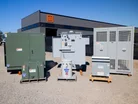
Engaging suppliers early allows design teams to build familiarity with specifications and standardise around proven configurations, reducing rework and downstream delays. Maddox, for example, has new transformers, like padmounts, substations, and dry-types, built in advance and stores thousands across yards in the US, enabling guaranteed on-time deliveries for projects with aggressive schedules.
Strategic inventory is becoming a critical differentiator. Maddox holds emergency spares in stock for rapid deployment, minimising downtime in an emergency or if a unit is damaged during installation or operation. The company also offers inventory planning solutions where customers procure transformers ahead of need and store them at Maddox locations until sites are ready.
This approach helps data centre operators decouple build schedules from volatile lead times, ensuring transformers are on hand when civil and mechanical works reach the right stage.
Securing future capacity at scale
As campuses become multi-site, multi-region platforms, developers are reserving manufacturing capacity years ahead and treating transformer supply as a portfolio strategy rather than a project-by-project decision.
Maddox offers thousands of transformer manufacturing slots annually for new US builds, giving data centres room to lock in future capacity for planned expansions.
Instead of haphazard purchasing as needs arise, operators are reserving production in anticipation of new projects, which helps smooth both internal capex planning and supplier utilisation.

This shift is also reshaping supplier selection. With 55% of distribution transformers nearing end-of-life by 2030, utilities represent a massive, ongoing source of demand.
Maddox’s focus on the commercial and industrial market – rather than utilities – means its backlog is not dominated by grid replacement orders, enabling more attention and capacity for data centre customers. That focus helps avoid the crowding-out effect many developers experience when competing with utility-scale orders at large OEMs.
From transactions to partnerships
Transformer procurement is moving from transactional purchasing to long-term supply chain partnership, driven by the cost of failure and the complexity of modern facilities.
Buyers increasingly want suppliers who understand their roadmap, can plan inventory and capacity around it, and will stand behind their product for the long term. The conversation has shifted from “How fast can you get it done?” to “Can I trust you not to screw this up?” – a mindset change many see as healthy for the industry.
55%
Support is a core part of that equation. Some developers opt for importers offering lower prices and faster lead times, but this can mean compromises on long-term reliability, limited warranties, and minimal boots-on-the-ground support.
Maddox provides US-based support that includes inventory planning schedules, on-site technical training, and five-year warranty coverage, alongside in-house repair facilities and a field service network that can respond within 48 hours.
For operators managing hundreds of transformers across campuses, that depth of support – and the availability of emergency spares – can be the difference between a minor incident and a prolonged outage.
For data centres navigating a power-constrained world, transformer procurement is no longer just a line item in the budget – it is a strategic lever for speed to market and resilience.
By engaging suppliers early, standardising designs, reserving capacity and prioritising partners who offer speed, scale and robust support, operators can keep building at the pace AI and cloud demand now require.
For more on Maddox’s transformer offerings, visit its homepage and padmount transformer portfolio at maddox.com.