Google Cuts Data Centre Emissions Despite AI Surge
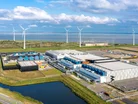
The explosion of AI creates a power paradox for technology companies. The same advanced models designed to address environmental challenges simultaneously drive substantial electricity demand across global data centres.
Google has now demonstrated a path forward, reducing data centre emissions by 12% during 2024 even as electricity consumption jumped 27%, according to its 10th annual environmental report. The company attributes this achievement to clean energy procurement, hardware innovation and infrastructure efficiency improvements.
"We're proud to release our 10th annual Environmental Report, which details how we're working to address the increased energy demands of AI to enable this positive impact, while also showcasing how AI can be used to build a more energy-efficient and resilient world," it says.
Record clean energy procurement
Google signed contracts for over 8GW of additional clean energy generation in 2024, representing the largest annual total in its history and double the previous year's volume. The company has now secured more than 170 agreements since 2010 to purchase over 22GW of clean energy generation.
- Data centre emissions down 12% despite a 27% rise in electricity use
- Signed over 8GW of new clean energy contracts in 2024
- Six times more computing power per electricity unit than five years ago
- AI tools cut 26 million tonnes of emissions, exceeding Google's own footprint
- Ironwood TPU runs 30 times more efficiently than the 2018 Cloud TPU
The company brought 2.5GW of new clean energy online during 2024. It maintained what it describes as a 100% renewable energy match on a global basis for the eighth consecutive year.
Carbon-free energy across data centres and offices increased from 64% to 66% on an hourly matching basis. Nine out of 20 grid regions with Google-owned and operated data centres achieved at least 80% carbon-free energy.
Google's clean energy purchases avoided more than 8.2 million tonnes of carbon dioxide equivalent emissions in 2024 alone. From 2011 to 2024, the company estimates its clean energy purchasing cumulatively avoided more than 44 million tonnes of emissions.
"Transparency, accuracy and rigour are the foundation of sustainability reporting," says Luke Elder, Lead Sustainability Reporter at Google. "As the volume and complexity of data and strategies grow, we're innovating our processes to meet rising expectations without compromising on these core commitments."
Nuclear and geothermal advances
Google has moved beyond traditional renewable sources by signing the world's first corporate agreement to purchase nuclear energy from small modular reactors, partnering with Kairos Power. The deal will bring up to 500MW of clean energy to US grids by 2035, with the first reactor expected to become operational by 2030.

Google also expanded its partnership with Fervo Energy for enhanced geothermal projects in Nevada, contracting for a 115MW project. This expansion will increase the amount of enhanced geothermal generation enabled by Google by almost 25 times compared to its initial pilot project.
Data centre efficiency improvements
Google's data centres now deliver over six times more computing power per unit of electricity than they did five years ago. The average annual power usage effectiveness for the company's global fleet dropped to 1.09 in 2024, below 1.10 for the first time in six years.
The company's seventh-generation Tensor Processing Unit, called Ironwood, operates nearly 30 times more efficiently than the first Cloud TPU from 2018. The sixth-generation TPU, Trillium, delivers 67% more energy efficiency than the previous generation and 14 times more compute per watt compared to first-generation Cloud TPUs.
Five of Google's products enabled others to collectively reduce an estimated 26 million tonnes of greenhouse gas emissions in 2024, exceeding Google's total emissions of 11.5 million tonnes during the year.
Company portals

Executives
Luke Elder
Senior Lead, Sustainability Reporting

Mike Laufer
CEO
Sundar Pichai
CEO