HSCALE Expands in Italy with Milan Data Centre Investment
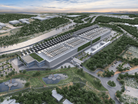
HSCALE has closed its second hyperscale data centre campus in Northwest Milan, taking its total committed power capacity in the region to 250MW as demand for AI and cloud infrastructure continues to grow across Southern Europe.
The Bain Capital-backed company says the two campuses are scheduled to be ready for service in 2028, with more than €2bn (US$2.32bn) committed to the Milan market. Pre-construction and procurement work is already underway across both developments.
Located in Settimo, Northwest Milan, the campuses sit within one of Europe’s most established hyperscale locations. The area already hosts major cloud providers and continues to attract new infrastructure investment due to connectivity access and available grid capacity.
HSCALE says both sites are fully owned, with power already committed and key development milestones secured. In a market where land acquisition, power access and permitting can delay projects for years, the company positions delivery certainty as a core part of its expansion strategy.
Flexible infrastructure for AI workloads
The Milan campuses are designed to support a mix of traditional cloud computing and high-density AI deployments, with cooling infrastructure built to accommodate multiple operational requirements.
HSCALE says its design approach allows customers to move between air-cooled, direct liquid-cooled and hybrid cooling configurations without major changes to the building structure or additional capital expenditure.
This flexibility is becoming increasingly important as hyperscale operators expand AI deployments that require higher rack densities and liquid cooling technologies, while still supporting networking, storage and compute environments that continue to rely on more traditional cooling systems.
“We designed HSCALE's Milan campuses around a simple principle, the building should never be the bottleneck,” says Oliver Schiebel, CEO at HSCALE. “Our base design is liquid-cooled first, built for the most demanding hyperscale and AI workloads, and can pivot to air-cooled traditional deployments in the same physical structure. No redesign, no additional capex. We design and build like this because we understand the long-term commitments our customers must make.”
The company says the design philosophy follows 12 months of engineering work aligned with hyperscaler requirements. The aim is to allow operators to deploy current infrastructure while retaining flexibility for future technology changes as AI workloads continue to evolve.
Milan strengthens hyperscale position
Milan continues to grow as a strategic connectivity location outside Europe’s traditional FLAP-D markets – Frankfurt, London, Amsterdam, Paris and Dublin.
The city is home to MIX, Italy’s largest internet exchange point, which connects more than 420 networks. Its location places it at a central point between European and Mediterranean network routes, supporting growing demand for regional cloud and AI infrastructure.
HSCALE says the expansion reflects a wider industry movement towards markets with stronger energy availability and connectivity options.
“Milan is one of the strongest hyperscale markets in Europe and we are committing around €2bn (US2.32bn) to this region because we understand what the market needs and are serious about its growth potential,” says Paul Berry-Selwood, CCO at HSCALE.
“Our team closed the second site, secured the power and is already progressing through pre-construction, ensuring we deliver real capacity, as fast as possible.”
The company also expects the campuses to support employment growth during both construction and operational phases. HSCALE says the developments will draw from Milan’s engineering, IT and data centre operations workforce.
Alongside infrastructure investment, HSCALE says it is supporting local community initiatives through sponsorship of the Festival di Villa Arconati, a long-running cultural event in the Milan metropolitan area.
Energy strategy and long-term growth
Energy sourcing forms a central part of HSCALE’s Milan expansion strategy. The company says almost 50% of the campuses’ power supply will come from renewable generation sources including solar, wind and hydroelectric energy.

HSCALE adds that it intends to increase the renewable share of its energy mix as additional grid capacity and generation projects become available across Northern Italy.
The company’s clean energy strategy is supported through a partnership with Aquila Clean Energy, providing access to integrated renewable energy supply rather than relying solely on conventional power purchase agreements.
HSCALE is backed by Bain Capital, which manages approximately $225bn in assets across private equity, venture capital, credit markets and real assets investments.
With both Milan campuses progressing through development, HSCALE is continuing work across its broader hyperscale infrastructure pipeline while preparing for delivery milestones scheduled for 2028.