
Hut 8 Commercialises US$9.8bn Texas AI Data Centre Lease
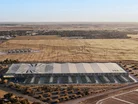
Hut 8 has commercialised the first phase of its Beacon Point AI data centre campus in Nueces County, Texas through a 15-year lease valued at US$9.8bn.
The agreement covers 352MW of IT capacity and supports the deployment of hyperscale AI training and inference infrastructure for a confidential high-investment-grade tenant.
Structured as a triple-net lease, the deal forms part of Hut 8’s wider strategy of combining power infrastructure, digital infrastructure and large-scale compute environments.

Beacon Point becomes the company’s second AI data centre campus commercialised under its power-first development model, following its River Bend project.
Hut 8 says the transaction increases its total contracted AI data centre capacity to 597MW, with aggregate base-term contract value reaching approximately US$16.8bn.
The campus has secured an interconnection agreement for 1GW of utility capacity, with initial energisation expected in the first quarter of 2027.
AI infrastructure and hyperscale growth
The Beacon Point campus is designed to support AI workloads at scale, with Hut 8 developing a dedicated AI factory based on NVIDIA’s DSX reference architecture.
The system is engineered to support high-density AI training and inference operations, which place increasing demands on power cooling and infrastructure performance.
The initial phase requires approximately 500MW of utility capacity and forms part of a broader campus capable of scaling to 1GW. Hut 8 says the first data hall is expected to be delivered in the third quarter of 2027.
Asher Genoot, CEO of Hut 8, explains how the project reflects the company’s infrastructure strategy.
“Beacon Point underscores why we start with power and maintain flexibility across end markets.
"Operating across multiple applications lets us underwrite assets that single-use-case developers cannot, then redirect them toward higher-value commercialisation pathways as demand evolves.
"This flexibility is intentional, and it is embedded in how we underwrite, develop, and commercialise infrastructure.”
The company originally assessed the site as part of its Bitcoin infrastructure operations before repositioning it towards AI infrastructure as demand patterns changed.
Hut 8 describes this as a core part of its power-first underwriting model, where energy availability and grid access drive site selection before commercial applications are finalised.
Under the lease terms, the base contract value includes a 3.0% annual rent escalator. Hut 8 states that three optional five-year renewals could increase the total potential contract value to approximately US$25.1bn.
Engineering for high-density AI environments
The campus also reflects changing requirements within AI infrastructure design. Hut 8 says the original data hall design was planned for 224MW of IT capacity, based on commercially deployed chip architectures available during the early design phase.
As AI systems evolved towards higher rack-level power densities, the company redesigned the facility to support a 352MW AI factory within the same land and utility footprint. This represented a 57% increase in planned IT capacity without expanding the site.
NVIDIA is acting as a technology partner for the project, while Jacobs serves as engineering, procurement and construction management lead. Vertiv is supporting critical digital infrastructure systems including power and cooling environments.
Asher says the project demonstrates the repeatability of Hut 8’s development model. “This transaction commercialises the first building of our newest gigawatt-scale campus and marks our second AI data centre lease," he says.
"More importantly, it demonstrates that our development model, which pairs power-first underwriting with disciplined commercialisation and institutional execution, is repeatable and extendable across our broader pipeline.”
Bob Pragada, Chair and CEO of Jacobs, outlines the engineering focus behind the campus build.
“Beacon Point underscores the strength of our partnership with Hut 8 and the discipline required to deliver AI infrastructure with speed, safety, and certainty.
"Building on our work together at River Bend, we are applying our EPCM leadership and advanced digital twin technology to set the benchmark for AI infrastructure deployment, optimisation, and resiliency.”
Digital twin technology allows operators and engineering teams to simulate, monitor and optimise infrastructure performance in real time, improving operational planning and resilience.
Power partnerships and campus expansion
Power access remains central to the project. Hut 8 is developing Beacon Point alongside AEP Texas, a subsidiary of American Electric Power, and the Corpus Christi Regional Economic Development Corporation.
The interconnection agreement with AEP Texas secures 1GW of utility capacity for the site, supporting future campus expansion and additional AI infrastructure deployment.
Giordano Albertazzi, CEO of Vertiv, highlights the growing link between power delivery and AI capacity.
“Next-generation AI infrastructure will be defined by how quickly power can be converted into AI capacity. Partnering with Hut 8 aligns with Vertiv's systems-level approach to converged physical infrastructure – bringing power, cooling, and deployment execution at scale.
"At Beacon Point, we are applying Vertiv's global manufacturing depth, supply chain discipline, engineering expertise, and critical digital infrastructure portfolio to help deliver AI capacity with speed, reliability, and long-term performance.”
The project is also expected to contribute to regional economic activity in Texas.
Aaron Bowman, CEO of the Corpus Christi Regional Economic Development Corporation, says: “Beacon Point reflects the type of long-term investment that supports durable growth in the Coastal Bend economy. Hut 8's focus on power infrastructure and disciplined execution aligns with the region's assets and workforce capabilities, and we are pleased to support the advancement of this campus in Nueces County.”
Alongside Beacon Point, Hut 8 says it continues to advance a broader infrastructure pipeline covering 7,545MW of energy capacity across development diligence and exclusivity stages, applying the same power-first strategy used at both River Bend and Beacon Point.
Company portals




Executives
Asher Genoot
Chief Executive Officer
Bob Pragada
Chair & Chief Executive Officer at Jacobs
Giordano Albertazzi
Chief Executive Officer