IEA Warns Grids Must Scale for Data Centre Surge

The International Energy Agency (IEA) has warned that global power grids must undergo rapid expansion and modernisation as electricity demand accelerates, driven in part by data centres and AI workloads.
According to the IEA, global electricity demand is set to grow by more than 3.5% annually over the next five years.
This would see power consumption expand at least 2.5 times faster than overall energy demand during the same period.
In the data centre sector, which is already competing for grid capacity in key markets, the implications are significant.
To keep pace, the IEA estimates that annual investment in electricity grids must increase by 50% by 2030.
"At a moment of significant uncertainty across energy markets, one certainty is that global electricity demand is growing much more strongly than it did over the past decade," says Keisuke Sadamori, the IEA's Director of Energy Markets and Security.
"In this Age of Electricity, the increase in global power consumption through 2030 is set to be equivalent to adding more than two European Unions."
Data centres and electrification drive demand
The IEA attributes much of the growth in electricity demand to industrial electrification, the expansion of electric vehicles and the rapid rise of AI.
Data centres, particularly those supporting large scale AI training and inference, are a key contributor to this shift.
Cooling demand is also climbing, with the UN Environment Programme estimating that cooling now accounts for 20% of global electricity use. In many regions, data centres are adding to this load as they deploy more intensive compute and advanced cooling systems.
Emerging and developing economies remain the largest drivers of demand growth.
However, advanced economies are also seeing rising electricity consumption after roughly 15 years of relative stagnation.
Developed markets are expected to account for around one fifth of total demand growth through 2030.
This trend means tighter competition for grid connections in mature markets, alongside growing opportunities in emerging regions where infrastructure may still be catching up.
Clean generation rises but grids lag

The IEA’s analysis highlights strong growth in renewables and nuclear power.
By 2030, renewables and nuclear are projected to generate 50% of global electricity, up from 42% today.
Solar photovoltaic deployment is leading this shift, while nuclear output has reached record levels.
Natural gas fired generation is also expected to grow through 2030, particularly in the United States and the Middle East.
Coal generation is forecast to decline globally, returning to 2021 levels by the end of the decade. As a result, emissions from electricity generation are expected to remain broadly flat to 2030.
However, increased clean generation does not automatically translate into reliable supply for high load users such as data centres.
Grid infrastructure must expand and become more flexible to integrate new capacity and manage variable output.
"This surge in demand and shift in the power mix underscores the urgent need for expanded grid infrastructure and greater system flexibility to integrate capacity and maintain reliable, resilient systems," says Brendan Reidenbach, Energy Analyst at the IEA.
Connection queues and bottlenecks
The report identifies a major bottleneck in grid connections.
More than 2,500GW of projects – including renewables, storage and data centres – are currently stuck in connection queues worldwide.
These delays can slow data centre site development and increase costs, particularly in regions where grid capacity is constrained.
The IEA suggests that deploying grid-enhancing technologies and implementing regulatory reforms could unlock up to 1,600GW of queued projects in the near term.
Such measures would allow more flexible connections and more efficient use of existing infrastructure, helping accommodate new data centre capacity without waiting for entirely new transmission lines.
"Meeting this demand will require annual investment in grids to rise by 50% by 2030," Keisuke says.
"Expanding flexibility will also be crucial as power networks continue to evolve – so will a strong focus on security and resilience."
Affordability and resilience pressures

Battery storage deployment has increased sharply in markets including California, Germany, Texas, South Australia and the UK, providing short-term flexibility for power systems.
Access to storage for data centres can support resilience strategies and participation in demand response schemes.
Electricity affordability remains a concern. In many countries, household electricity prices have risen faster than incomes since 2019, while elevated prices are also affecting industry.
Data centre operators must therefore balance expansion plans with cost control and long term power procurement strategies.
The IEA stresses that ageing infrastructure, extreme weather and cyber threats present growing risks to power systems.
Modernising operations and strengthening physical protection of critical infrastructure will be essential as electricity demand continues to climb and data centres become even more central to the global economy.
Company portals

Executives

Brendan Reidenbach
Energy Analyst
Fatih Birol
Executive Director
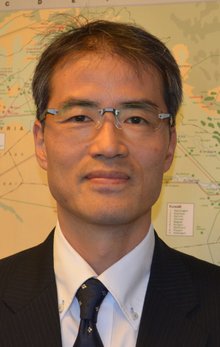
Keisuke Sadamori
Director of Energy Markets & Security