
Inside TeraWulf’s US$290m AI Data Centre Deal with Schneider
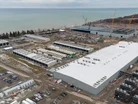
Schneider Electric and Motivair by Schneider Electric have successfully delivered more than US$290m in AI infrastructure solutions for TeraWulf’s rapidly expanding Lake Mariner data campus, next to Lake Ontario in Barker, New York.
Lake Mariner is the site of an old coal plant, which was built in 1984 and retired in 2020. Since then, the site has housed rows of bitcoin mining racks. Now, it has become an AI high-performance computing (HPC) site, with five halls for 3GW of capacity.
The campus leverages liquid cooling solutions from Motivair and integrated power infrastructure from Schneider Electric to support HPC, cloud and AI workloads.
Building at record speed
The partnership supports TeraWulf’s expansion into high-demand AI data centres by integrating top-tier engineering, innovative cooling and advanced power solutions. The result is scalable infrastructure that optimises both energy consumption and overall performance.
Schneider Electric and Motivair were required to meet demanding construction and operational timelines as TeraWulf sought to transform the site into a series of purpose-built, AI data centres within a tight 12-month timeframe.
To achieve this, TeraWulf relied on technical design and engineering guidance to deploy a suite of specialised hardware.
This included Schneider Electric Galaxy VX Uninterruptible Power Supply (UPS), Galaxy Lithium-ion Battery Systems, NetShelter Racks and Enclosures, alongside Motivair Coolant Distribution Units (CDUs), In-Rack Manifolds and ChilledDoors.
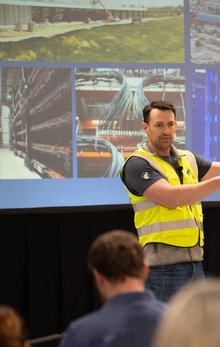
TeraWulf’s Chief Operations Officer Sean Farrell has overseen data centre buildings going up in less than 12 months, which requires engineering on the fly.
For context, a normal data centre would take approximately 36 months to build.
“We work around the clock,” Sean says, explaining that 1,600 people from the local area, Texas, Florida, California and Washington are working on the site in some capacity – from structural and electrical engineers to mechanical contractors and tradespeople.
To build a data centre of the size of some of TeraWulf’s site (The CB-4 hall is 330,000 square feet, for example), the engineering process requires constant refinement. Other sites are due to begin construction in Kentucky, western New York and Texas.
“Kentucky’s going to be easier to build than the data halls here because they’ll replicate that reference design,” says Gary Lamora, VP of Strategic Accounts at Schneider Electric. “There’s a lot of lessons learned when you build that scale.”
“It is an arms race to compute today and who can bring that compute to market the fastest.”
Considerations to build an AI factory include the land and how connected it is to the power grid, and the capacity to deliver the data centre on time and within budget, such as enough trades people available like electric and mechanical contractors.
“This is what it takes to drive data centre building at scale,” Gary explains.

Infrastructure and clean power
The Lake Mariner campus is supported by long-term lead commitments from tenants Core42 and Fluidstack (backed by Google), and draws from a New York regional power grid, which is a mix of 89% zero-carbon, with substantial surplus power available to support customers’ HPC and AI workloads.
“The biggest demand for a data centre is power,” Sean says. “We used our expertise in the power space to work with grid operators to pull a large flow from the grid to power a data centre.”
The first bitcoin mining building served as a base to a group of journalists, who had been invited to the TeraWulf site for a briefing and a tour.
Picture 15,000 small computers, set up in rows within the air-cooled infrastructure. While the long and thin building housed bitcoin mining computers, it doesn't suit the needs of AI HPC, which requires square-shaped buildings for optimal airflow management and the heavy fluid-piping infrastructure needed for liquid cooling.
To keep these advanced systems running efficiently, Schneider Electric’s award-winning software solution, EcoStruxure IT Data Center Expert, was integrated for advanced monitoring and digital intelligence.
Company portals



Executives

Gary Lamora
VP of Strategic Accounts
Sean Farrell
COO