OpenAI Hires Intel's AI Chief for AGI Data Centre Push

The global pursuit of artificial general intelligence (AGI) is fuelling an intense competition for senior technical experts who can build and manage the massive computing infrastructure it requires.
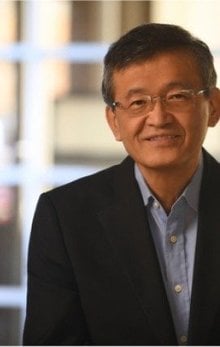
OpenAI has recruited Sachin Katti from Intel where he was the Chief Technology and AI Officer. The move highlights a growing trend where the competition for AGI is not just about algorithms but also about the physical hardware and data centre infrastructure that powers them.

Sachin's role at OpenAI will be to lead the development of the computing systems that will form the foundation of OpenAI's AGI ambitions. His departure from a major chip manufacturer like Intel to an AI research organisation indicates the strategic importance of bespoke infrastructure in the race to develop more advanced AI.
Building compute infrastructure for AGI
The announcement was made by Greg Brockman, President of OpenAI, who confirmed Sachin's appointment on the social media platform X.
Greg stated that Sachin will “work on designing and building our compute infrastructure, which will power our AGI research and scale its applications to benefit everyone”. This refers to the complex web of hardware systems, networking architecture and data centre operations needed to train and run large-scale AI models.
AGI research, which aims to create AI systems with human-like reasoning across multiple domains, demands a colossal amount of computational power.
OpenAI, the developer behind ChatGPT, requires substantial computing resources to handle the enormous datasets and complex calculations involved. Sachin brings a blend of expertise in networking and AI operations, positioning him to address the significant infrastructure challenges associated with scaling AGI research.
Intel's leadership and AI chip competition
In response to the departure, Intel, the global manufacturer of processors and computing hardware for data centres, acted swiftly to restructure its leadership. Lip-Bu Tan, Intel's CEO, will now take direct control of the AI and advanced technology divisions. The move could be seen as an attempt to reassure stakeholders of Intel's continued focus on this critical sector.
In a statement, Intel clarified its position saying: “AI remains one of Intel’s highest strategic priorities and we are focused on executing our technology and product roadmap across emerging AI workloads.”
Sachin’s tenure at Intel spanned approximately four years where he initially led the networking division before his role expanded to include AI operations. His move to OpenAI is particularly noteworthy given he was appointed Chief Technology and AI Officer at Intel in April 2024, only a short time before his departure.
The demand for data centre resources
This high-profile recruitment underscores a broader industry trend. The push for AGI is placing exceptional demands on data centre infrastructure. For Intel, the loss of a key executive to OpenAI is more than a personnel change. Intel is in stiff competition with Nvidia and other manufacturers to dominate the market for AI-optimised processors, a market that has seen explosive growth.

Intel’s processors are fundamental components in the data centres where AI models are trained and deployed making any development in the AI sector directly relevant to its core business. Intel's statement on Sachin’s exit expressed gratitude for his work.
“We thank Sachin for his contributions and wish him all the best. Lip-Bu will lead the AI and Advanced Technologies Groups, working closely with the team,” Intel says. The CEO’s decision to personally oversee the AI divisions signals how high the stakes are in the rapidly evolving AI hardware market.


Executives

Greg Brockman
President, Chairman, & Co-Founder
Lip-Bu Tan
Chief Executive Officer