
Legrand Selected to Cool 1.2GW AI Campus in Portugal

Legrand has been selected by Start Campus to deliver high-efficiency cooling systems for a hyperscale data centre campus in Sines, Portugal, designed to support artificial intelligence and cloud workloads at scale.
The project centres on a 1.2GW facility, one of Europe’s largest digital infrastructure developments, built to handle high-performance computing demand. Start Campus is developing the site as a fully renewable-powered campus, with efficiency targets that include a Power Usage Effectiveness (PUE) of 1.1 and a Water Usage Effectiveness (WUE) of 0.
These metrics reflect how efficiently a data centre uses energy and water – with lower figures indicating better performance. Achieving these levels requires advanced cooling and infrastructure design, particularly as AI workloads increase heat density within server environments.

Cooling for high-density AI workloads
Legrand will deliver its ColdLogik rear-door heat exchanger technology through its specialist brand USystems. This system is installed at the back of server racks and removes heat directly where it is generated.
By cooling exhaust air before it enters the wider data hall, the system reduces the need for traditional air-based cooling. It uses a liquid cooling circuit to capture and dissipate heat at source, which improves thermal efficiency and supports higher rack densities.
This approach is increasingly relevant for AI-driven data centres, where compute intensity produces greater heat loads than conventional cloud applications. Managing this heat efficiently is essential to maintaining performance and controlling energy consumption.
According to Legrand, the system can reduce cooling power demand by between 80% and 90% compared with conventional methods. This allows operators to scale infrastructure without extensive redesign of cooling systems or facility layouts.
Start Campus integrates this technology within a broader cooling strategy that includes seawater cooling. This method removes the need for freshwater consumption, aligning with the site’s Water Usage Effectiveness target of 0.
Delivering performance at hyperscale
The Sines campus is designed to support next-generation workloads across Europe, including artificial intelligence and high-performance computing. These applications require stable high-capacity infrastructure with consistent thermal management.
Robert Dunn, CEO of Start Campus, outlines the complexity of the project. “These are very technically challenging projects, so we need to work with the best in the business to meet those complex challenges. We've been able to work with very good partners, such as Legrand, to deliver for our customers.”
Legrand’s cooling technology is designed to respond dynamically to changing conditions within the data centre. The system adjusts cooling output in real time, ensuring that temperature levels remain stable even as workloads fluctuate.
This capability supports autonomous operation, reducing the need for manual intervention while maintaining efficiency across the facility.
Long-term infrastructure partnership
Beyond technology deployment, the agreement between Start Campus and Legrand includes ongoing operational support. This reflects a wider trend in data centre development, where partnerships extend across the full lifecycle of a facility.
Rita Lourenço, Key Account Manager – Critical Power at Legrand, explains the approach. "A major advantage for our customers is the full lifecycle partnership we are able to offer."
"This includes knowledge sharing, maintenance support, proactive problem detection, and long-term collaboration beyond commissioning."
Rita points to the importance of continuous optimisation in hyperscale environments, where systems must adapt over time as workloads evolve.
The Sines campus combines renewable energy advanced cooling and scalable infrastructure design to support growing demand for AI and cloud services. By integrating rack-level cooling with broader efficiency measures, the project addresses both performance requirements and resource constraints within modern data centre operations.
Company portals


Executives
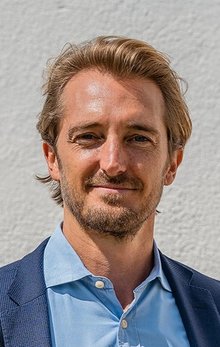
Robert Dunn
CEO