Microsoft Upgrades Data Centres for AI Workloads with NVIDIA
Microsoft is introducing new capabilities across Microsoft Foundry and Azure AI infrastructure to improve how data centres support AI at enterprise scale.
The company is working with NVIDIA, targeting a transition from experimentation to production and enabling organisations to run AI systems across cloud, hybrid and sovereign environments.
From specialised chips to liquid cooling systems, infrastructure design has become critical to performance and scalability as demand for AI workloads constantly grows.
Foundry tools support AI deployment at scale
Microsoft Foundry brings new tools that allow organisations to build and deploy AI agents within data centre environments. These agents, as software systems that can reason and act, run on NVIDIA accelerators, which are specialised processors designed to handle AI tasks efficiently.
The use of NVIDIA Nemotron models allow teams to deploy AI without building core models from the ground up, which reduces the time required to move from testing to production.
Foundry Agent Service enables teams to create AI agents that connect with existing enterprise systems, including software platforms and internal data sources. It ensures that AI workloads can operate within the established IT and data centre frameworks.
Foundry Control Plane can provide end-to-ed visibility into how AI agents use compute resources, interact with data and perform tasks.
Currently in public preview, Voice Live API supports real-time and voice-based applications. These workloads require low latency, placing further emphasis on data centre performance and proximity to users.
Azure data centres evolve for AI infrastructure
Microsoft’s Azure platform sees updates designed specifically for inference-heavy workloads.
The company confirms it is the first hyperscale cloud provider to power on NVIDIA Vera Rubin NVL72 systems.
Yina Arenas, Corporate Vice President of Microsoft Foundry, says: "Microsoft’s AI infrastructure approach is engineered to seamlessly bring next-generation NVIDIA systems into Azure data centres that are designed for power, cooling networking and rapid generational upgrades.
"This allows our customers to move with speed and agility and stay at the leading edge from generation to generation.
"In less than a year, we’ve deployed hundreds of thousands of liquid-cooled Grace Blackwell GPUs across our global data centre footprint, and now we are excited to be the first hyperscale cloud to power on NVIDIA’s newest Vera Rubin NVL72 in our labs.
"Over the next few months, Vera Rubin NVL72 will be rolled out into our modern, liquid-cooled Azure data centres."
The integration of next-generation NVIDIA systems also reflects the need for rapid hardware upgrades. Data centres must accommodate frequent changes in chip architecture while maintaining uptime and service continuity.

Physical AI links data centres with operations
Microsoft and NVIDIA are extending their collaboration into physical AI, connecting data centres with real-world operations such as manufacturing and logistics. This work uses the NVIDIA Physical AI Data Factory Blueprint, with Foundry acting as the platform for hosting and managing these systems within Azure data centres.
The blueprint allows developers to build and train AI models that interact with physical assets. These include machines and robotics systems, all connected back to centralised data centre infrastructure.
Integration between Microsoft Fabric and NVIDIA Omniverse libraries supports digital twins. Within data centres, this enables simulation of operations using live data, which improves planning and operational efficiency.
Rather than relying on alerts alone, systems can trigger automated actions across connected environments. This reduces reliance on manual intervention and improves response times across facilities.
"Whether powering always-on agents, scaling next-generation AI infrastructure or deploying intelligent systems in factories, energy facilities and sovereign environments, Microsoft and NVIDIA are helping customers move faster from insight to action," says Yina.
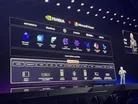
The updates were revealed at NVIDIA GTC 2026, an annual tech conference which took place between 16 and 19 March in San Jose, California.


Executives
Yina Arenas
Corporate Vice President - Microsoft Foundry