Moody's Ratings: Hyperscalers' Spending Surges to US$700bn
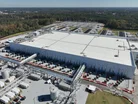
Data centres sit right at the heart of the global AI race. In fact, JLL, a global consultancy, predicts that the data centre sector will double in size by 2030.
A new research report from Moody’s Ratings highlights the extraordinary scale of investment now flowing into AI infrastructure, with tech giants committing unprecedented levels of capital to expand data centre capacity.
The report examines capital spending among leading hyperscale companies, and finds that total investment by 6 major players is expected to reach around US$700bn in 2026, nearly six times the level recorded in 2022 when ChatGPT was introduced.
The Moody’s analysis frames this spending surge as a direct response to explosive demand for computing power driven by AI.

Moody’s identifies hyperscalers as the driving force
There are 6 companies the report says are leading the AI infrastructure build-out: Microsoft, Amazon Web Services (AWS), Alphabet, Meta, Oracle and AI cloud provider CoreWeave. According to the report, these firms dominate global investment in AI infrastructure because of their scale and access to capital.
Moody’s estimates that capital expenditure across these companies rose sharply to US$387bn in 2025 and is projected to jump to roughly US$700bn this year, more than twice the amount of spending.
The report forecasts that spending will potentially reach around US$820bn by 2027 as hyperscalers accelerate the build-out of AI-ready data centres.
This can be explained by wider infrastructure spending as hyperscalers are deploying capital not only into data centre facilities themselves, but in to technology like semiconductors, networking equipment, cooling systems, construction and power generation.
AI demand outpacing infrastructure supply
A central challenge Moody’s report highlights is the persistent imbalance between demand for AI computing power and the available infrastructure needed to deliver it. Despite record spending, the industry is capacity constrained.
According to the research, the computing requirements to train increasingly sophisticated AI models continue to consume large portions of available infrastructure.
At the same time, demand for inference is growing rapidly as generative AI tools and agent-based systems are adopted across businesses and consumer platforms.
The Moody’s analysis notes that even the largest cloud providers face capacity pressures. AI-related services are expanding so quickly that available infrastructure often struggles to keep pace with demand.
In Amazon's second quarter earnings call in 2025, President and CEO Andy Jassy said that the company's "single biggest constraint" is power.
He added: "I don't believe that we will have fully resolved the amount of capacity we need for the demand that we have in a couple of quarters. I think it will take several quarters."
Energy availability is another significant constraint highlighted in the research. Large-scale AI clusters require enormous electricity supplies, and in many regions the availability of grid capacity, along with regulatory approvals and labour shortages, is slowing infrastructure deployment.
As a result, Moody’s expects AI infrastructure supply to remain behind demand for several years, potentially through at least 2027.
Investors weigh risks of capital intensity
While the report highlights strong demand signals for AI infrastructure, it also points to growing investor concerns over the scale of spending required.
AI data centres require far more capital than traditional cloud infrastructure because of the high cost of specialised processors, networking systems and advanced cooling technologies.
Early indicators suggest AI revenues are emerging
Despite caution from investors, Moody’s research highlights early signs that the massive infrastructure investment is beginning to generate returns.
The report notes that the combined backlog of contracted revenue across key hyperscalers has reached approximately $1.7tn, representing a dramatic increase in demand for cloud and AI infrastructure services.
Meta reported its revenue for the three months to the end of December 2025 rose 24% year-on-year to US$59.9bn which surpassed market expectations. Mark Zuckerberg, CEO of the hyperscaler, explained its investments in infrastructure will only increase further in 2026.
"We are now seeing a major AI acceleration. I expect 2026 to be a year where this wave accelerates even further."
"As we plan for the future, we will continue to invest very significantly in infrastructure to train leading models and deliver personal superintelligence to billions of people and businesses around the world," the CEO adds.
A multi-year build-out for AI infrastructure
The Moody’s Ratings report says that the current surge in AI infrastructure investment is likely to continue for years. As AI technologies advance and adoption spreads across industries, computing demand will keep expanding.
The report underscores how AI is transforming infrastructure economics for the data centre sector. Facilities must support higher power densities and increasingly complex networking architectures.
In Moody’s view, hyperscalers are entering a prolonged investment cycle that could redefine the scale and strategic importance of global data centre infrastructure.
The report suggests that today’s multibillion-dollar infrastructure projects may only represent the early stages of a much larger transformation if AI adoption continues on its current trajectory.







Executives
Andy Jassy
President and CEO

Mark Zuckerberg
CEO