
Nscale, NVIDIA and Microsoft Collaborate for New AI Data Hub

Nscale has set out plans to build and operate a large-scale AI data centre campus in West Virginia, supported by a letter of intent with Microsoft for 1.35 gigawatts of AI compute capacity.
The Monarch AI campus is positioned as a flagship deployment of NVIDIA’s Vera Rubin GPUs, using NVL72 systems engineered with the NVIDIA Vera Rubin DSX AI Factory reference design.
The new data centre, called the Monarch Compute Campus in Mason County, will be constructed on a site covering up to 2,250 acres. Nscale secured the site through its acquisition of AIP Corp (American Intelligence & Power Corporation).
The location includes what is described as the US’ first state-certified AI microgrid, with a power runway that scales beyond eight gigawatts.
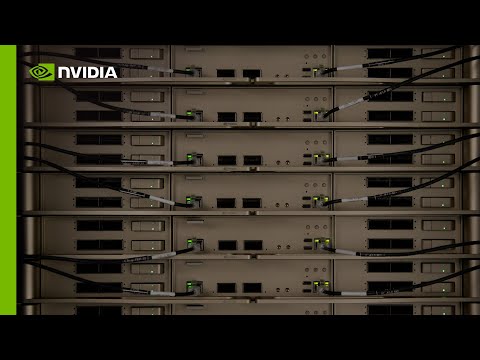
Under the agreement, Nscale is responsible for constructing and operating the data centre infrastructure required to host the GPU deployment.
The delivery is structured in phases beginning in late 2027, forming one of the largest dedicated AI compute environments globally. The campus operates under a long-term framework that combines a multi-year compute services term with a long-term data centre lease structure.
"This collaboration with Microsoft marks a pivotal milestone both for Nscale and the development of the Monarch Campus," says Josh Payne, CEO of Nscale.
"By integrating our specialized AI infrastructure with Microsoft’s global platform, we are creating a foundation for innovation that can scale alongside the most ambitious AI models in the world".
Power and scale define the campus build
The Monarch campus reflects the growing requirement for power-dense data centres as AI workloads expand and reports suggest AI-related data centre capacity could reach 156 gigawatts by 2030. Nscale builds on its existing capacity of over one gigawatt with a site designed for rapid expansion.
The campus has the potential to reach a total power draw of eight gigawatts, enabling the development of large-scale compute clusters. Its microgrid design allows on-site power generation, meaning the facility operates independently of the local grid. This approach reduces pressure on existing utilities and avoids added cost for local users.
The location also supports connectivity requirements. High-speed fibre links connect the campus to major AI and cloud hubs, including Ashburn and Chicago. This proximity reduces latency and supports performance for AI training and inference workloads.
“Microsoft’s datacenter approach is to build the best global infrastructure informed by near-term and long-term demand,” says Jon Tinter, President, Business Development and Ventures at Microsoft.
“Our investments blend owned datacenters, leased facilities, and strategic collaborations. This collaboration with Nscale and NVIDIA is an important step to deliver meaningful AI innovation to our customers.”
Nico Caprez, Vice President of Global AI Infrastructure Growth at NVIDIA, adds: “AI is becoming essential infrastructure for every industry.
“With this large-scale NVIDIA DSX AI Factory Blueprint, Nscale is building the infrastructure required to produce intelligence at industrial scale and power the next wave of global innovation.”
Infrastructure design and power delivery
A central element of the project is its power strategy. Nscale is working with Caterpillar to deploy G3500 series natural gas generator sets, scaling to two gigawatts of power generation by the first half of 2028.
The generator sets support the NVIDIA Vera Rubin DSX AI Factory reference design, ensuring alignment between power delivery and compute infrastructure. The approach focuses on reliability and speed of deployment, which are both critical for large data centre builds.
Melissa Busen, senior vice president of Electric Power, Caterpillar, says: “This collaboration reflects Caterpillar and our dealers’ continued focus on supporting customers that require primary, continuous-duty power at scale through our broad energy solutions portfolio.
“Projects like Monarch demonstrate how Caterpillar’s natural gas generation platforms are being deployed as core infrastructure for data centers and other power intensive applications where reliability, speed of deployment, and lifecycle performance are critical.”
The use of G3500 series units shortens infrastructure timelines. This is particularly relevant for AI data centres, where demand for capacity often outpaces the speed at which traditional infrastructure can be delivered.
Environmental and community considerations
Nscale has outlined plans to develop the campus with attention to environmental and local factors. The microgrid design allows for future connection to the wider grid, enabling the export of surplus power if required.
The company also pursues carbon sequestration, which is the process of capturing and storing carbon dioxide to offset emissions.
The campus is designed with a high-efficiency approach that reduces water consumption and avoids reliance on municipal water supplies, so residential users and local services are not affected by the facility’s operations.
The Monarch campus is structured to support high-density AI workloads within a single, integrated data centre environment while ensuring sustainability is not sidelined.





Executives
Jonathan Tinter
President, Business Development and Ventures
Josh Payne
Founder & CEO
Melissa Busen
Senior Vice President Electric Power Division

Nico Caprez
VP Global AI Infrastructure Growth