
Power First, AI Ready: SC Zeus Forges APAC’s Digital Future

AI is not simply increasing data centre demand – it is fundamentally rewriting the engineering logic of digital infrastructure.
Across APAC, rack densities are climbing rapidly, cooling systems are shifting toward liquid-ready architectures and power availability – not land – has become the primary constraint on growth. Facilities originally designed for traditional enterprise and early cloud workloads are increasingly misaligned with the structural requirements of AI-scale compute.
In this new environment, infrastructure cannot be retrofitted into readiness. It must be engineered for density, flexibility and long-term adaptability from day one.
Singapore-headquartered SC Zeus Data Centers (SC Zeus) has built its development model around this reality. With active projects across Japan, South Korea, Thailand and Australia, the company adopts a power-first strategy – engaging utilities early, aligning grid delivery with phased construction and designing modular, liquid-ready facilities engineered for a 20-year lifecycle.
Rather than treating “AI-ready” as a feature, SC Zeus embeds it as a core engineering principle: integrating scalable power architecture, high-density floor loading, future cooling pathways and upgrade-ready systems at the design stage.
In markets where grid expansion timelines, land availability and regulatory complexity increasingly constrain deployment, this disciplined sequencing – power first, density by design and modular execution – forms the backbone of SC Zeus’ regional growth strategy.
As AI-driven compute reshapes infrastructure requirements across the region, SC Zeus’ strategy is grounded in long-term engineering discipline rather than short-term expansion cycles.
Joe Gooi, CEO of SC Zeus Data Centers, explains how this approach is shaping the company’s expansion across APAC.
How is SC Zeus engineering for the next 20 years in the region?
Across APAC, we are seeing a fundamental shift in data centre demand driven by AI and large-scale compute workloads. Traditional enterprise-oriented facilities – designed around low rack densities, static power allocation and air-only cooling – are no longer sufficient for AI and LLM deployments.
At SC Zeus, “AI-ready” is not a marketing term: it is an engineering principle. From day one, our sites are designed to support significantly higher rack densities, liquid-cooling readiness and modular electrical and mechanical systems that can evolve over time. This includes floor loading, ceiling heights, pipe routing, power distribution architecture and chilled-water capacity that can accommodate both current and next-generation cooling technologies.
Power availability has become the primary bottleneck for data centre development across APAC.
In markets such as Japan, South Korea, and Southeast Asia – where land, power and timelines are increasingly constrained – future-proofing must be embedded at the design stage.
Our approach focuses on flexibility: enabling customers to deploy today at moderate densities while retaining the ability to scale to AI-era requirements without disruptive retrofits. This long-term engineering mindset underpins SC Zeus’ 20-year asset lifecycle strategy across the region.
What is SC Zeus’ strategy for securing just-in-time, high-capacity power in supply-constrained markets?
Power availability has become the primary bottleneck for data centre development across APAC. In cities like Osaka and Seoul, demand from hyperscalers and AI platforms is rising faster than grid expansion timelines.
SC Zeus addresses this challenge through a power-first development strategy. We engage with utilities and local authorities at an early stage – often well before site acquisition is finalised – to secure long-term power allocation with clear delivery milestones. Our developments are planned around “just-in-time” power delivery, aligning grid availability with phased construction and customer deployment schedules.
In parallel, we design our facilities to maximise power efficiency and operational flexibility. Modular electrical systems allow us to scale capacity incrementally, while resilient architectures ensure reliability even in constrained grid environments. Where feasible, we also explore sustainable power options and utility-aligned efficiency programmes to support long-term energy resilience.
In today’s market, the ability to secure and deliver power reliably is as important as the building itself. SC Zeus’ advantage lies in combining early utility engagement with disciplined, phased execution.
What does it take to achieve high-density deployment at scale?
High-density AI deployment is not simply about increasing rack power – it requires a holistic redesign of the entire data centre ecosystem. Cooling, electrical redundancy, structural design and construction methodology must all be aligned from the outset.
ZEUS OSA 1 in Osaka exemplifies this approach, particularly in the Japanese context. The facility is engineered to support high-density workloads through liquid-cooling readiness, robust power distribution, scalable mechanical systems and a prefabrication-led delivery strategy. In Japan, where construction labour constraints, seismic requirements and quality standards are especially stringent, prefabrication provides a meaningful advantage.
By leveraging all this, SC Zeus is able to improve build quality, shorten on-site construction timelines and reduce execution risk in a tightly regulated environment.
Prefabrication also enables more precise integration of pipework, structural loading and thermal management systems – critical for supporting AI-era densities.
Equally important is resilience. High-density environments magnify the impact of any failure, so electrical and cooling systems must be engineered with redundancy at both system and component levels. SC Zeus balances performance with uptime through modular design, standardised prefabricated systems and operational simplicity.
SC Zeus’ advantage lies in combining early utility engagement with disciplined, phased execution.
Ultimately, large-scale high-density deployment is not a one-off technical achievement, but an ongoing systems-engineering challenge that continues to evolve alongside AI workloads.
ZEUS OSA 1 reflects SC Zeus’ practical experience in high-density design, prefabrication-led delivery and reliability engineering, while also illustrating broader shifts taking place across AI infrastructure development. As market conditions and technology requirements continue to change, SC Zeus will continue refining its design and delivery approach to support the next phase of AI compute growth.
Why Japan – and why Osaka is the next AI compute hub?
Japan is rapidly emerging as a strategic AI compute hub in Asia due to its political stability, advanced infrastructure, strong enterprise demand and increasing adoption of AI across industries. Within Japan, Osaka stands out as a particularly compelling location.
Osaka benefits from a relatively diversified power ecosystem, strong interconnection to national grids and a growing concentration of data centre and digital infrastructure investment in the Kansai region. With Tokyo facing increasing land and power constraints, global cloud and AI companies are naturally expanding into Osaka to support latency-sensitive workloads and regional redundancy.
SC Zeus’ presence in Osaka positions us at the centre of this shift. By developing AI-ready facilities aligned with utility capacity and long-term demand, we enable global and regional customers to deploy scalable compute infrastructure in one of Asia’s most strategically important markets.
What is SC Zeus’ APAC expansion roadmap?
SC Zeus’ expansion strategy across APAC is deliberately focused on a small number of high-conviction markets rather than broad geographic dispersion. Market selection is guided by a consistent set of criteria, including demand–supply dynamics, power reliability, regulatory clarity and long-term market liquidity.
Japan, South Korea, Thailand and Australia all sit at the core of this roadmap.
These markets demonstrate strong structural demand from hyperscalers and AI platforms, coupled with increasingly constrained supply – particularly around power and suitable development sites. SC Zeus prioritises locations where reliable power sources and supporting infrastructure can be secured with clear delivery timelines, enabling phased, just-in-time deployment.
Regulatory transparency and alignment with institutional capital are equally important. SC Zeus focuses on jurisdictions with stable permitting regimes and deep investor appetite for long-life digital infrastructure assets, ensuring long-term liquidity and scalability.
SC Zeus will continue refining its design and delivery approach to support the next phase of AI compute growth.
Execution-wise, the company emphasises scalable campus developments rather than isolated facilities, allowing capacity to expand in line with customer demand while managing construction, power, and capital deployment risk. As AI workloads continue to scale across APAC, SC Zeus positions itself as a long-term infrastructure partner – delivering not just capacity, but certainty around expansion, performance and reliability.
How does SC Zeus future-proof its developments?
Future-proofing is one of the most critical – and often underestimated – challenges in modern data centre development. Technology cycles are shortening, but data centre assets are expected to operate for decades.
SC Zeus addresses this through modular engineering and upgrade-ready design. Cooling architectures are designed to evolve from air to hybrid or liquid solutions. Power systems are built with flexibility to support changing density profiles. Structural and spatial layouts anticipate future equipment generations rather than locking in today’s assumptions.
Just as importantly, we design for operational resilience and maintainability. Avoiding premature obsolescence is not only about technology – it is about ensuring that facilities can be upgraded, reconfigured and optimised without major disruption over their full lifecycle.
In a rapidly shifting AI environment, the most valuable data centres will be those designed for change. That philosophy sits at the core of SC Zeus’ development strategy.
Company portals

Executives
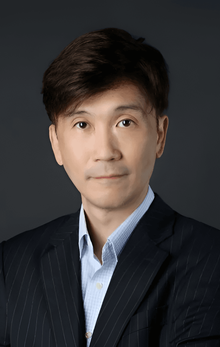
Joe Gooi
Chief Executive Officer