PwC: Data Centres to Drive $1.5tn Chip Boom by 2030
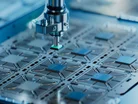
The semiconductor industry is entering its largest expansion in history, with PwC projecting new fabrication facilities to attract more than US$1.5tn in investment between 2024 and 2030.
According to PwC’s Semiconductor & Beyond 2026 report, the surge matches the total capital spent across the previous two decades.
Government subsidies, rising AI workloads and the rapid adoption of electric vehicles are fuelling the construction boom. Data centres, in particular, are reshaping the demand for semiconductors as AI accelerators dominate the market.
Glenn Burm, Global Semiconductors Leader and Partner at PwC US, says: “The industry is currently undergoing a rapid transformation, driven by AI advancements, geopolitical shifts and increased government investments.”
AI workloads drive new semiconductor demand
The growth of AI is rewriting how semiconductors are consumed. PwC forecasts the global server market will exceed US$300bn by 2030, with AI workloads accounting for much of that expansion.
By the end of the decade, the server and network segment is expected to become the largest market for semiconductors. Within that, AI accelerators in data centres are projected to make up around half of total segment revenue, compared to only a small portion in recent years.
Cloud providers such as Amazon, Google and Microsoft are developing their own custom AI accelerators to optimise workloads in their data centres. This intensifies competition with established manufacturers, including Nvidia and AMD.
The adoption of machine learning across industries is also driving parallel growth in high-bandwidth memory. Data centre operators require these components to enable faster processing speeds for AI applications.
- Global semiconductor fab investments from 2024-2030 will exceed US$1.5tn
- AI accelerators are projected to reach 50% of data centre semiconductor revenue by 2030
- The industry requires an additional 100,000 engineers by 2030
Government support fuels record investments
According to SEMI data, 18 new fabrication projects are scheduled to begin in 2025, with most set to start production between 2026 and 2027. National subsidies play a central role in this expansion.

The US CHIPS Act alone has unlocked more than US$630bn of semiconductor-related investments across 28 states. In response, companies are making unprecedented commitments.
In June, Texas Instruments announced plans to spend more than US$60bn across seven fabs, the largest investment in foundational semiconductor production in US history. Intel, recipient of US$7.86bn in direct CHIPS Act funding and an additional US$3bn for secure government production, is preparing to invest over US$100bn across four states.
The commitments highlight how government intervention and AI-driven demand are reshaping the balance of semiconductor supply. For data centres, this surge means new capacity for AI chips but also pressure on supply chains and energy resources.
Expanding applications beyond data centres
While data centres lead semiconductor demand, other sectors continue to expand their requirements.
The automotive market is projected to grow at an annual rate of 10.7% to 2030, powered by electric vehicle and autonomous driving technologies. PwC analysis suggests that electric and hybrid vehicles could represent 50% of global sales by 2030, with power semiconductors forming more than half of vehicle semiconductor costs.
Consumer electronics add further momentum. PwC expects growth of 5.6% in home appliances and double-digit increases in augmented reality, virtual reality and personal robotics. These devices rely on AI processors and power management chips that enable edge computing and reduced latency.
Preparing for the decade ahead
The semiconductor industry will need an additional 100,000 engineers by 2030 to meet production demands. At the same time, the industry faces the challenge of balancing security, innovation and sustainability.
Glenn says: “As semiconductor security bears even more weight on the pace of innovation and economic growth, companies must adopt a forward-looking approach to remain competitive. Through this report, we aim to provide industry leaders, policymakers and businesses with the insights they need to navigate the future of this dynamic sector.”
For data centres, the report highlights the central role they play in shaping semiconductor demand.
With AI accelerators expected to dominate by 2030, operators must prepare for new levels of power consumption, supply chain dependency and infrastructure scaling.