Real-Time Energy Monitoring: Data Centre Power in Focus
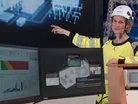
Data centres are under pressure to do more with the energy they consume. Higher-density workloads, tighter power constraints and the growing cost of inefficient cooling have made visibility an imperative reporting feature.
Real-time energy monitoring gives operators the data needed to understand what is happening across electrical and thermal systems as it happens, then act before inefficiencies become faults or downtime.
The most useful deployments now combine monitoring with automation, predictive analytics and digital twin modelling. That shift is visible across energy infrastructure, compute load management and thermal optimisation, where operators are moving away from static checks and towards continuous operational awareness. The result is a more measured approach to power use, maintenance and capacity planning.
But what does real-time energy monitoring look like in practice?
Here, Data Centre Magazine explores some of the latest and greatest innovations transforming power visibility for operators around the world.
Hitachi Energy: Comprehensive oversight

Hitachi Energy’s HMAX Energy launch shows how real-time monitoring is being applied to critical infrastructure beyond the data hall itself. The company says the AI-powered suite is designed to safeguard energy assets while improving operational efficiency, with a plan, predict and prevent model that uses data-driven insights, early asset monitoring and proactive maintenance.
For data centre operators, the reliability of the facility depends on the wider electrical chain as much as on the IT load. Hitachi Energy’s reference cases point to faster response times and earlier fault detection, with the company saying its approach can reduce revenue loss from equipment breakdowns by up to 60% and transformer failures by 50%. The HMAX model also uses digital twins to provide a real-time view of system status, lifecycle and performance, which is particularly important in environments where grid and asset conditions can change quickly.
Wolf Mueller, Managing Director of BU Service at Hitachi Energy, says: “Today’s ageing grid is under unprecedented pressure and faces multiple challenges simultaneously, such as soaring energy demand, increasing complexity, supply chain constraints, and workforce shortages. With HMAX Energy, we are partnering with customers to safeguard critical infrastructure, anticipate failures earlier and keep electricity reliable.”
OBM: Behind-the-meter visibility
OBM’s adaptive dispatches launch brings the power discussion closer to the data centre operator’s daily energy decisions. The company has introduced a behind-the-meter load management capability in its Foreman Advanced Power Management platform, designed to help flexible energy users manage variable generation assets in real time. That matters in data centre settings where compute load, on-site generation and battery storage can no longer be treated as separate operational silos.
The key point here is coordination. OBM says its software automation throttles compute as generation fluctuates and grid conditions change, helping sites switch between powering compute, selling power to the grid or storing power in battery energy storage systems. In practice, that means real-time monitoring is not only about understanding demand but about shaping it to suit market conditions and infrastructure limits.
Dan Lawrence, CEO of OBM, says: “In today’s constrained energy market, behind-the-meter generation offers quicker access to new capacity. However, coordinating compute, generation and storage in real time remains a significant operational hurdle without automation.
“Our new adaptive dispatches feature provides the intelligent control layer specifically designed for these dynamic environments, ensuring seamless curtailment, grid participation and optimisation. For power producers, co-located flexible loads provide revenue when grid prices are unfavourable.”
Telefónica and Ekkosense: Partnership and digital twins
Telefonica’s work with an AI-based digital twin puts real-time monitoring into the thermal management space, where data centres often find their clearest efficiency gains. The project, developed by Telefónica Germany in collaboration with EkkoSense, uses IoT sensors, advanced analytics and a real-time 3D digital twin to improve the management of critical infrastructure.
The operational value lies in how much more precise the cooling environment becomes. Telefonica says the system allows it to monitor critical equipment in real time, maintain a dynamic thermal and load risk map and receive automated recommendations that help eliminate inefficiencies, extend equipment life and maintain continuity. It also says initial evaluations indicate a 15–20% reduction in energy consumption for cooling systems, which has a direct impact on energy OpEx.
Rüdiger Kunze, Head of Housing & Site Infrastructure at Telefónica Germany, says: “Digitalisation makes the data centre visible, automation makes it intelligent. EkkoSense’s Digital Twin combines both, enabling operators to redefine energy efficiency and proactively guide their infrastructure into the future.”
“One of the main barriers to data centre optimisation has always been the complexity of traditional tools such as DCIM,” adds EkkoSense CEO Dean Boyle. “EkkoSense solves this challenge for Telefónica Germany by drawing on new levels of sensing granularity, real-time analytics and 3D visualisation capabilities to create a concise digital twin of the data centre environment. This approach makes immersive real-time optimisation a reality – from the smallest Edge site through to the largest facility.”
Vertiv: Predictive maintenance unlocked
Vertiv’s Next Predict service shows how real-time monitoring is converging with predictive maintenance. The company’s AI-powered managed service analyses asset behaviour before risks materialise, moving data centre maintenance away from traditional time-based or reactive models. For operators, that matters because energy performance and equipment condition are tightly linked in facilities where power and cooling systems must work continuously.
Vertiv says the service uses AI-based anomaly detection to analyse operating conditions and identify deviations early, then applies predictive algorithms to assess operational impact and prioritise response. It also says the approach delivers predictive intelligence across power, cooling and IT systems, which is important in AI-heavy environments where the load profile can shift quickly and create new stress points.
Ryan Jarvis, Vice President and Head of Global Services at Vertiv, says: “Data centre operators need innovative technologies to stay ahead of potential risks, as compute intensity rises and infrastructures evolve. Vertiv Next Predict helps data centres unlock uptime, shifting maintenance from traditional calendar-based routines to a proactive, data-driven strategy.
“We move from assumptions to informed decisions, by continuously monitoring equipment condition and enabling risk mitigation before potential impacts to operations.”
The future of energy intelligence
Real-time energy monitoring is evolving beyond just a means of recording usage after the fact. It is now a layer that connects cooling, load management, asset health and grid interaction into a single operational picture for data centre operators.
This matters because the industry’s energy challenge is now as much about timing as it is about consumption. Live data helps operators decide when to cool, when to maintain, when to curtail and when to use storage or flexible load to their advantage. As these systems become more connected, passive measurement will be left behind in favour of active control.





Executives

Dan Lawrence
CEO
Dean Boyle
CEO & Co Founder

Rüdiger Kunze
Head of Housing & Site Infrastructure
Ryan Jarvis
Vice President of the Global Services Business

Wolf Mueller
Executive Vice President and Business Unit (BU) Managing Director for Service