
RT-One to Build Latin America’s Largest AI Data Centre
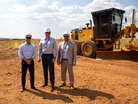
RT-One has announced plans to build what it says will be the largest AI data centre in Latin America, after officially acquiring land for the project in Uberlândia, Minas Gerais in Brazil.
The facility represents an initial investment of more than US$1.2bn and will occupy over one million square metres. The site includes 630,000 m² of buildable land alongside a permanent environmental reserve of 300,000 m².
The Uberlândia campus is set to support high-performance computing, sovereign cloud services, cybersecurity and advanced AI workloads, with its first phase launching at 100MW of installed capacity and scaling up to 400MW. Built to international energy efficiency standards, the project will run on 100% renewable power and adopt advanced cooling technologies to minimise environmental impact.
“AI processing capacity is vital for the modern world. Robust, secure and sovereign data centres are the foundation of this new digital era,” says Fernando Palamone, CEO of RT-One.
“By bringing this infrastructure to Brazil, we are preparing the country to compete globally, generate high-quality jobs and train new talent to lead the digital transformation.”
Sustainability and site design
The development integrates environmental considerations into its design, with a significant portion of the land preserved as green space. Located on the western outskirts of Uberlândia along the route to Prata, the preserved area is fully integrated into the site’s masterplan.

Ricardo Simões, Vice President of RT-One, highlights: “We believe in Brazil, and we know that being a reference requires attention to every detail. That’s why our data centres operate with 100% renewable energy. This is RT-One’s non-negotiable commitment to sustainability.”
Arising from strategic partnerships
The project launch was presented alongside a wide network of technology and infrastructure partners, including Hitachi, WEG, Siemens, Vertiv, Schneider Electric, Engemon Construtora, Multiway Infra, Munters and UNIUBE.
These collaborations will help deliver the campus with efficiency, resiliency and sustainability built into its design, as well as create a wider innovation ecosystem.
Through these partnerships, RT-One aims to establish a data centre environment with state-of-the-art technology and robust operational standards.
The collaboration with global suppliers and regional organisations is expected to ensure performance and reliability at scale, while supporting local workforce development.
Championing regional impact
Beyond its role in powering AI and digital infrastructure, the data centre is also designed to stimulate regional development. RT-One expects the project to position Uberlândia as a new hub for digital innovation in Brazil by creating jobs, training programmes and opportunities for collaboration between academia and industry.
Public officials attending the project launch included Paulo Sérgio, Mayor of Uberlândia, Vanderley Pelizer, Deputy Mayor and Fabiano Alves, Secretary of Economic Development and Innovation. Their presence underlined the local government’s support for the initiative and its significance for the region’s future economic strategy.
The data centre is expected to generate high-quality employment opportunities during construction and operation, contributing to the local economy while advancing Brazil’s standing in the global AI and data infrastructure landscape.
Establishing a Latin American flagship
With construction underway, the Uberlândia facility is set to become a reference point for technology infrastructure in Latin America.
Once complete, it will provide sovereign cloud capacity, high-density computing resources and AI-ready infrastructure to meet growing regional and global demand.
By committing more than US$1.2bn and partnering with global technology leaders, RT-One positions itself at the centre of Latin America’s digital transformation. The project is designed not only to deliver the scale and resilience needed for AI workloads, but also to embed sustainability and workforce development into the foundation of the region’s data economy.