
Schneider Electric: Q&A on Europe’s Data Centre Energy Shift
As Europe’s data centre sector scales to meet surging demand from cloud, AI and digital services, energy availability and grid resilience have moved to the centre of infrastructure planning.
Schneider Electric is positioning itself at the heart of this shift, supporting operators as they navigate the balance between rapid expansion, efficiency and decarbonisation.
The company is building on its long-standing strengths in electrification, automation and digitalisation to address the specific pressures facing data centres, from power quality and resilience to lifecycle efficiency and sustainability targets.
These challenges are increasingly acute as facilities grow larger, denser and more geographically distributed across Europe.
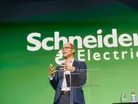
As Executive Vice President of Europe Operations, Laurent Bataille oversees Schneider Electric’s regional strategy at a time when data centre demand is accelerating alongside broader electrification across industry, transport and buildings.
Here, Laurent shares his insights with Data Centre Magazine.

Who are the key players in the European energy transition?
Europe’s energy transition is a collective endeavour, one that depends on the coordinated action of policymakers, technology leaders, utilities and consumers.
The EU leads at the policy level, through a comprehensive legal framework and financial mechanisms aimed at meeting targets under the European Green Deal to become climate neutral by 2050.
However, at the national level, governments and regulators must align to enable faster deployment of renewables and digital infrastructure.
Grid operators are modernising networks to integrate renewables, manage demand and ensure stability, while technology leaders like Schneider Electric provide the solutions that make decarbonisation possible.
Businesses are increasingly becoming ‘prosumers’, actively managing their energy use.
For example, our Molins de Rei plant in Barcelona uses a microgrid to generate, store and manage renewable energy - achieving 24% energy savings since 2019 and 100% decarbonisation.
With high energy costs placing a stranglehold on European industry, proactively managing energy as an asset is key to driving energy efficiencies – bolstering energy security, resilience and competitiveness.
Consumers are also playing a growing role, particularly through the adoption of EVs.
In 2024, nearly 14% of all new car registrations were EVs – with the trend a significant step toward reducing carbon footprints and decreasing reliance on fossil fuels.
EVs can charge when there is excess electricity production, which creates flexibility on the demand side.
They can also store large amounts of energy, enabling owners to use it to power their homes during peak times.
This approach maximises self-consumption and helps to ease strain on the grid.
By utilising smart and bidirectional charging, EV owners in Europe could also make huge energy savings – estimated between €450 (~US$530) to €2,900 (~US$3,00) every year.
Together, these groups are paving the way for Europe’s new energy landscape – but it’s their combined efforts that will determine the pace and success towards a more sustainable, resilient and competitive future.
What challenges does the European energy transition face?
The most pressing bottleneck for the energy transition lies in infrastructure.
The European Commission estimates that a €584bn (US$690bn) investment in electricity grids will be required by 2030.
Yet, the electrification rate in Europe is just 21% - a figure that hasn’t changed in the last decade.
Aging networks, coupled with the growing challenges of operating a more variable and complex power system that can meet surging energy demands, further expose system fragility.
Also, energy prices remain two to four times higher than in other major regions.
Efficiency, digitalisation and local renewable generation must become Europe’s first line of defence, not just to meet climate goals, but to stabilise costs and strengthen resilience.
Focus must be on the demand side – energy distribution and use, rather than production.
That’s where technology can make the most difference. In fact, greater electrification could save up to €250bn (US$295.6bn) annually by 2040 by reducing the need for costly fossil imports, according to our findings.
How are regulations impacting this?
Regulation is both a driver and a bottleneck.
Noteworthy regulatory progress underscores the continent’s commitment to the energy transition, with European governments pioneering benchmarks for global emulation – including initiatives like the Green Deal, Fit for 55 and the Corporate Sustainability Reporting Directive.
However, fragmented and slow implementation limits progress. Permitting processes is a good example – along with grid congestion, this threatens a fifth of planned capacity in major data centre hubs like Dublin, Amsterdam and Frankfurt.
As the EU shifts to a competitiveness-driven agenda, the opportunity is ripe to ensure strategic impact and added value of European regulation.
It’s not about de-regulation – it’s about simplification, smart regulation and proper implementation.
Through harmonised deployment of European regulation across Member States, the EU can provide the right conditions for companies to scale and succeed.
How will growing data centre demand impact European energy?
Rapid data centre growth is becoming a major challenge for Europe’s energy system – with electricity demands, propelled by the AI boom, projected to more than double, exceeding 230 TWh by 2035.
To address this strain, the EU’s revised Energy Efficiency Directive requires operators of data centres above 500 kilowatts to report annual key performance indicators.
Europe can also learn from national strategies.
For example, France’s strategic grid connections and reliance on nuclear power enable it to keep pace with demand while maintaining low carbon intensity – demonstrating that thoughtful infrastructure planning can support both digital growth and decarbonisation.
Yet data centres can also become key enablers of the energy transition.
With the right design and technology, they can act as flexible assets, helping to stabilise grids, store energy and reuse waste heat for nearby communities.
For example, we work with Queen Mary University of London to connect its data centre’s waste heat to a campus-wide heating network, cutting CO₂ emissions and energy costs for nearby buildings and student accommodation.
Closely coordinated with Europe’s climate and energy goals, our research suggests a sustainable AI future: electricity demand rising from 13 TWh in 2025 to 90 TWh in 2030, while maintaining grid stability and low emissions.
What do you think energy in Europe will look like in five years’ time?
Over the next five years, Europe’s energy landscape will be defined by the convergence of electrification and digitalisation, driven by ambitious regulatory goals – although infrastructure and implementation gaps will persist.
Europe is a global leader in green tech – with clean energy already accounting for 72% of the EU’s electricity generation. But the picture is uneven across countries – and electrification – which can more easily incorporate renewables – lags behind the EU’s 32% target.
What’s more, Europe must adapt its energy system to support the growth of demand for electricity, which is vital for competitiveness.
For example, the AI boom could increase Europe’s electricity demand by up to 20% over the next decade to power up more data centres.
Europe needs faster permitting and smarter grid investments, supported by adaptive and ambitious regulation.
Our findings show that, handled in the right way, this can allow electricity demand to grow from 13 TWh in 2025 to 90 TWh in 2030, while maintaining grid stability and low emissions.
With substantial grid investment, Europe will see a more decentralised system by 2030.
Shaped by prosumers, distributed energy resources and rapidly expanding digital and AI-driven demand, the years ahead will mark a decisive shift towards a cleaner, more resilient and competitive energy ecosystem.
Company portals

Executives
Laurent Bataille
Executive Vice President of Europe Operations