
Siemens & Rittal: Tackling AI Data Centre Energy Demand
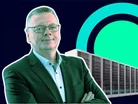
Siemens and Rittal are forming a strategic partnership aimed at tackling one of the most pressing challenges in AI infrastructure: energy demand inside the data centre.
In AI-focused facilities, individual racks now regularly exceed 100kW. By the end of the decade, that figure is projected to reach 1MW per rack, a level that stretches the limits of existing electrical and cooling systems.
Together, Siemens Smart Infrastructure and Rittal are looking to develop a new kind of system that can support this shift, while maintaining efficiency and scalability within the data centre environment.

Power moves closer to the rack
Siemens brings expertise in intelligent power systems, while Rittal focuses on modular data centre hardware. The partnership builds on this combination, with both companies aiming to create a more efficient power distribution model within the IEC market.
Their first joint development is a next-generation “sidecar” power rack. Designed to sit directly alongside server cabinets in the white space, it brings power infrastructure closer to where compute happens.
This is not standard practice in most data centres, where power systems are typically positioned further away from IT equipment. By reducing that distance, the sidecar model looks to cut energy loss and improve overall efficiency.
It also introduces a modular approach to scaling. Consolidating power electronics into a dedicated unit means operators can expand capacity more easily as demand increases, without the need for large-scale redesign.
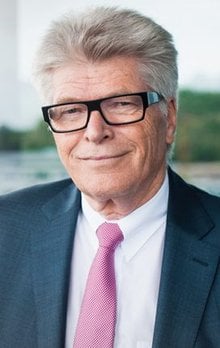
Friedhelm Loh, Owner and CEO of the Friedhelm Loh Group, which owns Rittal, says: “We have a long-standing collaboration with Siemens in a number of fields.”
He adds, “We are proud to be taking our partnership to the next level. Both companies are driven by the desire to innovate.
“As technology leaders, we have a responsibility to keep strengthening our customers’ competitiveness with the latest technologies.”
Standardisation and speed
As AI demand grows, so too does the pressure to build and scale data centres more quickly. Standardisation is becoming a central part of that effort.
Siemens and Rittal are focusing on creating repeatable infrastructure models that can be deployed across multiple sites. Siemens describes this approach as “minimising time-to-compute”, referring to the time it takes to bring new computing capacity online.
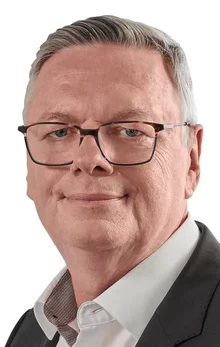
Andreas Matthé, CEO Electrical Products at Siemens Smart Infrastructure, says: “To enable the rapid growth of AI, we need smart, reliable, and scalable power supply solutions for data centres and we need them quickly.”
He continues, “In combination with our innovative electrical products and solutions, Rittal is an ideal partner when it comes to speed and standardisation in infrastructure.”
While the sidecar rack is the first outcome of the partnership, both companies indicate that further joint projects are already in development.
Efficiency under pressure
Behind the partnership is a broader question about energy performance in data centres. As power consumption rises, operators are under increasing pressure to deliver more compute without a proportional increase in energy use.
Siemens and Rittal point to the idea of achieving more “tokens per watt”: a way of describing how efficiently AI systems convert energy into output. In practical terms, it reflects how much work a system can perform for each unit of power consumed.
By combining electrical efficiency with modular design and closer integration between power and compute, the companies aim to improve both performance and reliability at rack level.
This approach could also support gains in uptime, as more coordinated systems reduce the risk of inefficiencies or failures within power distribution.
Beyond data centres, Siemens and Rittal see potential to apply similar designs in other high-reliability environments. Within the data centre, however, the focus remains on supporting the growing intensity of AI workloads and the infrastructure needed to sustain them.
Company portals
Executives
Andreas Matthé
CEO of Electrical Products at Siemens Smart Infrastructure
Friedhelm Loh
Owner