
SK Telecom Alliance: AI Data Centre Deployment Plan
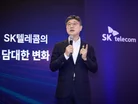
SK Telecom is partnering with server manufacturer Supermicro and energy and infrastructure specialist Schneider Electric to develop a joint solution for AI data centres. The initiative was announced at MWC26 and focuses on speeding up data centre construction and easing supply bottlenecks linked to the growth of AI computing.
The companies plan to create a pre-fabricated modular architecture that integrates computing hardware with power and cooling infrastructure before deployment.
As data centre experts will know, AI data centres require dense clusters of GPU servers and specialised infrastructure capable of supporting high energy demand and advanced cooling systems. As AI workloads increase, operators are facing increasing pressure to bring capacity online quickly while managing costs and infrastructure complexity.
The modular approach aims to address those challenges by turning data centre infrastructure into a repeatable building block that can be deployed rapidly and expanded as demand increases.
Modular architecture for faster data centre deployment
Traditional data centre construction often follows a steel-reinforced concrete approach. Under this model, the building structure is completed first before the server racks, electrical systems and cooling equipment are installed. While effective, this process can extend deployment timelines and introduce supply bottlenecks if equipment delivery delays occur.
The model proposed by SK Telecom, Supermicro and Schneider Electric integrates AI computing servers with supporting infrastructure within a single pre-manufactured module. These units include computing hardware alongside power distribution and cooling components.
The developers can shorten construction schedules and avoid delays linked to on-site installation by assembling these elements before delivery to the site.
SK Telecom, Supermicro and Schneider Electric state that the modular design improves cost efficiency compared with conventional construction methods.

Roles across the data centre ecosystem
Each company contributes a different area of expertise to the joint solution. SK Telecom provides operational knowledge of AI data centres through its AIDC business. Supermicro supplies the computing infrastructure while Schneider Electric delivers mechanical and electrical engineering capabilities.
Cenly Chen, Chief Growth Officer at Supermicro, says: “Supermicro is excited to partner with SK Telecom to bring data centres online faster than ever before.
“This new integrated solution will leverage Supermicro's high-performance, GPU-optimised servers tailored to customer workloads. We look forward to helping organisations meet their growing data centre needs with this latest technology.”
Supermicro focuses on providing the servers that run AI workloads inside the modular system. The company specialises in GPU-optimised computing platforms designed for machine learning and other high-performance applications.
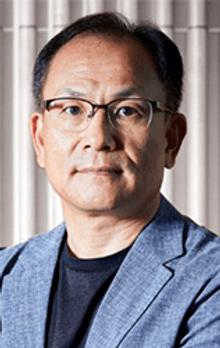
Min Yong Ha, Head of SK Telecom’s AIDC Business, says: “Through collaboration with global leaders in the AIDC business, we are advancing a total solution based on a pre-fabricated modular model.
“Building on this initiative, we aim to proactively address the AIDC deployment needs of global hyper-scalers while further strengthening our cost competitiveness.”
Power and cooling for high-density AI workloads
Running AI workloads requires more power and cooling capacity than conventional enterprise computing. As a result, infrastructure design becomes a critical part of modern data centre development.
Schneider Electric contributes engineering capabilities covering mechanical, electrical and plumbing systems, commonly known as MEP infrastructure.
Andrew Bradner, Senior Vice President at Schneider Electric, comments: “In the era of AI, the true measure of competitiveness lies in how fast and sustainably organisations can deliver high-performance infrastructure.
“Through this collaboration, we are introducing an integrated AI DC model based on a pre-fabricated modular design – empowering customers to lower carbon emissions, eliminate supply bottlenecks, and operate high-density AI workloads with greater resilience and efficiency.”
Within the modular framework, Schneider Electric designs power distribution and cooling systems that integrate directly with the computing hardware. This approach ensures the modules can support the thermal and electrical requirements associated with high-density AI processing.
The companies intend for the modular data centre design to support large-scale deployments used by hyperscale cloud providers and AI service operators. The partnership's overall focus is on reducing construction timelines while supporting the specialised requirements of AI computing environments.
Company portals



Executives

Andrew Bradner
Senior Vice President, Cooling Business

Cenly Chen
Chief Growth Officer, Senior Vice President, & Managing Director, B.V.
Min Yong Ha
Member of the Boards