SoftBank’s Battery Strategy for AI Data Centres in Japan
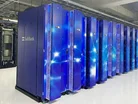
SoftBank is expanding its role in digital infrastructure with plans to build large-scale battery manufacturing and energy storage capabilities designed to support the growing power requirements of AI data centres in Japan.
The Japanese investment and technology group has launched a battery business focused on developing energy infrastructure as electricity demand from AI workloads continues to increase. The move comes as operators and governments look for ways to secure reliable power supplies for expanding data centre capacity.
According to the International Energy Agency (IEA), electricity demand from data centres worldwide is expected to more than double by 2030, reaching approximately 945 terawatt-hours. That figure is slightly higher than Japan’s entire electricity consumption today.
BloombergNEF reports that SoftBank’s planned manufacturing operation could become one of the largest battery facilities in Japan if the company manages to achieve its goals for mass production on a gigawatt-hour-per-year basis.
Data centre campus at the centre of plans
SoftBank is positioning an AI data centre development in Sakai City, Osaka Prefecture, as the foundation of its wider infrastructure strategy.
The company plans to establish two operations at the site – the AX Factory and the GX Factory.
The AX Factory will focus on AI data centre operations and the manufacture of AI infrastructure hardware. Alongside it, the GX Factory will be dedicated to producing next-generation batteries, solar panels and related technologies.
At the GX Factory, SoftBank intends to begin manufacturing battery cells and battery energy storage systems (BESS) at the start of 2028. The company aims to scale production over the following years.
The batteries produced at the facility are intended for deployment within the large-scale AI data centres SoftBank is developing. The company says it is pursuing an integrated approach covering development and manufacturing of both battery cells and energy storage systems.

SoftBank states that its “innovative battery cells” deploy a halogen-based material for the cathode and zinc for the anode. According to the company, the batteries offer charge and discharge performance with limited energy loss while delivering energy efficiency comparable to or exceeding lithium-ion alternatives.
Partnerships support battery development
To advance the project, SoftBank is working with specialist battery technology companies.
For battery cell development, the company has partnered with COSMOS LAB. In a joint press release related to the partnership, SoftBank says the collaboration focuses on creating battery cells that combine “highly safe and non-flammable characteristics” with “superior energy storage performance”.
The companies are jointly developing zinc-halogen batteries that use pure water as the electrolyte. SoftBank says the design addresses fire risks associated with conventional lithium-ion battery systems while maintaining strong storage performance.
The partners are aiming to establish mass production technology as quickly as possible.
For energy storage systems, SoftBank is collaborating with DeltaX. The companies are developing and manufacturing energy storage systems designed to deliver high energy density.
According to SoftBank, DeltaX’s Cell Connecting System design and Cell to Pack technology help maximise the performance of individual battery cells. The storage systems will also incorporate an energy management system equipped with AI-based power demand forecasting capabilities.
Growing role for energy storage in data centres
Battery energy storage systems (BESS) are becoming increasingly important within the data centre sector as operators seek greater flexibility in managing electricity demand.
A BESS stores electricity in battery cells and can support power supply, storage and supply-demand optimisation. As renewable energy generation expands, these systems help manage fluctuations in energy availability while supporting stable electricity delivery.
For data centres, energy storage can contribute to operational resilience and assist with managing the high power requirements associated with AI and cloud computing workloads.
The scale of growth expected in the sector is substantial. According to the IEA’s Batteries and Secure Energy Transitions report, global battery energy storage capacity is forecast to increase from approximately 83GW in 2023 to more than 1,200GW by 2030.
SoftBank’s battery manufacturing plans place energy storage alongside data centre development as part of a broader effort to support the infrastructure required for AI computing growth. By combining battery production, energy storage systems and AI data centre operations at its Osaka development, the company is building a platform designed to address both computing and power requirements within the same ecosystem.