Superconducting Cables: VEIR Delivers 3MW in Data Centres
VEIR has announced a major milestone following the demonstration of its first-generation Superconducting Technology for AI Racks (STAR), delivering 3MW of power through a single low-voltage cable in a simulated data centre environment.
The company, based in Massachusetts, positions this result as a response to increasing power demands from AI and high-performance computing infrastructure.
Following a US$75m Series B funding round earlier this year, which includes backing from Microsoft’s Climate Innovation Fund, Munich Re Ventures and National Grid, VEIR puts its technology on track for deployment.
The STAR demonstration is designed to replicate real-world conditions and meets the requirement for scalable, high-power delivery within data centre campuses.
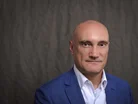
Tim Heidel, CEO of VEIR, says: "The power bottleneck is the single biggest constraint for AI and data centre growth.
"This demonstration marks a major milestone for VEIR and the industry, proving that superconducting power technology can deliver the high-power levels needed in a data centre environment, while dramatically reducing the space and weight demanded by traditional systems.
"Our technology is ready to deploy and provides an immediate solution needed to power the next generation of computing.”
Power demand pushes infrastructure limits
With data centre energy consumption expected to rise sharply, power infrastructure is under pressure.
The International Energy Agency projects electricity usage from data centres will more than double over the next five years, reaching 945TWh per year by 2030. This growth is largely driven by AI workloads, which require more than 500kW per rack.
Traditional cable and busbar systems are not designed for these high-density loads. VEIR’s superconducting cable sidesteps these limitations by eliminating electrical resistance, which allows the cable to carry more power across longer distances while remaining compact.
The system also integrates its own cooling technology, supporting safe and reliable operation in varied site conditions.
The STAR system has been tested at VEIR’s facility near its headquarters in Woburn, Massachusetts.
It is designed to support up to 800V of low-voltage operation and moves more than 3MW of power per cable.
This performance helps reduce the space required for power routing by over 20 times and extends operational distance by five times compared to conventional solutions.
"This is not just a technological step forward; it's a monumental shift in how we power the digital economy," says Peter Gross, a globally recognised expert in data centre engineering.
"Having spent decades in the mission-critical and data centre space, I can attest that conventional solutions are hitting a wall.
"The successful demonstration of VEIR's technology shows that a new path for high power density, high-reliability infrastructure is not only possible but ready to be integrated into today's data centre designs."
Commercial readiness and deployment potential
The demonstration is structured to highlight commercial readiness rather than experimental progress. The design-to-build process is completed end-to-end by VEIR and its partners, reinforcing the ability to deliver a working product within realistic project timelines.
This preparation aligns with rising demand for scalable infrastructure capable of supporting compute-intensive services, particularly those involving AI model training and inference.

Erhan Karaca, VEIR CTO, says: "Our integrated team designed STAR from the ground up to solve the high power density and delivery problems emerging in data centres. Using superconducting technology, we are able to move massive amounts of power to maximise performance – safely, reliably and at scale.
"This demonstration establishes a clear path to a scalable solution that can be quickly deployed, giving data centre architects the flexibility they need for next-gen designs."
STAR also enables data centres to increase rack density and reduce latency. The configuration not only uses smaller cables, it also shortens deployment timeframes by simplifying installation requirements.
Next steps for superconducting power
VEIR’s STAR demonstration shows that its superconducting cable can deliver hundreds of MWs safely within physical building spaces.
The system’s ability to integrate with existing infrastructure while supporting modern power loads makes it a direct answer to the challenges now facing new and retrofit data centre projects.
As VEIR moves towards commercial launch in 2026, it is expected to announce early adopters of the technology. These initial customers are likely to include operators building high-density compute environments who need to minimise space while maximising energy efficiency.
Company portals

Executives
Erhan Karaca
Chief Technology Officer
Tim Heidel
Chief Executive Officer