Iberian Outage Hits Telcos: Traffic Falls by 90%
On 28 April 2025, the Iberian Peninsula was plunged into darkness following a significant and unusual power outage that impacted much of Spain and Portugal. The blackout was triggered by “anomalous oscillations in the very high voltage lines,” with extreme atmospheric conditions cited as a contributing factor.
The incident effectively disconnected the Iberian power grid from the wider European network, causing widespread disruption across major urban centres including Madrid, Lisbon, Barcelona and Valencia.
The telecommunications sector was among the most significantly affected. Internet traffic dropped by approximately 90% in Portugal and 80% in Spain. Backup power systems at key telecom sites were quickly depleted, impairing the functionality of mobile and broadband services.
As a result, calls, data connections and even emergency communication services were severely disrupted.
Government response and public impact
Spanish Prime Minister Pedro Sánchez described the situation as a “critical moment” for the nation’s telecommunications infrastructure, urging citizens to restrict usage to essential communications only.
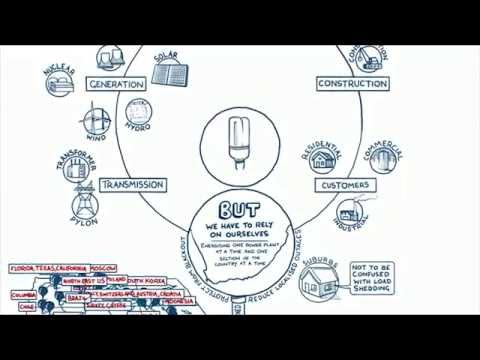
The disruption highlights a stark reality: modern telecom infrastructure operation fundamentally relies on a stable electricity supply. The relationship between communications networks and the power grid is deeply interdependent. When one fails, the other suffers, with compounding consequences across society and the economy.
The mounting threat of grid instability
Grid resilience is increasingly under strain from a range of overlapping pressures. By 2023, over 70% of European transmission lines and transformers were over 25 years old, raising serious concerns over infrastructure ageing.
Climate change has introduced further complexity as extreme weather events such as storms, floods and heatwaves become more frequent and damaging.
Additionally, the growing risk of cyberattacks and physical sabotage means that power grids are vulnerable in both physical and digital domains. While essential for sustainability goals, the integration of renewable and distributed energy sources adds operational complexity and can exacerbate grid instability if not carefully managed.
Telecom infrastructure under duress
When electricity fails, telecoms infrastructure is immediately at risk. Cell towers, exchanges, fibre nodes and data centres all depend on uninterrupted power. Although most facilities are equipped with backup power systems—typically batteries and diesel generators—these offer only short-term relief.
Battery backups generally provide around eight hours of support but can be rendered ineffective by prolonged outages. While offering extended runtime, generators depend on fuel access, which can be disrupted during blackouts. Power fluctuations or surges further increase the risk of damage to sensitive network equipment, adding complexity to recovery efforts.
Operational and commercial consequences
The blackout led to a cascade of negative impacts across telecoms networks:
Service interruptions: Users across Spain and Portugal reported widespread difficulties making calls or using messaging services.
Network performance decline: Cloudflare observed that “median download speeds more than halved and latency more than doubled in both Portugal and Spain.”
Cost and reputation risks: Operators face rising operational costs, reduced revenues and potential reputational harm.
Shameel Joosub, CEO of Vodacom Group, previously warned during South Africa’s ongoing power crisis:
“Instead of investing in rural infrastructure roll-out and in deploying new technologies, operators... have been forced to spend billions of rand just to ensure they are able to continue delivering services to consumers when the lights go out.”

Lessons in resilience: a global perspective
The Iberian blackout mirrors long-standing issues faced in regions such as South Africa and Venezuela. In South Africa, routine load shedding has exhausted battery backups and delayed network investments.
MTN South Africa noted that funds intended for 5G and rural expansion have instead been diverted into backup infrastructure.
In Venezuela, national blackouts have seen backup systems fail catastrophically, including incidents where repeated grid restart attempts triggered explosions at substations.
Industry best practices for continuity
To mitigate similar risks, telecom operators should prioritise the following:
- Deploy hybrid backup systems including renewable energy sources.
- Ensure strategic fuel storage and logistics planning.
- Collaborate closely with national grid operators for prioritised power restoration.
- Regularly test and maintain all backup systems.
- Explore infrastructure sharing and sector-wide resilience programmes.
A call for cross-sector coordination
The Iberian blackout offers a critical reminder: as digital infrastructure becomes more foundational to national economies, its vulnerability to power disruptions cannot be ignored. Telecommunications operators are not passive recipients of these risks — they must be proactive stakeholders in grid resilience strategies.
Robust connectivity is not just a service — it is a societal necessity. Investments in resilience, strategic coordination with energy providers and a long-term shift towards decentralised and renewable backup power are essential steps in safeguarding operational continuity.
Explore the latest edition of Data Centre Magazine and be part of the conversation at our global conference series, Tech & AI LIVE.
Discover all our upcoming events and secure your tickets today.
Subscribe to our Weekly Newsletter for the latest insights, trends and expert analysis.
Data Centre Magazine is a BizClik brand