
How Trinasolar Powers Sustainable and AI-Ready Data Centres
As AI and cloud computing reshape the global economy, data centres are becoming the backbone of digital infrastructure.
Hyperscale campuses designed for AI workloads are consuming electricity at levels far beyond traditional facilities. Multi-gigawatt sites not only strain local energy supply but also cause sharp fluctuations in demand, testing the limits of grid stability.
The scale of these challenges makes the link between renewable power and data centres critical.
For Trinasolar, this is a core focus as the company looks to translate long-term sustainability goals into real-world deployments.

Net-zero data hub in extreme conditions
Trinasolar highlights its work in a high-altitude region of China, where extreme weather and environmental conditions made energy deployment particularly difficult.
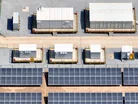
Despite these challenges, the company delivered what it describes as a landmark net-zero computing hub powered by a combination of solar, wind and storage systems.
The site now generates around 10 million kilowatt-hours of clean electricity annually. According to Trinasolar, this reduces carbon emissions by 8,000 tonnes each year, which it equates to planting more than 440,000 trees.
This example demonstrates how renewable integration and storage technologies can be applied to support intensive computing needs in environments where stability and reliability are non-negotiable.
Integrated power solutions for data centres
Trinasolar positions itself as a global leader in smart photovoltaic (PV) and energy storage solutions. Its strategy centres on redefining how large-scale digital infrastructure is powered, particularly as AI accelerates demand for compute capacity.
The company’s integrated PV and storage platforms are designed to support both the scale and intensity of modern data centre operations. By pairing solar generation with on-site energy storage, Trinasolar enables operators to reduce reliance on unstable grid supply while also lowering emissions.
A core feature of its approach is the company’s energy management platform. This system coordinates solar input, battery storage and fluctuating data centre loads.
For facilities supporting AI training and inference tasks – where power consumption spikes unpredictably – the platform allows dynamic balancing to maximise clean energy usage and maintain resilience.
Balancing clean energy with AI growth
The rise of AI has heightened concerns about the energy footprint of digital infrastructure. With racks consuming several times more power than in standard facilities, operators must secure not just more electricity, but cleaner and more reliable sources.
Trinasolar argues that pairing renewable generation with advanced energy storage is essential for this transition. By doing so, data centres can ensure that power-intensive workloads align with sustainability commitments, while also protecting grid stability in regions under pressure.
The company notes that this model is not simply about offsetting carbon, but about creating low-carbon, high-efficiency operations from the ground up.
Through intelligent integration of renewable energy and computing, facilities can achieve both performance and environmental targets.

Commitment to sustainable digital infrastructure
Looking ahead, Trinasolar says it will continue investing in renewable integration and smart energy management systems to meet the demands of global data infrastructure.
By developing technologies that directly connect solar and storage with the unique needs of hyperscale campuses, the company aims to deliver net-zero operations at scale. This ambition reflects a wider industry trend where energy innovation is seen as inseparable from the evolution of AI-ready infrastructure.
Trinasolar frames its mission as advancing the fusion of clean power and digital capacity. In its words, the company remains committed to powering the AI era with sustainability.