
TSMC Expands US Manufacturing to Meet Data Centre Demand
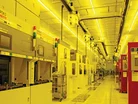
Taiwan Semiconductor Manufacturing Company (TSMC) is accelerating its US expansion as demand for data centre compute continues to rise, with its Arizona fabrication plants playing a central role in supplying advanced chips.
The company has committed US$165bn to its first three semiconductor fabrication facilities (more commonly known as fabs) in Arizona.
These fabs manufacture the processors that power AI, high-performance computing HPC and cloud platforms – all core components of modern data centre infrastructure.

TSMC’s first Arizona fab begins production in 2025, with the second expected by 2027 and the third later in the decade.
Plans extend further, with six fabs, two advanced packaging facilities and a research and development centre included in the wider roadmap.
At the same time, TSMC reports strong financial performance, with Q1 2026 net revenue reaching US$35.67bn – a 35.1% increase year on year – despite ongoing supply chain challenges affecting semiconductor production.
Scaling semiconductor supply for data centres
As hyperscale operators expand data centre capacity, demand for advanced chips continues to grow. These chips underpin AI training, inference and large-scale data processing, making semiconductor supply a critical dependency for the sector.
TSMC’s Arizona expansion is designed to address this need by increasing domestic manufacturing capacity in the US. The facilities are expected to create 6,000 direct jobs alongside wider construction and supply chain employment.
Wendell Huang, Chief Financial Officer of TSMC, links the investment directly to AI-driven demand. “We have strong conviction on the AI mega trend and that is the reason we are stepping up the capital expenditures to expand in Taiwan and in the US,” he said, speaking to CNBC.
"Not just to expand, but also try to accelerate where it is possible to satisfy or narrow the gap.”
TSMC has also acquired an additional 900-acre site in Arizona, providing flexibility to adjust its build-out strategy. Some planned facilities will move to this new site, while the remaining land is reserved for future expansion.
Supply chain pressures and resilience
Semiconductor manufacturing relies on specialised materials, including helium, which is used in advanced chip production processes. Disruptions linked to the Strait of Hormuz have affected global helium supply, with TSMC previously sourcing a large share from the Gulf region.
Despite this, the company maintains that production remains stable. Mitigation measures include diversified supply contracts, on-site recycling systems and existing inventories.
Leading fabs can recover between 80% and 90% of helium used, reducing dependence on external supply.
Other major chip manufacturers, including Samsung Electronics and SK Hynix, are also managing inventories to maintain continuity. These supply chain considerations directly affect data centre operators, as delays in chip production can slow infrastructure deployment.
US manufacturing and data centre growth
TSMC’s expansion forms part of a broader push to increase semiconductor manufacturing capacity in the US. This aligns with growing demand for domestic supply chains that support data centre and AI infrastructure.
The Arizona fabs are positioned to strengthen the availability of processors used in cloud environments and enterprise systems. This includes chips designed by companies such as Apple and NVIDIA, which are widely deployed in data centres.
Investment across the sector continues to grow. Apple has committed more than $600bn to US manufacturing over four years, while Samsung is progressing a US$17bn fab in Texas.

In March, Elon Musk, CEO of Tesla, revealed plans for two large fabs in Texas. During his announcement, Elon highlighted how his companies’ demand for advanced semiconductors outweighed global supplies. Referencing suppliers like Samsung, Micron and TSMC, he said: “we would like them to expand as quickly as they can”.
“And we will buy all of their chips. I have said these exact words to them,” he added.
As semiconductor output scales, the link between chip manufacturing and data centre capacity becomes more direct, with fabrication plants acting as a key enabler of digital infrastructure deployment.
Company portals




Executives

Elon Musk
Tesla CEO

Wendell Huang
CFO